
 Staff
StaffJLG Industries, designer and manufacturer of access equipment, offers some insight and possible solutions for working at height for installers in ‘front of house’ situations.
Everyday low-level access tasks are often underestimated, yet they create avoidable working-at-height risk in public-facing environments. In busy, ‘front-of-house’ environments, like hotels and retail spaces, routine maintenance and installation tasks are often carried out in view of guests, visitors or other members of the public, and frequently by a member of a workforce that may be pressed for time to get the task done.
This moment presents a shift for the facilities and installation industry. Wellbeing, ergonomics and inclusive design are no longer soft considerations, but they are now proactive risk controls that can help support safety performance, operator comfort and the end customer or guest experience.
Everyday tasks, everyday risks
Many risks in maintenance and installation do not come from complex activities but from frequent, low-level tasks. Everyday front-of-house maintenance tasks, from changing lighting to installing AV equipment, create overlooked working-at-height risks for facilities and installation teams. When tasks are perceived as minor or routine, familiarity may lead to reduced risk awareness or inconsistent adherence to safe working practices. Repetition, awkward postures and improvised access solutions may increase cumulative risk.
Supporting safe work practices in these activities means acknowledging that frequent, everyday tasks can still introduce potential risk and require appropriate planning, processes and equipment.
Unique challenges of front-of-house work
Front-of-house work introduces an added layer of complexity. Unlike ‘back-of-house’ areas where maintenance can happen behind the scenes, these spaces are live, public environments where work happens in front of guests, employees or customers.
This creates competing pressures. Tasks must be completed quickly to minimise disruption, yet they must also meet stringent safety standards. Under the Health and Safety at Work etc. Act 1974*, organisations are required to assess and control risks not only to workers but also to members of the public in these spaces. The presence of the public gaze may increase the likelihood of rushed decisions or risk-taking behaviours to complete work quickly and discreetly.
In such environments, the choice of access equipment becomes key. Solutions must enable safe processes around working at height while fitting the space seamlessly. Equally, the confidence of the operator plays a vital role. Workers who feel stable, supported and comfortable when working at height may be more likely to follow safe working practices.
Wellbeing as an indicator of health and safety
Labour shortages and efficiency pressures mean teams must complete tasks quickly and right first time. However, physical strain and fatigue may influence decision making when working at height, particularly among an ageing workforce. For many experienced operatives, routine tasks such as repeated ladder climbing, overhead installation work or carrying equipment through busy environments may become more physically demanding over time.
This is where ergonomic equipment design can support safe and efficient working practices. Equipment designed to reduce physical strain, improve stability and support more natural working positions can help operators work more comfortably and consistently, particularly during repetitive access tasks.
Considering operator wellbeing as part of equipment selection also aligns with more proactive approaches to health and safety. Rather than responding after incidents occur, the focus is on reducing the conditions that may contribute to risk in everyday work at height activities. Selecting appropriate access equipment can therefore play an important role in supporting safe working environments.
Inclusive access for risk control
Access equipment, like ladders, podiums and lifts, can be viewed not just as a tool, but as part of an organisation’s overall safety strategy. Inclusive design of this type of equipment can help broaden the range of people who can perform tasks at height, reducing the limitations of physical strength, agility or experience. Using stable, intuitive platforms, like low-level access lifts, may help reduce reliance on improvised access methods . When safe working practices are also practical and easy to adopt, organisations may see stronger compliance with procedures.
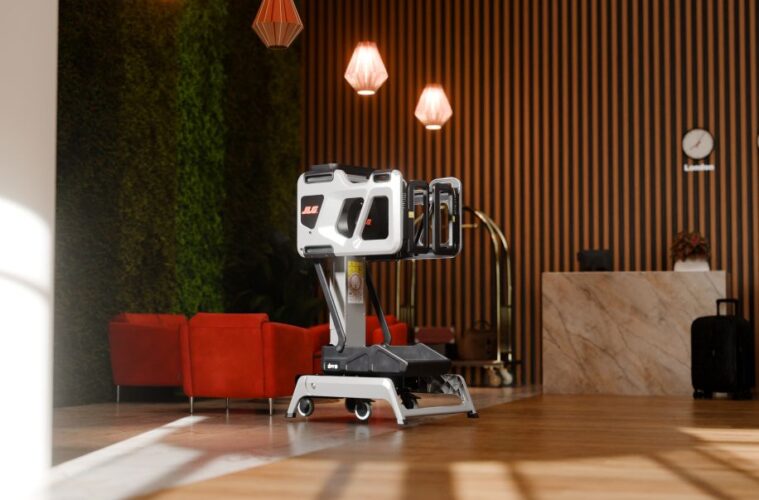
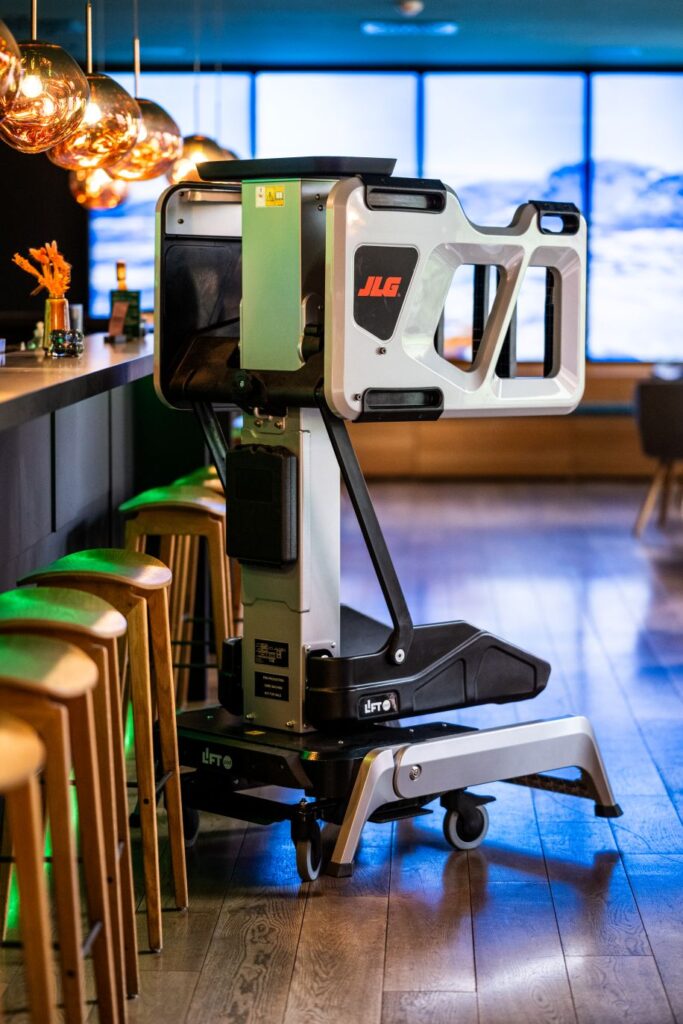
Access equipment manufacturer JLG has responded to these challenges with the introduction of a new low-level access category: the Quick Fold Lift. Designed specifically for front-of-house maintenance and installation tasks, the JLG® LiftPod Quick Fold Lift combines portability, compact dimensions and stability in a solution intended to support safe and more efficient working practices. It features a narrow working footprint of 0.99-m x 0.77-m and a folded footprint of 0.6-m x 0.77-m, allowing easy manoeuvrability and discreet storage. With stowed heights of 1.6-m and 1.9-m and working heights up to 3.2-m and 3.5-m, it is designed to fit in space-constrained areas. A 150-kg platform capacity enables operators to carry tools and materials safely, supporting efficient two-handed working across retail, hospitality, offices and other public-facing spaces.
This compact, unobtrusive access solution also supports a more professional environment by reducing disruption and visual clutter, particularly in premium settings such as hotels, offices and retail spaces where the guest experience is key.
The LiftPod demonstrates how access equipment can be designed to meet both operational and environmental requirements, particularly in public-facing spaces where professionalism and presentation are important considerations.
Supporting wellbeing in public-facing environments
In front-of-house environments, maintenance and installation work takes place in busy spaces where safety, wellbeing and presentation are critical. Not only must teams be able to work efficiently around guests, customers or employees, but routine maintenance in these environments places varied physical and operational demands on these teams. As organisations seek to improve safety, efficiency and wellbeing, greater focus is being placed on equipment suitability.
Equipment that supports stability, ease of movement and comfortable working positions can reduce strain during repetitive tasks and may enable safe, more controlled working practices. This is particularly important where work must be completed quickly, discreetly and with minimal disruption.
This is driving demand for access solutions that support operator comfort, stability and ease of use. Products such as the JLG LiftPod Quick Fold Lift reflect this shift, offering a practical approach to working at height where safety, presentation and manoeuvrability all matter.
*Health and Safety Executive. Health and Safety at Work etc Act 1974: https://www.hse.gov.uk/legislation/hswa.htm