
 Daniel J Sait
It won’t surprise you to learn EI is a massive movie fan. Titles old and new are enjoyed most days. We have long argued that integrators are essentially an extension of the entertainment industry, and integrators who love music and movies gain extra insight into what will excite and please customers.
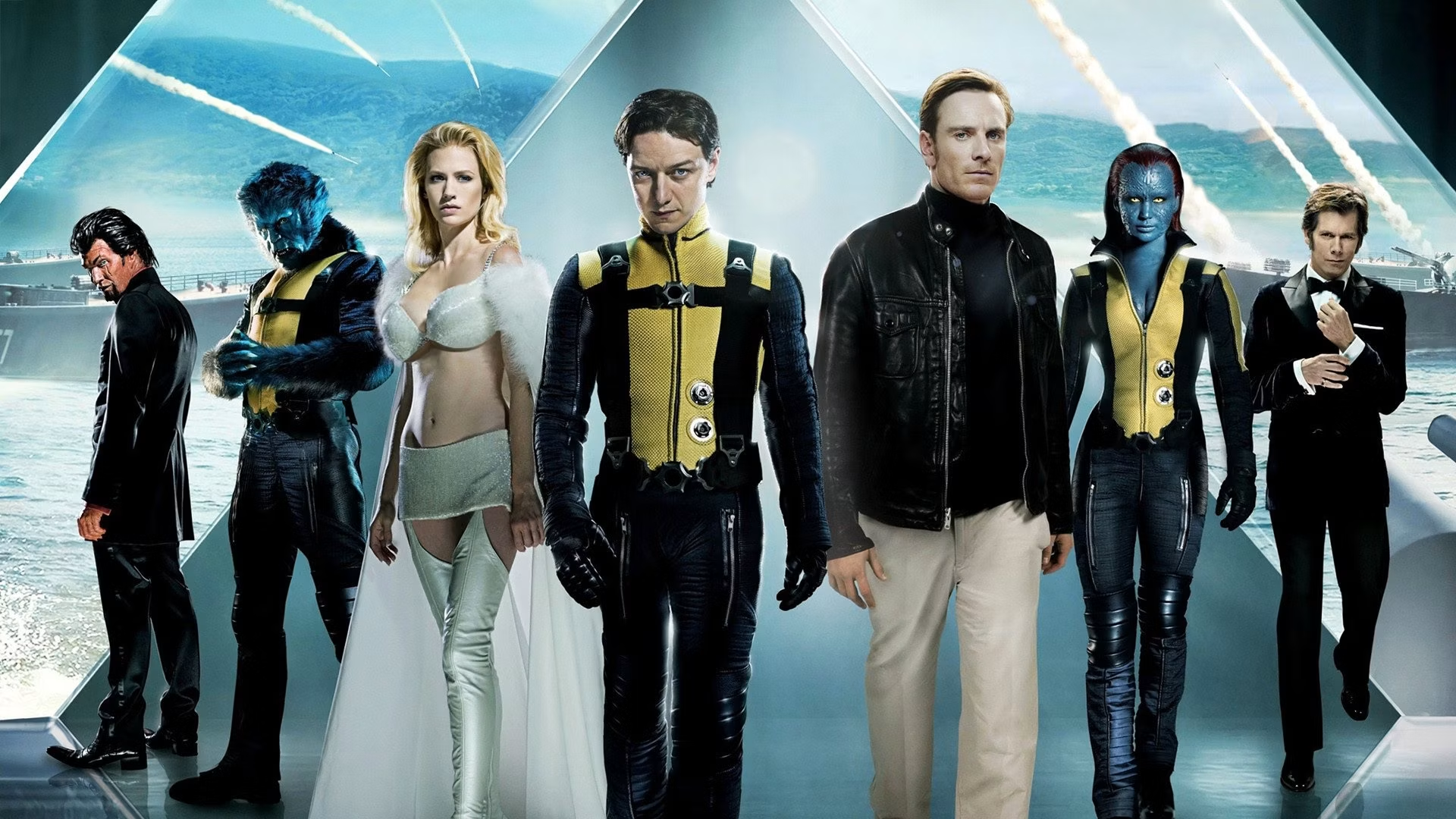
Just recently, EI was enjoying watching X-Men: First Class. It remains a favourite X-Men title, but it reminded me of something that has always irritated me about the franchise: what on earth happened to the timeline?
The original three films established a world, characters, relationships and history. Then came the prequels. Individually, some worked – First Class certainly did – but collectively they completely contradicted what had already been established.
The worst thing about this is that there was no grand plan behind it. Different directors had different ideas, creative egos pulled in different directions and the studio apparently wasn’t sufficiently concerned with maintaining a coherent whole to rein it all in. Eventually, the franchise required the cinematic equivalent of emergency plumbing: the entirely unconvincing ‘alternative timelines’ explanation.
Days of Future Past essentially gave everyone permission to stop worrying about the contradictions. Problem solved? No. The prequels basically meant that the original trilogy now existed in a timeline that the studios said never actually happened.
In trying to continually reinvent the franchise, the films had undermined their own legacy. Characters, events and relationships we’d previously been told mattered suddenly didn’t matter at all because they never actually took place.
The lesson to learn
Our technology changes incredibly quickly. We’ve travelled through distributed audio, touchscreens, apps, voice control, streaming, IoT, immersive audio, human-centric lighting, energy management, AI and countless other developments. Tomorrow there will be something else.
Consumer attitudes change too. Interior design moves on. We need to embrace those changes, but we shouldn’t allow them to continually rewrite the reason our industry exists. The central narrative should remain remarkably simple.
Professional integration is about creating better places for people to live. It means understanding what somebody actually needs, designing technology around them, making disparate systems work together and, crucially, being there to support those systems afterwards. The hardware will change. The interfaces will change. AI will undoubtedly change how systems are programmed, commissioned and controlled. Today’s must-have technology may eventually look as dated as yesterday’s enormous touchscreen.
But the industry’s core proposition shouldn’t require an alternative timeline every five years, where one concept is championed as the bee’s knees only to be replaced by another a few short years later.
We’re not really selling boxes, protocols, apps or even automation. We’re selling expertise, reliability, thoughtful design and long-term support. We’re creating technology around human beings rather than expecting human beings to organise their lives around technology. That’s the storyline worth protecting.
Because if we become too distracted by whatever happens to be the industry’s latest blockbuster, we risk contradicting everything we told the customer in the previous film. And eventually, even Days of Future Past can’t fix that.
What do you think? let us know dan@essentialinstall.com