

Ateeq Sheikh, founder of AudioBro, a room-aware Hi-Fi and home cinema optimisation platform, examines the potential for AI in assisting installers working in Hi-Fi and home cinema.

The most difficult part of a home cinema installation is rarely a lack of information. Installers already work with measurements, room drawings, calibration platforms, product data and years of practical experience. The harder problem is turning all that evidence into a clear decision: what matters most in this particular room, what should change first and how will we know whether it worked?
That is where conversational, room-aware intelligence could become useful to the professional channel. Not as a substitute for an experienced installer, but as a layer that helps organise evidence, preserve context and explain the reasoning behind a recommendation.
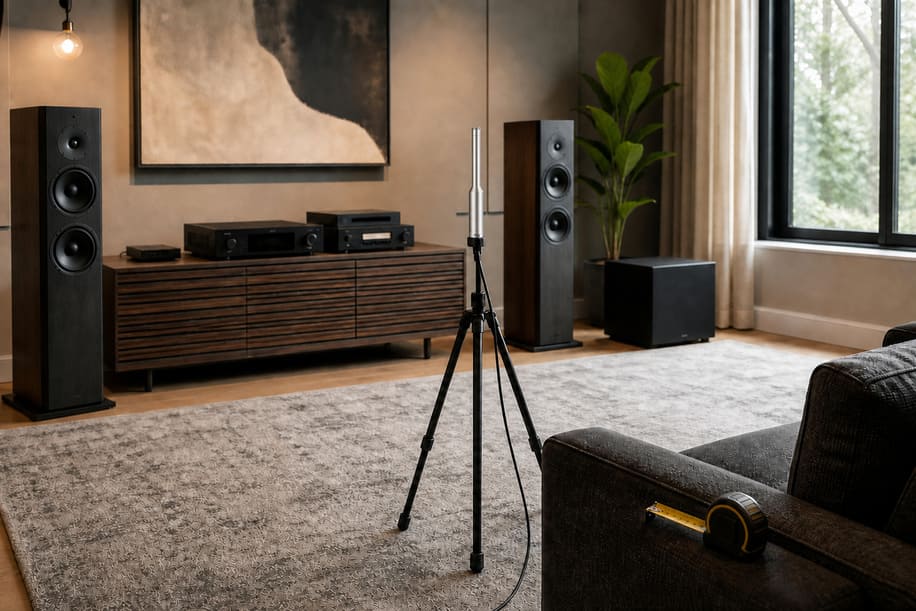
Home cinema is unusually dependent on its environment. Two systems using similar equipment can behave very differently because of room dimensions, construction, seating, speaker and subwoofer positions, reflective surfaces and the way the system has been calibrated. A generic answer may be technically correct yet wrong for the room. Useful intelligence therefore has to begin with the room, not with a product catalogue or a list of universal tips.
It also needs memory. A project develops across surveys, design decisions, installation, calibration and later client changes. Photographs may be captured at one stage, measurements at another and listening observations after handover. If that context is fragmented across inboxes, screenshots, reports and individual recollection, it becomes harder to explain why a decision was made or to pick up the project accurately months later.
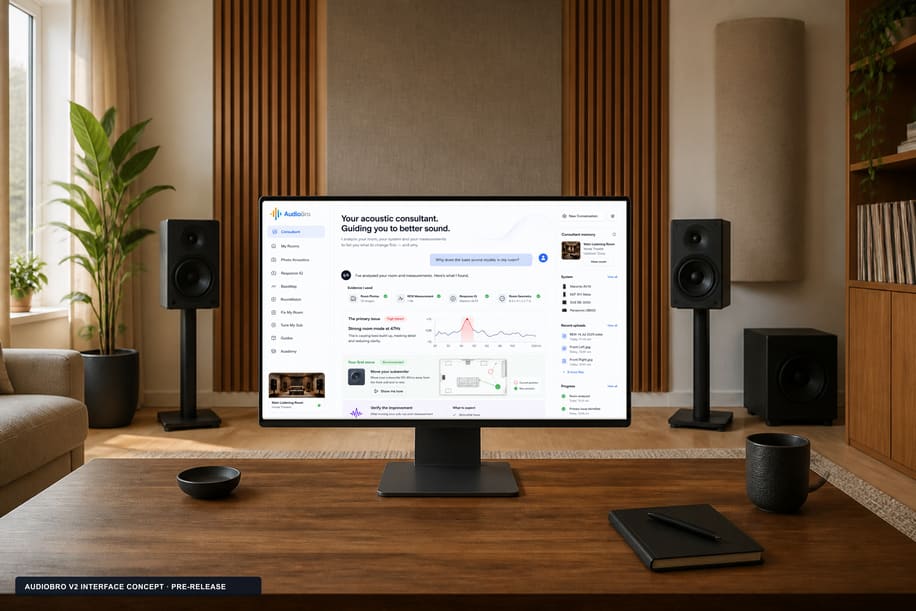
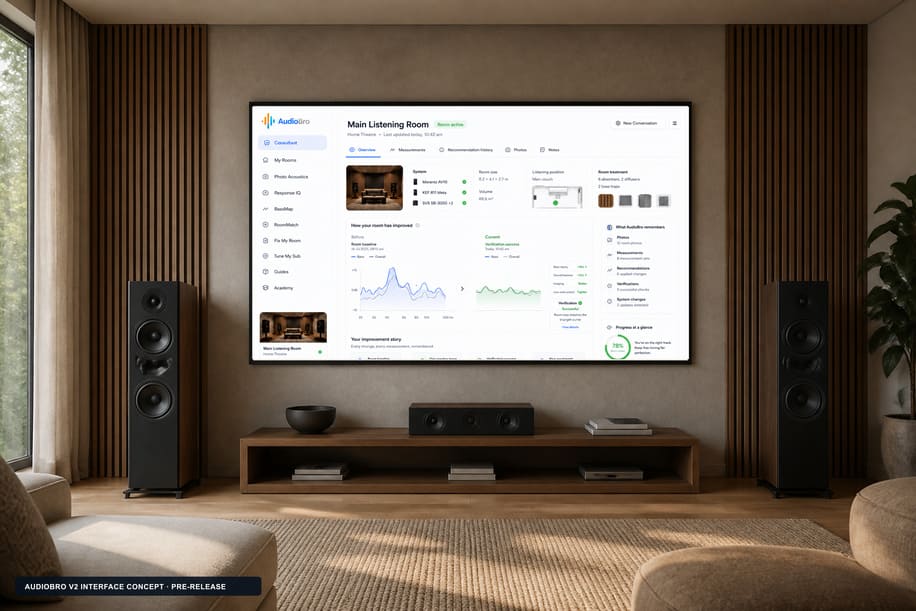
A room-aware system can help maintain that continuity. It can bring together room geometry, system configuration, placement history, photographs, measurement files and calibration screenshots, then retain the relationship between the evidence, the recommendation and the outcome. The aim is not to generate more data. It is to make the existing data easier to use.
A humanised experience
Conversation matters because clients do not experience a system as a graph. They describe dialogue as unclear, bass as uneven, imaging as unstable or a room as tiring at higher levels. An installer has to translate between that language and technical evidence. A conversational interface can make this translation easier: connect the client’s description to the relevant room and system context, explain the likely cause without overstating certainty and present the next action in language the client can understand.
The strongest workflow is deliberately restrained. Rather than producing a long list of possible changes, it should identify one best first move. That might be testing a different subwoofer position, adjusting the listening position, reviewing a crossover decision or gathering a missing measurement before acting. The recommendation should explain both the physical action and the audible outcome it is intended to produce.
Crucially, prediction is not verification. A model may identify a promising position or likely cause, but that does not prove an improvement. The installer still needs to apply professional judgement, make the change and retest or otherwise gather appropriate evidence. A trustworthy system must preserve the distinction between what was predicted, what was measured and what was confirmed. It should never turn confidence into false certainty.
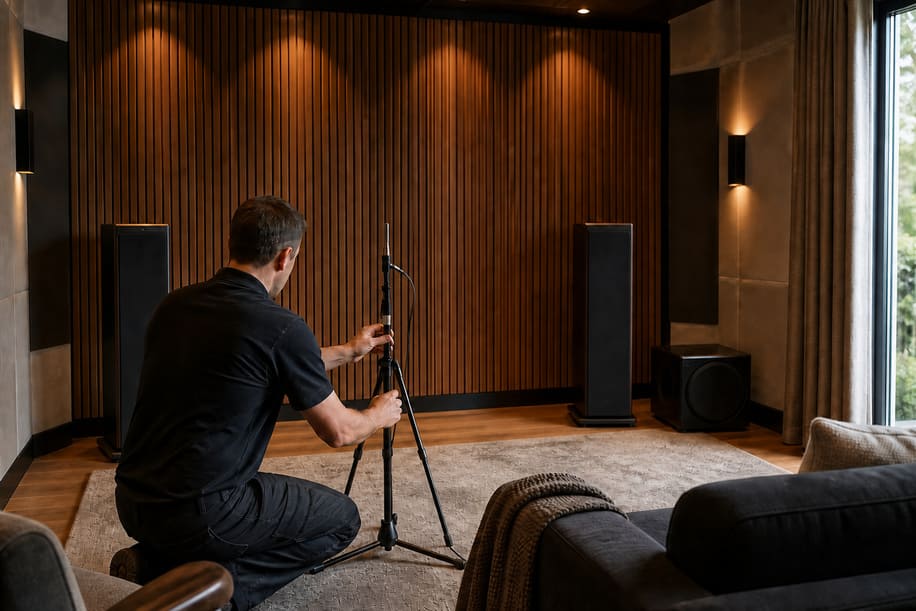
This creates a useful professional loop: understand the room, identify the main bottleneck, make one controlled change, measure again and document the result. If the change does not help, that outcome should also be remembered. There is little value in software that forgets failed experiments and recommends the same action again six months later.
For installers, the commercial value is not simply faster analysis. It is clearer communication and a more durable client record. A well-structured explanation can help a customer understand why placement or acoustic work should come before another equipment purchase. A comparison between the original state and a verified result can also make skilled work more visible, particularly when much of the installer’s value lies in decisions the client cannot see.
There are important boundaries. Room photographs, measurements and system details are sensitive client data and should remain private by default. Professional reporting must be based on canonical project evidence rather than regenerated prose. And any future white-label or dealer workflows should support the installer’s authority, not create a competing relationship with the client.
AudioBro’s current platform is built for enthusiasts, while its dedicated dealer and installer workflows are still in development. That distinction matters. The opportunity is not to dress a consumer chatbot in professional language. It is to build tools around the real lifecycle of an installation: evidence gathering, room-aware reasoning, one clear action, client communication, retesting and long-term continuity.
The best installers will not be replaced by conversational intelligence. They may, however, be strengthened by systems that remember more, explain decisions more clearly and keep every recommendation tied to evidence. In a field where the room can overturn assumptions and verification is everything, that is a practical place for AI to earn its role.