
 Daniel J Sait
Stuart Lockhart, MD, Vision Audio Visual, takes a look at what support is happening behind the screen across the install universe.

Mounting and support products have quietly moved up the value chain and list of considerations for integrators. What used to be a simple decision about how to fix a screen to a wall is now something that can affect how a space looks, how quickly it can be installed and how easy it is to maintain over time, thanks to the evolution of the product categories.
That shift is being driven by a combination of factors. Clients expect cleaner, more integrated finishes. Integrators are under pressure to deliver projects faster with fewer people. And systems themselves are changing more frequently, which means what gets installed today needs to be easier to adapt tomorrow. As a result, brackets, racking and support solutions are now integrated into the design and lifecycle of the system.
At the higher end of residential and commercial AV, there’s a clear expectation that technology should blend into the environment. Displays are larger, rooms are more design-led and visible hardware is less acceptable than it used to be.
That’s pushed mounting solutions towards lower profiles, cleaner lines and better cable management. But more importantly, it’s brought them into the conversation earlier. Integrators are increasingly working with designers and architects to make sure the infrastructure behind the display supports the finish that the client expects.
In practice, that means thinking about where hardware sits, how cables are routed and how much access is needed after installation, not just whether the mount can carry the load.
The other big change is the pressure on installation time. Labour is tight, project timelines are shorter and there’s less tolerance for complex on-site assembly. That’s why we’re seeing a move towards more modular, pre-configured solutions that reduce the amount of work required on site. Mounts and support systems need to be straightforward to specify, quick to install and consistent across different projects.
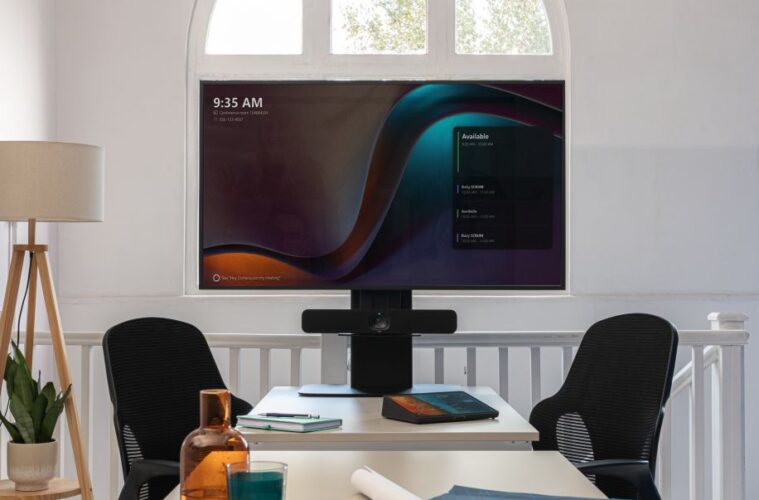
A good example is the growing demand for tabletop and freestanding solutions that arrive largely pre-assembled and include integrated cable management and storage. These directly impact how quickly an integrator can deliver a room and move on to the next job. The same applies across meeting spaces, signage and hybrid environments, where repeatability and speed are becoming just as important as performance.
One area that’s changed significantly is how much attention is now paid to access after installation. In the past, once a display was on the wall, the job was largely done. That’s no longer the case. Displays are bigger, systems are more complex and upgrades are more frequent. If you can’t easily get behind a screen, you’re creating problems for later.
We’re seeing more solutions designed specifically to address that, with features like slide-out mechanisms, removable sections and built-in space for power and media hardware. These allow integrators to maintain and upgrade systems without having to dismantle the entire installation. It’s a small detail at the point of install, but it makes a big difference over the life of the system, particularly in commercial environments where downtime isn’t acceptable.
Universal appeal
Another clear trend is the move away from highly proprietary mounting solutions towards more universal, adaptable systems. Integrators are working with a wide range of display brands and technologies and they need support solutions that can accommodate that without adding complexity. Universal VESA compatibility, adjustable mounting points and modular designs are becoming standard expectations.
This is particularly relevant in digital signage and multi-screen environments, where layouts may need to change over time. Mounting systems that can be reconfigured or expanded without starting from scratch offer a clear advantage. We’re also seeing this in more specialised applications, such as menu boards and retail displays, where modular rail systems allow screens to be positioned independently of wall structure and adjusted precisely during installation.
As display technologies evolve, particularly with larger formats and dvLED, the role of the mounting system becomes more critical. Alignment, stability and service access all affect the final result. A poorly designed support structure can undermine the performance of even the best display, while a well-designed one makes installation easier and ensures a better finish. That’s why mounting is increasingly being treated as part of the system, rather than an accessory added at the end.
The direction of travel is fairly clear. The best support solutions are the ones that simplify the job for the integrator while delivering a cleaner result for the client.
In many cases, the most effective mounting solutions are the ones that go unnoticed. They don’t draw attention to themselves, but they solve multiple problems at once and help everything else work as it should. That’s why they’re becoming more important, not less. In modern AV, what sits behind the screen is often just as critical as what’s on it.