

 Daniel J Sait
Amit Ravat, Managing Director of Retrotouch Switches & Sockets, examines the opportunities in lighting and shading.
Lighting and shading have become fundamental elements of modern home design, influencing not only aesthetics, but also comfort, wellbeing and energy efficiency. Nowhere is this more evident than in kitchens and bathrooms, where homeowners increasingly expect spaces that adapt to different activities, times of day and personal preferences.
In kitchen design, demand continues to grow for layered lighting schemes that create distinct moods and functional zones. Rather than relying solely on traditional ceiling fixtures or pendant lighting, designers are incorporating multiple layers to support a wider range of activities. Bright task lighting is essential for food preparation and cooking, while softer accent lighting helps create a more relaxed atmosphere for entertaining or family dining. This layered approach delivers greater flexibility while also enhancing the visual appeal of the space.
Smart lighting is central to this evolution. Homeowners are increasingly embracing tunable white and colour-changing lighting that allows them to tailor an environment throughout the day, supporting everything from focused work and family meals to evening relaxation. Carefully positioned lighting can create the illusion of more space, highlight architectural features and bring depth and character to cabinetry through the use of profile and concealed lighting systems.
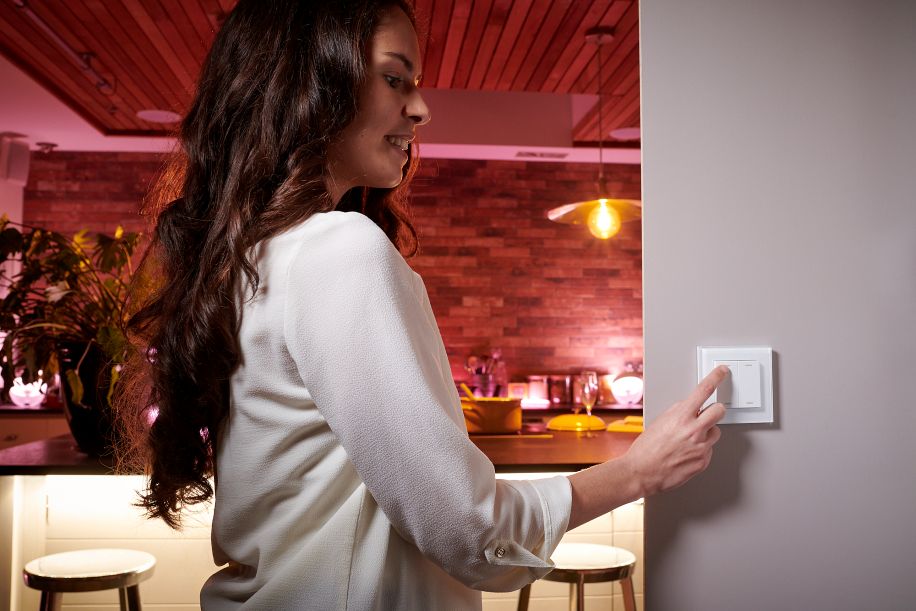
Successful lighting design, however, is about far more than installing smart products. Ease of use remains one of the biggest drivers of adoption. Homeowners want technology that feels intuitive and integrates naturally into everyday life. The ability to control lighting through wall switches, voice assistants, smartphone apps, motion sensors and automated scenes is quickly becoming an expectation rather than a luxury.
One of the traditional challenges with smart lighting has been maintaining connectivity when a conventional wall switch is turned off, interrupting communication with the smart system. New generations of smart switches are overcoming this limitation. Solutions such as Retrotouch’s Friends of Hue, Control4 and EnOcean-compatible switches allow smart lighting systems to remain continuously connected while still providing familiar wall-switch operation. Users can therefore enjoy seamless control via switches, apps, voice assistants, Apple HomeKit integration and motion sensing without compromising convenience.
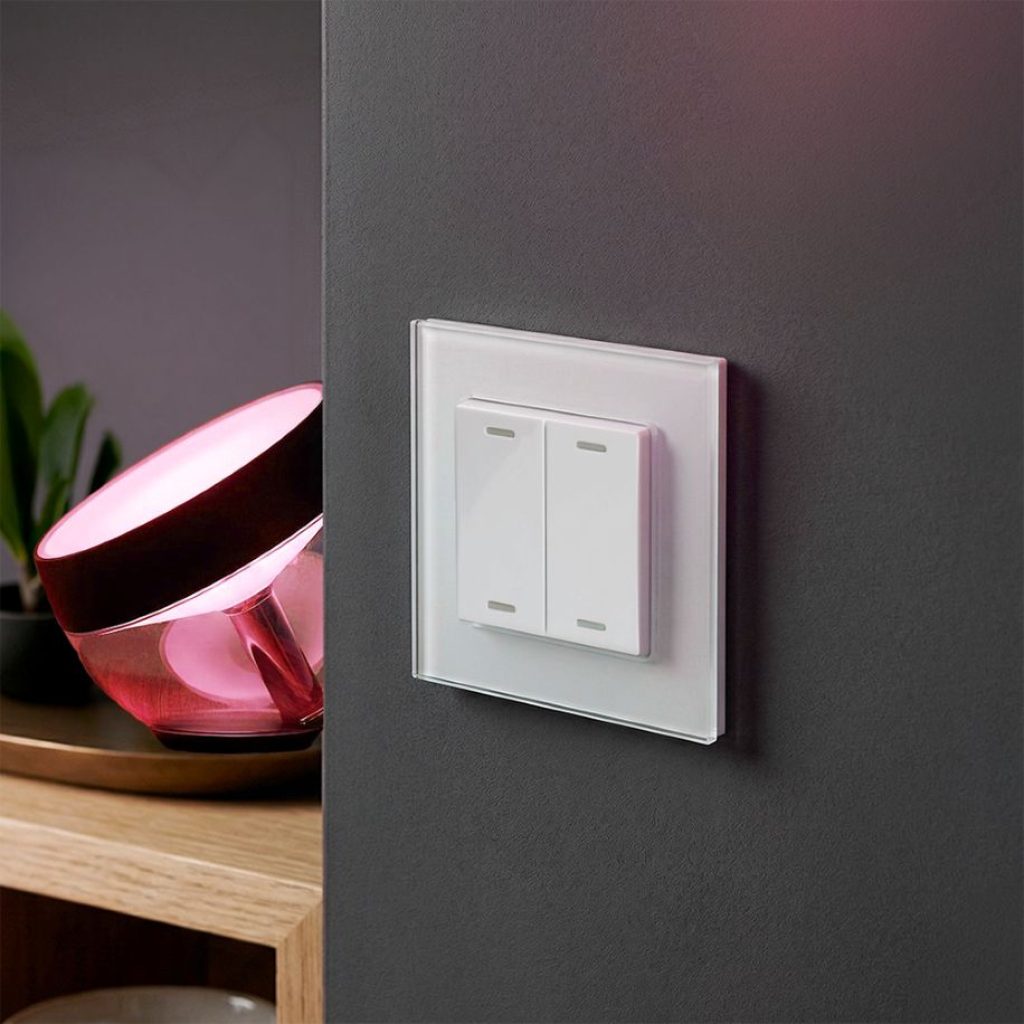
The market is also moving towards wireless, battery-free technologies that simplify both installation and retrofit projects. Retrotouch’s ‘stick anywhere’ Friends of Hue switches provide installers with a flexible solution that requires no batteries or extensive rewiring. These products offer electrical contractors and smart home professionals an accessible route into intelligent lighting, allowing homeowners to begin with individual rooms such as kitchens, bathrooms or living spaces before expanding into wider home automation as their requirements grow.
The importance of design
Design is becoming just as important as functionality. Consumers increasingly want technology that complements interior schemes rather than competing with them. Premium finishes, coordinated accessories and discreet controls are now key considerations, particularly within high-specification kitchen and bathroom projects where every design detail contributes to the finished aesthetic.
Looking ahead, the convergence of illumination, shading and occupancy sensing is set to accelerate. In bathrooms, for example, integrated systems featuring presence detection, lux-level activation and scene-based mood lighting that automatically adjusts according to the time of day and occupancy are likely to become increasingly common. Similar trends are emerging throughout the home, with automated shading working alongside intelligent lighting to maximise natural daylight, improve energy efficiency and enhance overall comfort.
As awareness of these technologies continues to grow, smart illumination is rapidly evolving from a specialist feature into a standard element of modern home design. For installers, designers and manufacturers alike, the opportunity lies in delivering systems that combine flexibility, aesthetics and intuitive control, enabling homeowners to create living spaces that are more responsive, efficient and enjoyable to use.