






A True All-Rounder? Assessing the recently introduced Sonos Play. EI Editor Daniel J Sait takes a listen.
Sonos, of course, has built its reputation on delivering accessible multi-room audio and occasionally dipping its toe into portable audio capabilities with Roam 2 and Move 2. The Sonos Play sits neatly between the smaller Roam 2 and the more powerful Move 2. Arriving just in time for spring and summer, the question is: what does the Play add to the Sonos proposition?
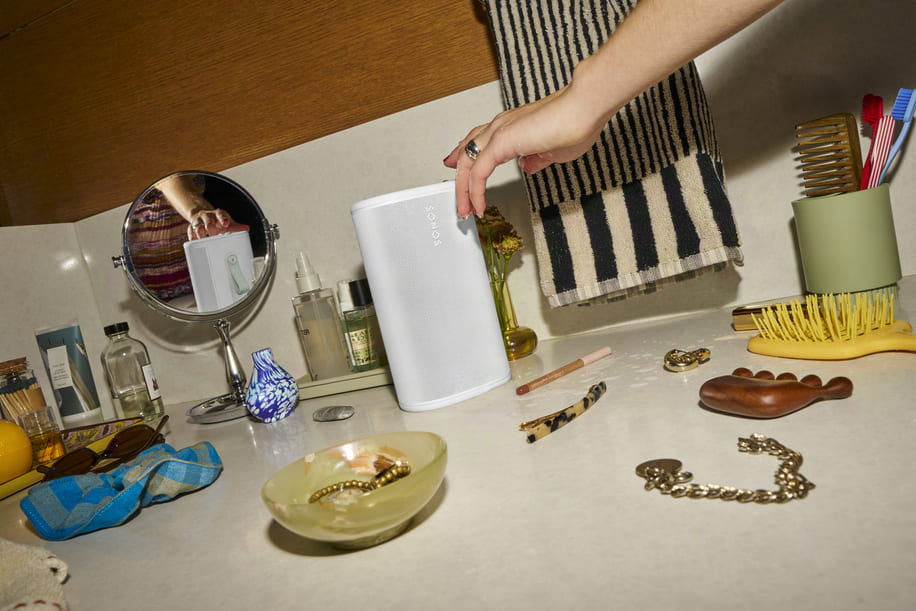
From a design perspective, the Sonos Play is immediately recognisable as part of the wider Sonos family. The finish is clean and understated, with a premium feel. It strikes a useful balance in size. It is compact enough to be moved easily from room to room and taken out and about, but substantial enough to feel like a permanent fixture when placed on its charging base and working as part of a wider Sonos system.
That charging base is a key detail. It gives the Play a ‘home’ within a property, allowing it to behave more like a fixed wireless speaker that can be picked up when needed. This is an important distinction, as it shifts the product away from being a purely portable device and into something that can be integrated into everyday living spaces.
Durability is another plus. With an IP67 rating, the Play is well suited to kitchens, bathrooms and outdoor areas. For installers, this opens up more flexible placement options without needing to specify dedicated outdoor speakers in every scenario. This creates a genuine place of its own within the Sonos world and improves the chances of a simple upgrade for an installer’s existing Sonos customers, especially those with a liking for music outdoors.
Setup and Integration
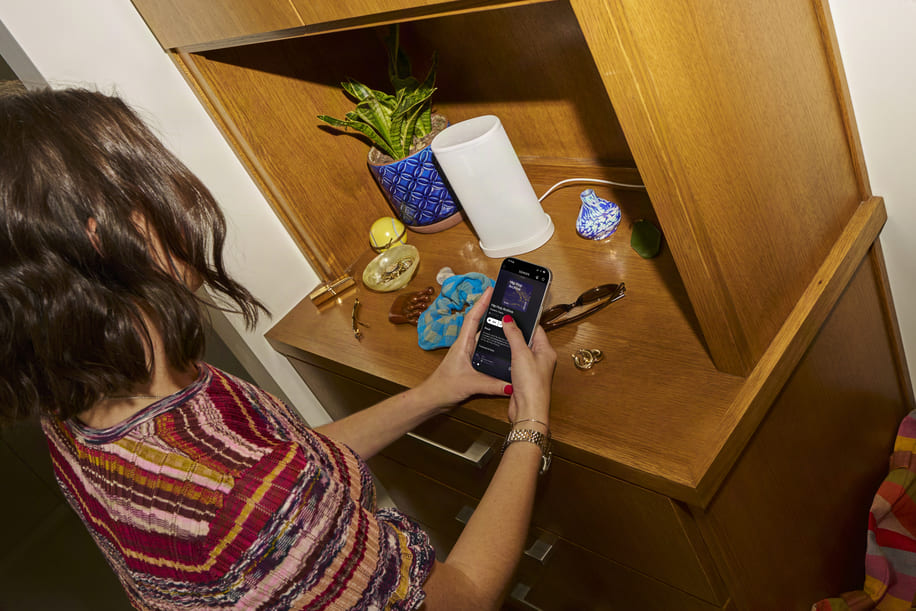
As expected, setup is handled through the Sonos app. The Play integrates into existing Sonos systems over Wi-Fi, while Bluetooth provides a fallback for more casual use. This dual-mode operation is one of the product’s strongest features. Within the home, it behaves like any other Sonos zone, supporting grouping, streaming services and app control. Outside the home network, it becomes a simple Bluetooth speaker, extending its usability without complicating the system design.
Support for AirPlay 2, Spotify Connect and voice control (Sonos’ own system and Alexa) further enhances flexibility, although the absence of Google Assistant may be a consideration for some projects.
Performance and Use Cases
Sonically, the Sonos Play delivers a confident and well-balanced performance. It offers a surprisingly open presentation for its size, with clear vocals and a controlled low end that works well for everyday listening. A genuinely good all-rounder for this size of speaker, it handles pop, rock, classical music and podcasts equally well.
In smaller to medium-sized rooms, the Play is capable of acting as a primary audio source. It is particularly well suited to kitchens, bedrooms, home offices and informal living spaces where clients want quality sound without the complexity of a full system.
Used as a stereo pair, performance improves further, creating a wider soundstage and a more immersive experience. While it will not replace a more advanced stereo or 2.1 system, it is more than adequate for many secondary spaces within a property.
Outdoors, the Play holds its own at moderate volumes, making it a practical solution for patios and garden use. As the need for a bigger soundstage becomes more important, larger options such as the Move 2 remain the better choice for bigger spaces.

Installer Perspective
This is where the Sonos Play becomes particularly interesting. It effectively bridges the gap between fixed and portable audio, offering a level of flexibility that can simplify system design. With many installers becoming more interested in exterior audio in recent years, this is a useful addition to the Sonos universe.
For projects where clients want music throughout the home without committing to a fully installed system in every room, the Play provides a strong solution. It can act as a ‘floating zone’, moving between spaces as needed while still integrating into the wider Sonos ecosystem. It may also suit rental properties where customers or landlords are looking for something that can be moved around with ease.
It also works well as an entry point. For clients new to Sonos, a Play can serve as their first experience of multi-room audio, with the option to expand into additional zones over time.
Another advantage is its potential to reduce complexity. In certain scenarios, specifying a Play instead of installing in-ceiling speakers or additional amplification can save time and cost while still delivering a satisfying user experience.
At £299, it sits in a competitive part of the market. While many consumer reviews point to alternative portable options as being attractive, they lack one important factor: they are not Sonos and cannot merge into the Sonos ecosystem with the same ease as the Play.
Well Played
The Sonos Play is a well-judged addition to the Sonos line-up, filling a gap that has existed for some time. It combines the portability of the Roam 2 with elements of the performance seen in the fixed installation range. For installers, its real value lies in flexibility. It is not a replacement for a fully designed audio system, nor is it intended to be, but it is a useful tool that can enhance one.
Whether used as a movable zone, an entry point for new clients or a practical solution for secondary spaces, the Play earns its place.
In short, this is not just a lifestyle speaker. In the right context, it is a genuinely useful addition to the professional installer’s toolkit.