
 Daniel J Sait
Pulse Cinemas co-founder and now heading up new initiative Directly AV, Mike Beatty reflects on a highly insightful and personal journey into India and the Smart Home Expo.

Recently I had the privilege of spending time in Mumbai attending the Smart Home Expo and meeting integrators, distributors, manufacturers and industry professionals from across India.
I came home energised. Not because the market is perfect, because it isn’t, but because there is a feeling there that reminds you what this industry is supposed to be about in the first place: growth, optimism, relationships, curiosity, momentum and innovation.
Sometimes in the UK and parts of Europe, our industry can feel mature to the point of becoming cautious. We know the products, we know the brands, we know the structure of the market and in some areas we’ve become incredibly good at refining what already exists.
India feels different.
It feels like a market that is still building itself in real time. And with that comes an energy that’s difficult to ignore.
The scale alone is hard to comprehend until it is experienced properly. Smart Home Expo now attracts hundreds of brands and thousands of visitors from across the automation, AV, lighting, security and smart building sectors. But what struck me most wasn’t the size of the show. It was the age, attitude and ambition of many of the people walking the floor.
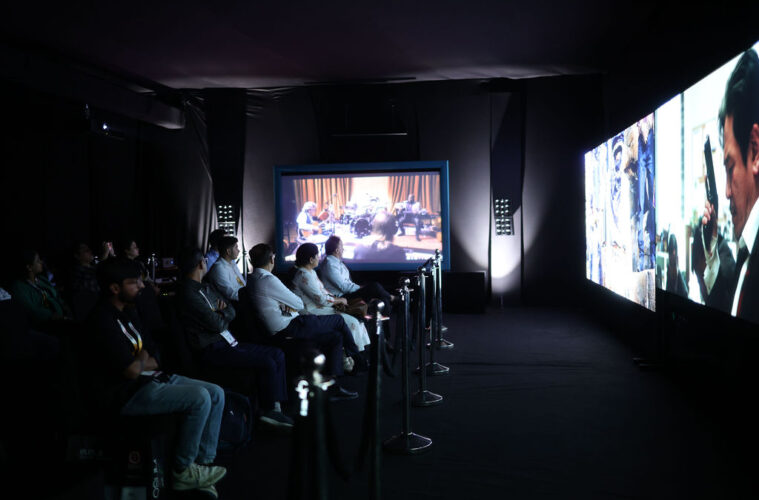
Darren Barker, Design Director, Cinema Luxe
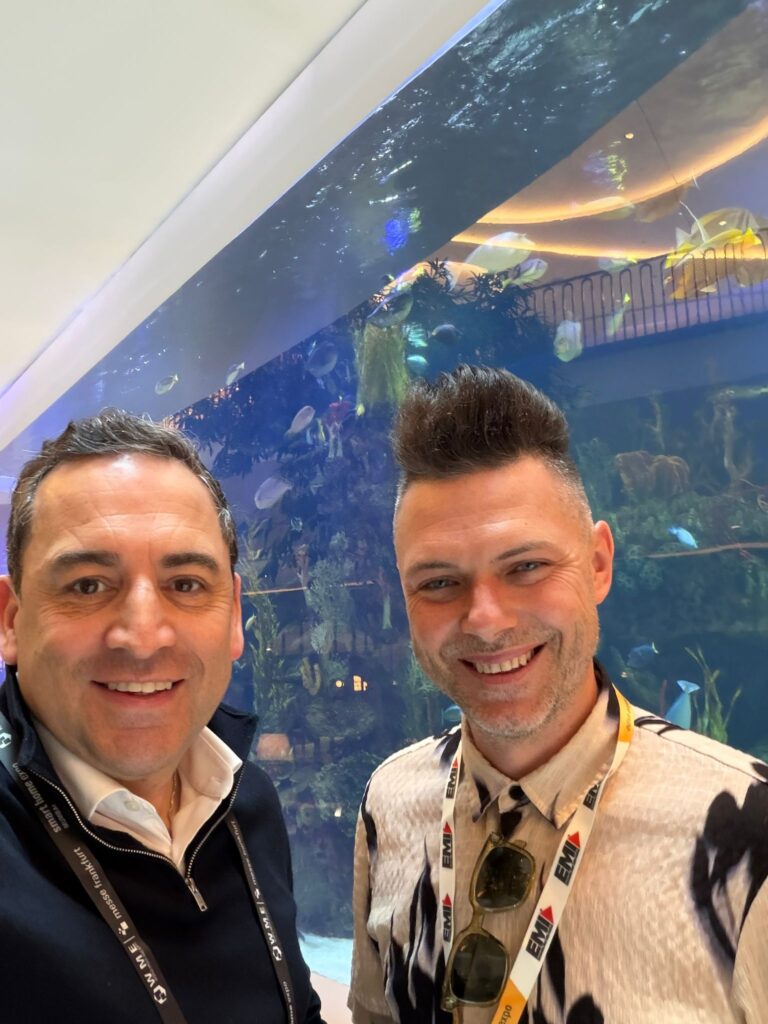
There Is A Genuine Hunger To Learn
Conversations don’t begin with “we’ve always done it this way.” They begin with questions. People want to understand global best practice. They want to improve. They want to collaborate. And importantly, many are willing to invest in themselves and their businesses to do it.
That openness matters.
One of the most refreshing parts of the trip was seeing how seriously many Indian integrators and distributors value relationships. Hospitality is deeply ingrained within the culture. Time is given generously. People make introductions. Doors open quickly. Conversations often become friendships surprisingly fast.
There’s something the UK and parts of Europe can relearn from that.
Not every conversation has to begin with suspicion or guarded commercial positioning. Sometimes industries grow fastest when people spend more time building trust and less time protecting territory.
What also stood out was the pace at which India is embracing technology. The appetite for smart home systems, premium AV, automation and luxury residential experiences is growing rapidly. There is significant wealth in parts of the market and an increasing desire for homes that feel modern, connected and experiential rather than simply functional.
Joel George Joseph, Shalom Spaces
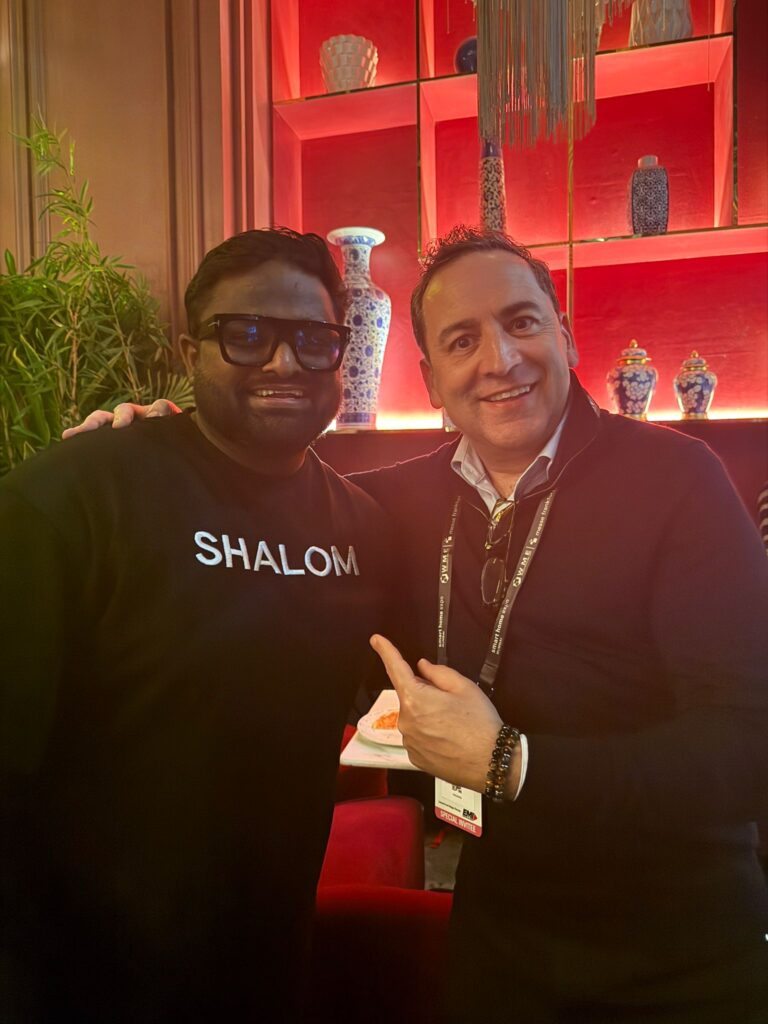
Education Represents A Huge Opportunity
But perhaps the biggest opportunity isn’t the technology itself. It’s education.
In many conversations I found myself discussing not just products, but fundamentals. Room design, acoustics, lighting, engineering. The difference between installing equipment and actually designing an experience.
And the reality is, many people there are eager to learn those disciplines.
That creates huge opportunities for UK and European businesses that genuinely bring knowledge, standards and experience to the table, not just boxes.
This became particularly clear during conversations around The Cinema Designer and the direction the platform is heading. The response from the Indian market was genuinely very encouraging. Integrators were not only interested in what the platform already delivers today, but equally excited about the innovations and deeper engineering tools currently being developed behind the scenes.
There was real appreciation for the idea that great cinema and media room performance should begin with design, calculations, room behaviour and proper planning, not simply product selection.
That mindset matters enormously.
Many of the conversations around TCD weren’t purely about software. They were about raising standards, improving confidence, reducing mistakes and helping integrators present themselves more professionally to clients. India appears incredibly receptive to that kind of structured growth and education.
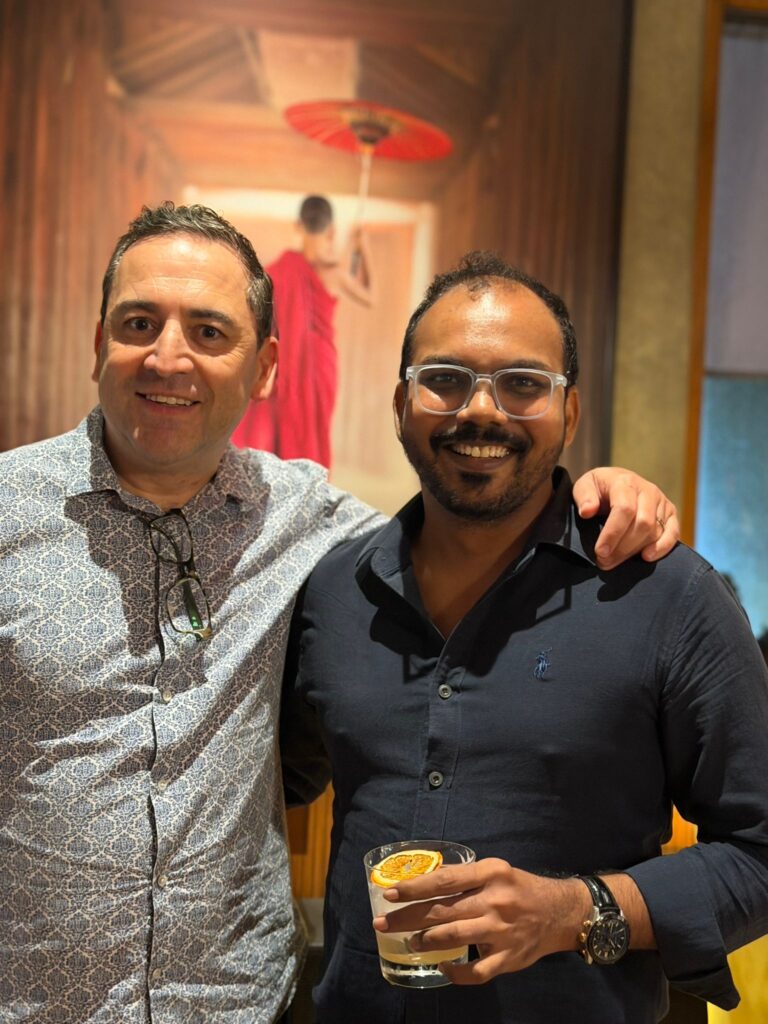
Naresh Chittathuru, Audio Business Company (ABC)
DirectlyAV Sparks Strong Interest
I also spent a great deal of time discussing DirectlyAV and the reaction was fascinating to watch.
There was clear intrigue around the idea of a more direct and intelligent route between premium manufacturers and professional integrators. Particularly one designed to remove unnecessary friction, improve pricing structures and create stronger relationships between brands and the people actually delivering projects.
Many integrators understood the concept immediately.
Not because they simply wanted cheaper products, but because they recognised the wider opportunity around access, support, efficiency and the ability to compete more effectively in a rapidly growing market.
Interestingly, some of the strongest conversations weren’t around products at all. They were around logistics, fulfilment and how the model could realistically support the Indian market properly rather than simply shipping products internationally and hoping for the best.
In fact, this week we are already speaking with a company regarding warehousing opportunities within India itself, helping ensure products can be held locally and delivered efficiently to support integrators properly as the model develops further.
That part is important.
India deserves proper infrastructure, proper support and long-term commitment from companies entering the market, not short-term opportunism.
A Market Still Defining Itself
Because while India is moving incredibly fast, some areas of the market are still developing in terms of process, system design, documentation and performance standards. That isn’t criticism. It’s simply the reality of a younger and rapidly evolving industry.
The mistake would be to view that as weakness.
Personally, I see it as possibility.
Some of the most exciting markets in the world are the ones still shaping their identity. There is less complacency. Less “this is how it’s always been done.” More willingness to adapt.
I also think there’s an important mindset lesson for our own market.
In the UK and Europe we sometimes spend too much time talking about economic uncertainty, pressure on margins and challenges within the industry. Those challenges are real of course. But spending time in India reminded me how powerful optimism can be inside a growing sector.
People there believe opportunity exists.
And when industries collectively believe that, behaviour changes. Businesses move faster. Partnerships form more naturally. New ideas are welcomed rather than immediately criticised.
That mindset has value.
Of course, India has its own challenges. Logistics can be difficult. Scale creates complexity. Consistency across projects and regions is not always straightforward. Relationships between distributors, integrators and manufacturers often operate differently to the UK model. None of this should be underestimated.
But markets don’t need to look identical to be successful.
In fact, some of the most successful companies over the next decade will probably be the ones willing to understand regional differences rather than trying to force global sameness onto every territory.
A Reminder Of What Matters
For me personally, the trip was also a reminder of something much simpler.
This industry is still full of good people.
People trying to build businesses. People supporting families. People passionate about technology and design. People excited about what the future might look like.
And sometimes stepping outside your own market is exactly what’s needed to remember that.