

 Daniel J Sait
Sonos 27 represents more than a software update. With AI-powered control, custom agents and products that can dynamically change their role within the home, Sonos is making a determined play to become a truly intelligent whole-home audio platform. EI takes a closer look at what matters most for installers.
All of the new features and Sonos’ ambitions for the future were presented in a recent keynote by CEO Tom Conrad at the first-ever Sonos Open House on September 1, 2026, in New York City.
For integrators, the most significant aspect of Sonos 27 is not a new speaker or redesigned app. It is the direction of travel.
Sonos is increasingly asking installers to think of its offering not as a collection of networked loudspeakers, but as a smart audio operating system for the home – one that understands the products connected to it, adapts to how they are being used and can interact effectively with AI, making the experience seamless and personalised.
At the heart of this is Sonos 27mcp. Available now in Early Access, it uses Model Context Protocol (MCP), the increasingly important open standard that allows AI assistants to interact with external systems and services. Sonos has effectively opened its system to AI platforms like ChatGPT and Claude, allowing a chosen AI to discover and control Sonos products.
That potentially changes the control proposition considerably. Instead of navigating an app or remembering a predetermined voice command, a user could ask an AI assistant to find a particular artist or style of music, play it in a particular room, adjust volumes or reorganise groups as part of a natural conversation. Interestingly, Tom’s demo was conducted with very little need to use or open the Sonos app.
For integrators, this is where Sonos 27 starts becoming particularly interesting. The smart home is steadily moving from users issuing commands to systems understanding intent. An open Sonos platform that can become one of the tools available to an AI agent potentially gives professionally installed Sonos systems a role within that emerging model.
The next stage will be Sonos 27voice, arriving in Early Access later this autumn. Developed specifically around music and Sonos control, this dedicated AI-powered assistant is also designed to understand natural, conversational requests rather than rigid commands.
A user might not remember an artist or track name, for example, but can describe what they remember. Alternatively, they could simply request music appropriate for cooking dinner, entertaining friends or winding down at the end of the day. The important distinction is that the system attempts to understand meaning, context and mood.
Sonos is also deliberately avoiding the idea that one assistant should control everything. Its longer-term answer is Sonos Custom Agents, targeted for release in 2027. Users will be able to create different agents within the Sonos environment, choosing their model, personality and voice. Rather than Sonos attempting to build one AI that does everything, specialist agents could perform different roles.
That open philosophy could prove highly significant for the custom installation market, particularly if AI agents increasingly become another layer within wider home automation systems. There is plenty happening outside AI too.
Hardware announcements
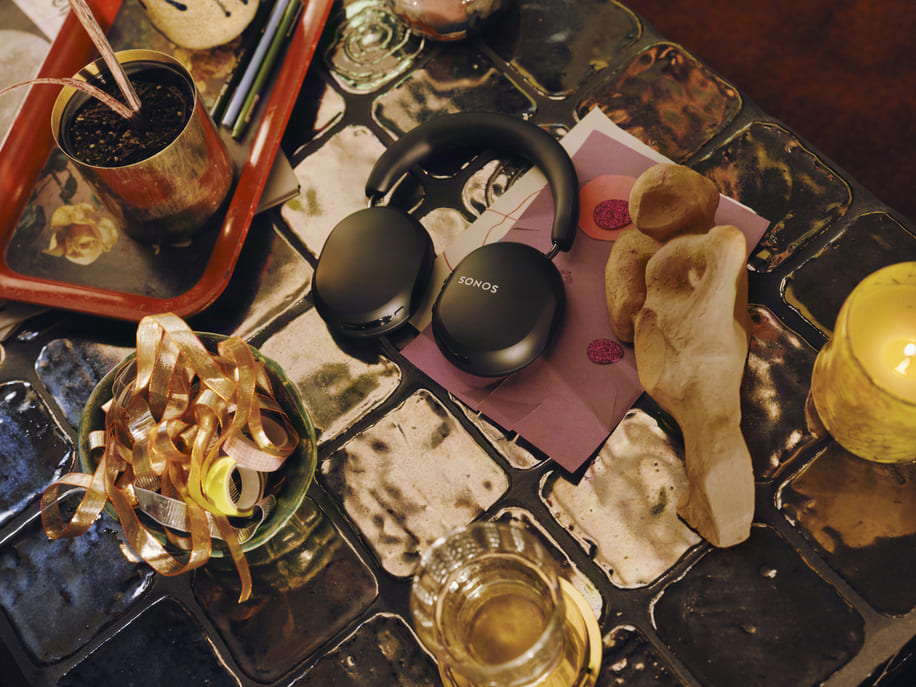
Sonos Ace Ultra (available from September 29) represents an important step in making headphones a genuine part of the Sonos ecosystem rather than a separate personal audio product. Headphone Linking, initially in Early Access, securely connects Ace Ultra directly to a Sonos system over Wi-Fi. Music can be pushed or pulled between compatible Sonos speakers and the headphones, meaning a listening session can effectively follow the user. Audio playing privately through the headphones can subsequently be handed back to a speaker elsewhere in the home.
That is a significant leap in functionality and makes Ace Ultra feel like a true Sonos product. For installers, it also means headphones could increasingly be considered when specifying the complete Sonos experience rather than treated as an optional accessory.
Also available from September 29 is Beam Ultra. The compact soundbar introduces nine custom drivers and promises to be a market beater at its size and price point. A redesigned centre channel is combined with AI Speech Enhancement, which detects human voices and provides four selectable levels of dialogue enhancement.
Perhaps an even clearer demonstration of the new thinking behind Sonos 27 is Portable Surrounds. Available since September 8, a matching pair of Sonos Play or Move 2 portable speakers can become wireless rear channels simply by being moved into position behind the listener in a room containing a compatible Beam Ultra, Arc Ultra, Arc or Beam (Gen 2).
Sonos Positioning Technology uses high-frequency sound to establish where the speakers are located and assign their roles. Move them away again and they revert to being portable speakers.
It is a deceptively important development. Products are no longer necessarily tied to a single purpose or room; the system understands where compatible devices are and changes what they do accordingly.
That same philosophy connects Portable Surrounds, Ace Ultra, Sonos Fabric, 27voice, MCP and eventually Custom Agents. Sonos wants its ecosystem to understand more about the home, the products within it and what the user is trying to achieve.
For installers, there is another practical message. When designing a Sonos system, the conversation should no longer stop with the fixed loudspeakers. Portable products and headphones increasingly belong in the specification too.
Sonos 27 therefore feels less like a collection of individual features and more like a statement about what Sonos believes comes next. The destination is a music system that does not just respond to commands, but increasingly understands context, location and intent.
That starts to look much more like a truly smart home music system.