
A masking screen is only as good as its ability to frame the image correctly. While modern projectors and video processors can accommodate almost any aspect ratio, many masking systems still rely on a limited number of preset positions. The result can be compromised presentation, unnecessary commissioning work and return visits when new content doesn’t fit the available presets. Mask Position Logic is the answer.
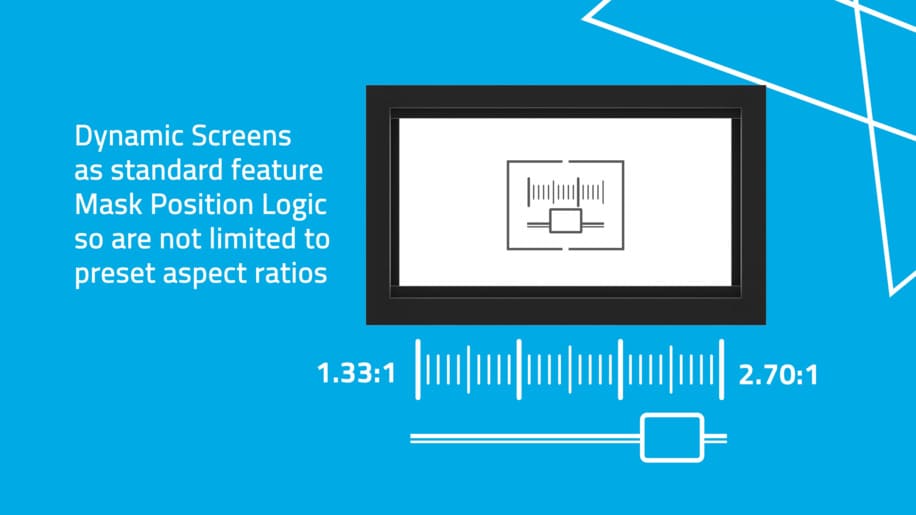
Display Technologies believes it has solved that problem with Mask Position Logic (MPL), a feature included as standard across its Dynamic Screens range. Rather than relying on predefined aspect ratios, the system automatically calculates the precise mask position required for virtually any supported image format.
Why traditional masking has limitations
Conventional masking systems generally fall into two categories. The simplest offer open and closed positions only, effectively supporting just two aspect ratios. More advanced systems introduce a series of presets for common formats such as 1.33:1, 1.78:1 and 2.35:1.
While this provides greater flexibility, it also introduces additional work during installation. Every preset must be programmed and tested on site, with installers deciding in advance which aspect ratios are likely to be required. If new content falls outside those programmed positions, further adjustments may be needed later.
As streaming services and modern cinema releases continue to use an increasingly diverse range of image formats, fixed presets can quickly become restrictive.
A different approach
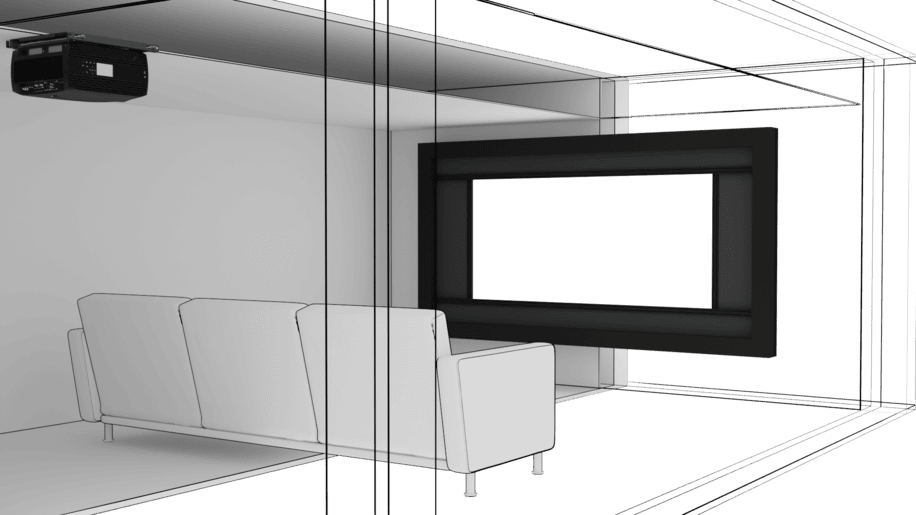
Mask Position Logic removes the concept of presets entirely. Instead of moving between fixed positions, the system continuously calculates exactly where each masking panel needs to sit based on the incoming aspect ratio. Every Dynamic Screen is capable of positioning its masks anywhere within its supported operating range, creating a seamless transition rather than stepping between predefined points.
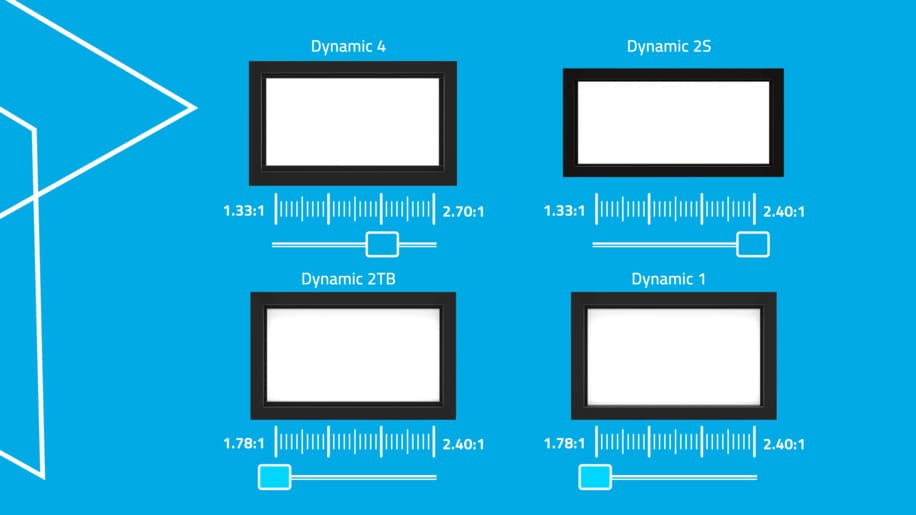
Depending on the model, Display Technologies says the system supports aspect ratios from approximately 1.33:1 through to 2.70:1, allowing the screen to accommodate virtually any content without requiring additional programming.
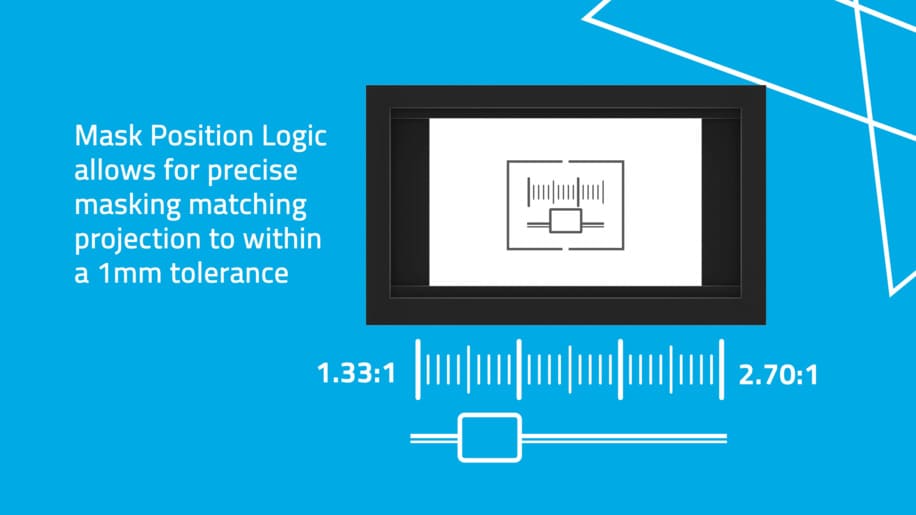
Accuracy is another key part of the design. Display Technologies states that Mask Position Logic positions the masking panels to within 1mm, ensuring black borders remain clean and consistent regardless of the aspect ratio being displayed.
For installers, this eliminates the fine manual adjustments that can often be required to hide small black bars or image overspill.
Designed for automated cinemas
The system has also been developed with modern control platforms in mind.
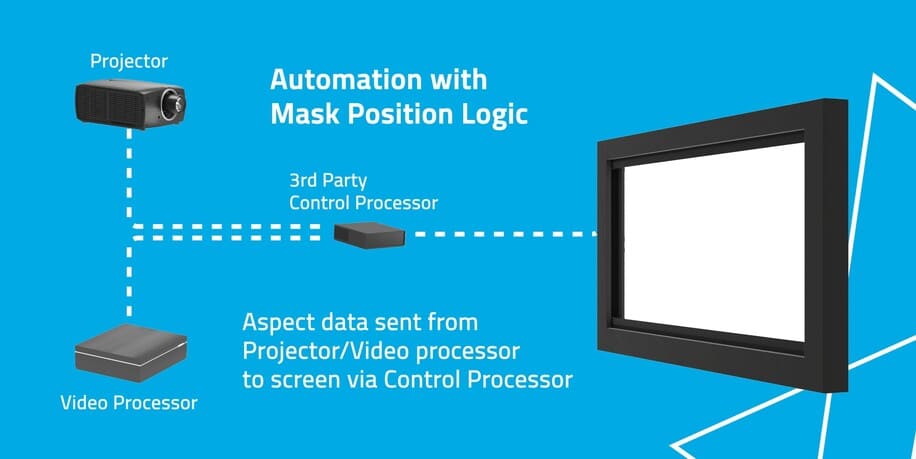
Rather than relying on manual calibration, aspect ratio information is passed automatically through the control system. The projector or video processor sends the current aspect ratio to the third-party automation processor using a straightforward command, such as 1778 for a 1.78:1 image. That information is then forwarded directly to the screen, allowing the masks to reposition automatically.
Because the mask positions are calculated rather than selected from stored presets, there is no commissioning table to build during installation and no ongoing maintenance if a client begins watching content presented in a different aspect ratio.
For integrators, this can significantly reduce setup time while ensuring the system continues to operate correctly as new content formats emerge.
Available across the Dynamic Screens range
Mask Position Logic is included across the entire Display Technologies Dynamic Screens portfolio, including the Dynamic 1, Dynamic 2S, Dynamic 2TB and Dynamic 4 models.
Each screen offers different masking arrangements and operating ranges, allowing installers to specify the most appropriate solution for the room while benefiting from the same underlying control technology.
Display Technologies describes Mask Position Logic as unique within the masking screen market and includes it as a standard feature rather than an optional upgrade.
For integrators designing dedicated home cinemas or premium media rooms, the attraction is straightforward. Instead of programming a handful of aspect ratios and hoping they cover every eventuality, the screen automatically positions its masks wherever they need to be, providing a consistently accurate presentation regardless of the source material.
The result is a cleaner installation process, fewer commissioning headaches and a cinema experience that remains faithful to the director’s intended framing every time the lights go down.
All the options are available from the SRND Group.