
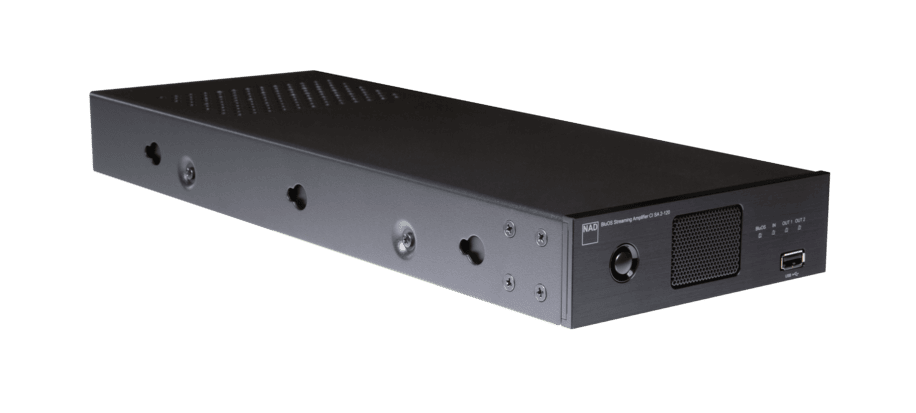
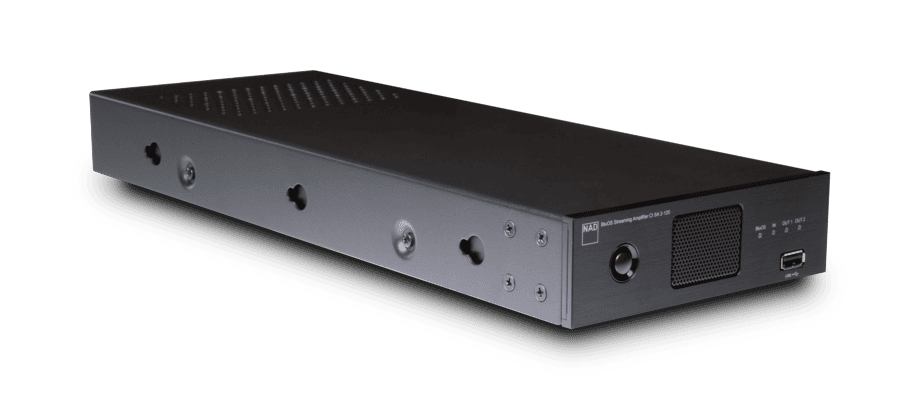
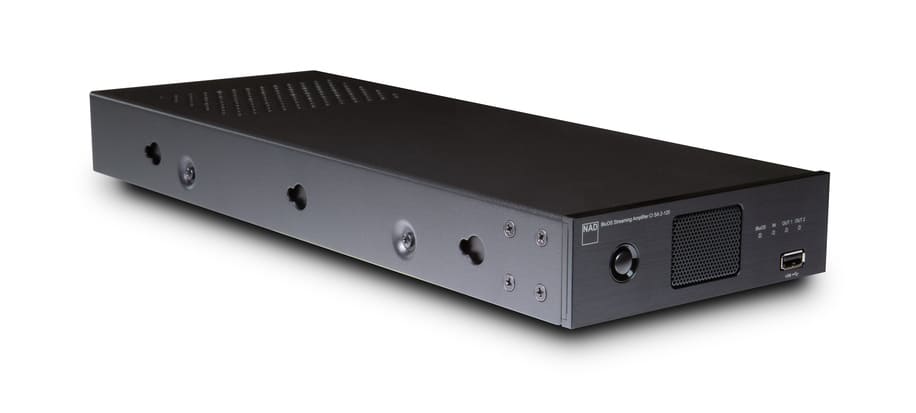
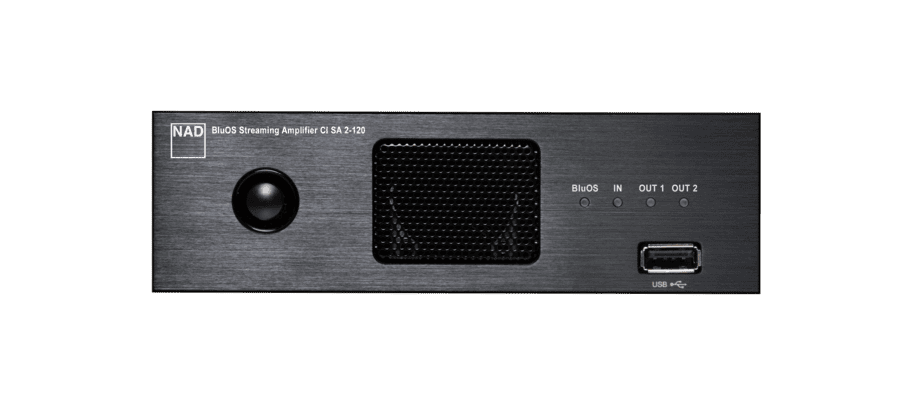
NAD’s new CI SA2-120 BluOS Streaming Amplifier packs amplified dual stereo hi-res streaming flexibility into a 1/3-width x 1U rack space!
NAD has been leveraging BluOS devices into the CI space for a few years now, but the latest series represents something of a spectacular coming of age for custom installation. No more so than the impressive little CI SA2-120. It is remarkable not only because three units fit side-by-side in a 1U rack space, offering six fully discrete stereo-powered zones delivering 2 x 60W, but also because the feature list leaves almost every other rack-mount streaming amplifier of any size looking positively frugal.
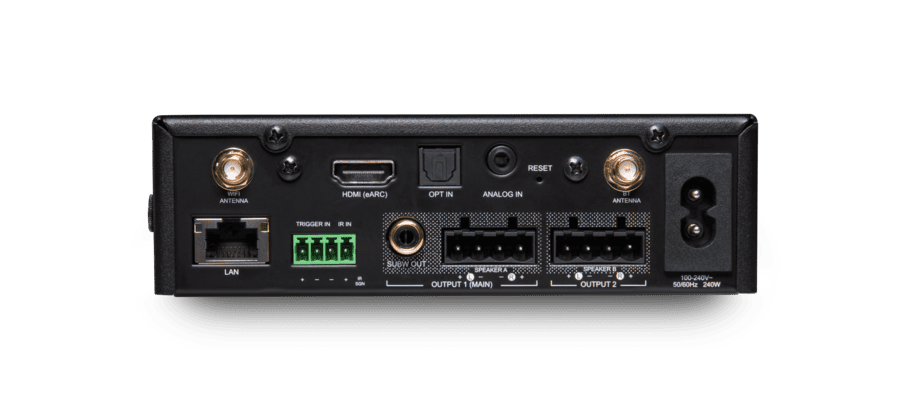
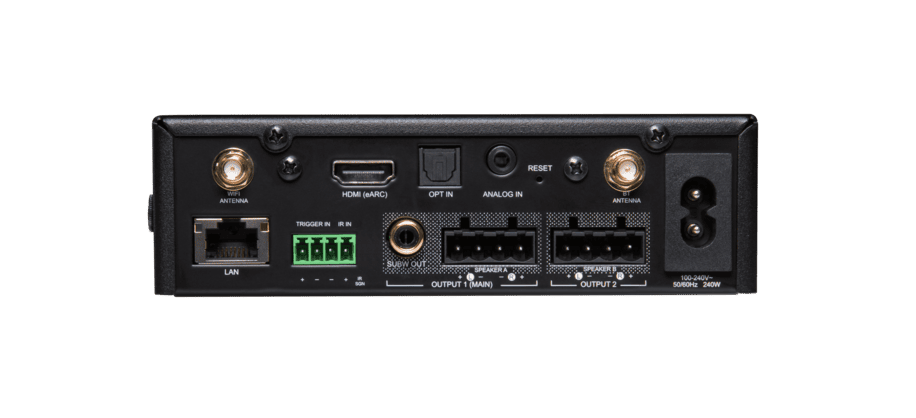
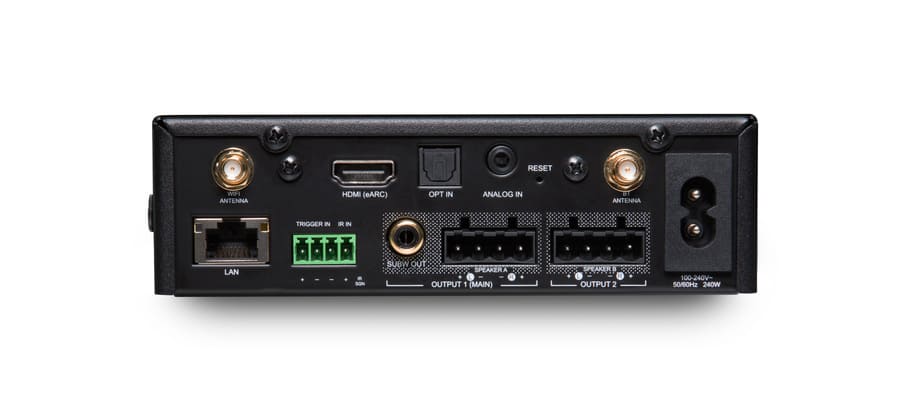
That comprehensive list includes Wi-Fi, RJ45 network, Bluetooth, USB, optical, HDMI eARC and analogue inputs, direct Digital amplifier modules with Dynamic Power Management which allows for doubling power to a single stereo zone without the need for bridging, a subwoofer output, 12V trigger and IR ports.
Being BluOS, the device also has possibly the widest fully certified control platform integration list of any streamer operating system. Even the BluOS app has matured into a superbly usable and highly robust platform and there is a new installer configuration utility that makes setting up multiple units very slick. (Watch out for a forthcoming review of that.)
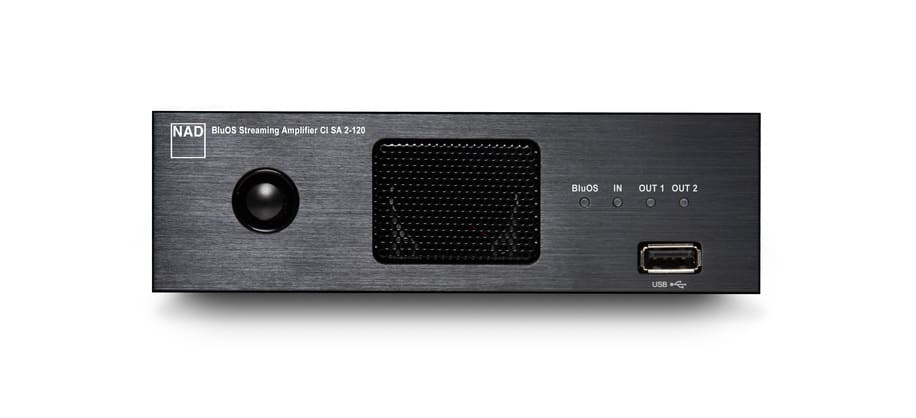
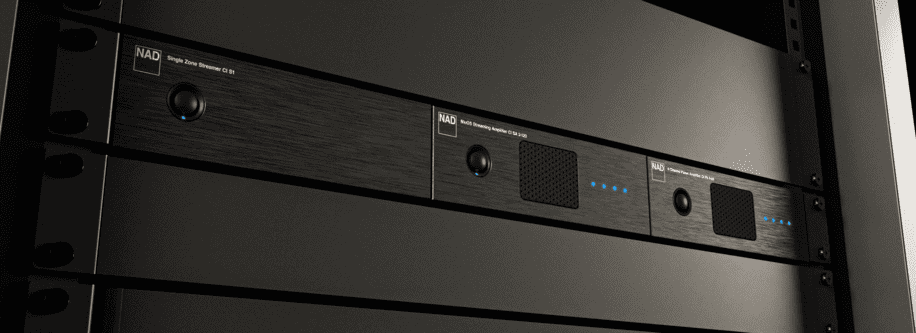
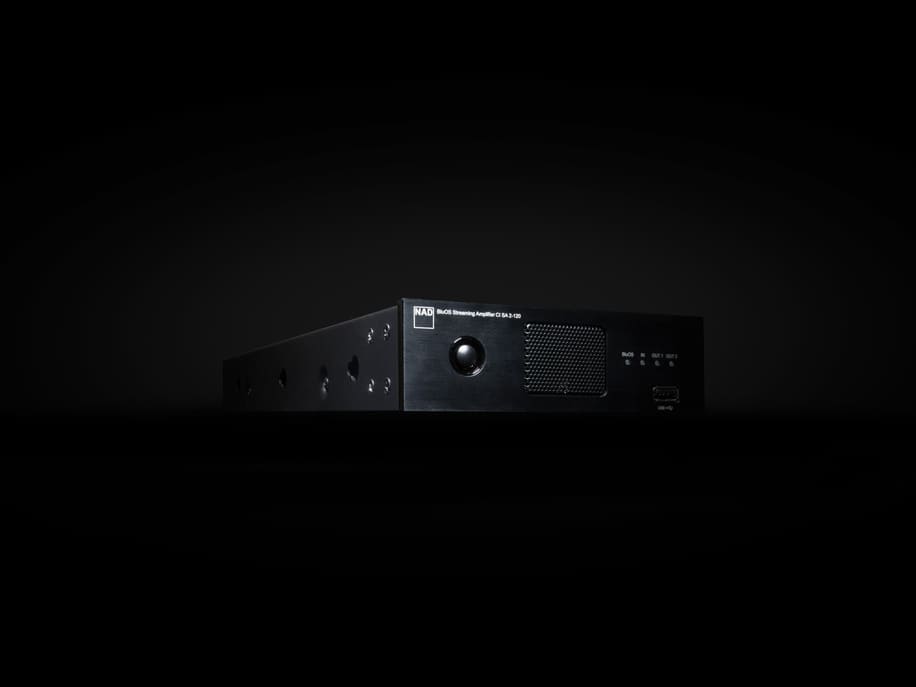
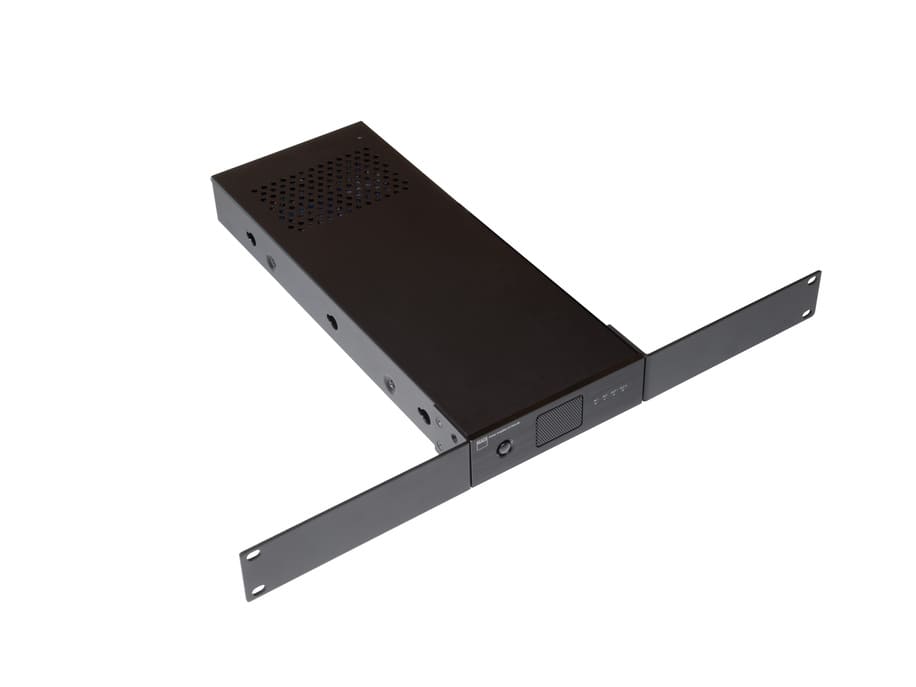
Straight out of the box, the device feels solid and substantial with a premium build quality and a front panel aesthetic that does not need to hide in a rack for fear of scaring small children. At 1U high and one-third of a rack width, it is disarmingly compact even if the footprint extends to full rack depth. Three units can be mounted side by side using NAD’s bespoke ChassisLink locking system, forming a tidy trio of independent stereo streaming amplifiers, supplied complete with rack ears and braces.
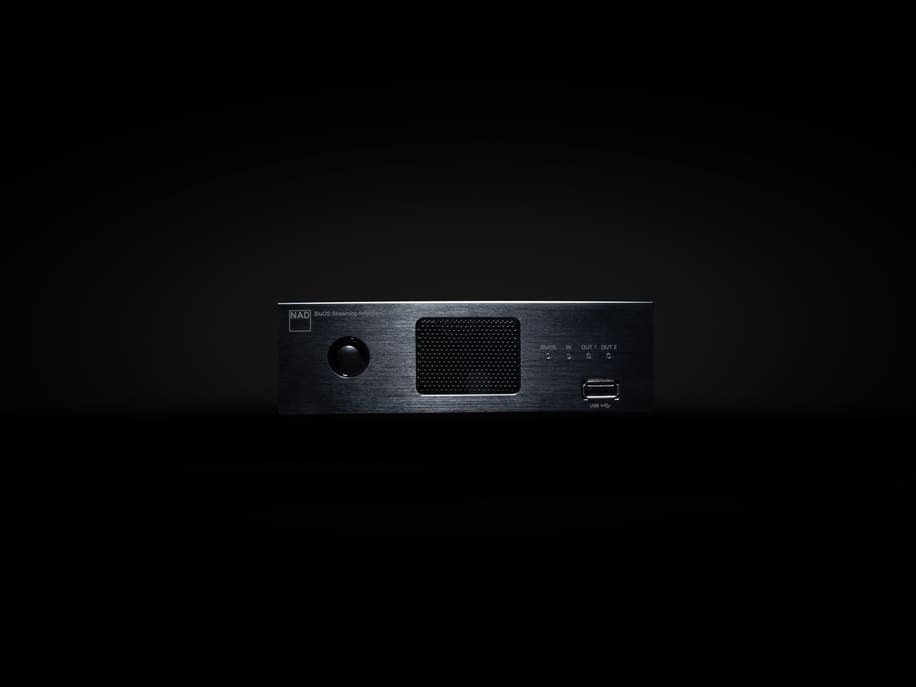
You could configure that trio as six stereo zones at 60W per channel or three stereo zones at 120W for larger rooms requiring more power. You could configure that trio as six stereo zones at 60W per channel or three stereo zones at 120W for larger rooms requiring more power and via the BluOS app you can create a single zone using all 4 channels if you’re looking to spread the audio across a larger space. The single subwoofer output can be used in zone 1 and configured with the latter powerhouse configuration and both zones can be paired with a network subwoofer from sister brand Bluesound. Amplifier power is supplied by NAD’s well-respected Direct Digital amplifier modules, which run very cool.
At this point, I know what you are thinking, because I was thinking it too: could six CI SA2-120 units deliver 12 fully powered stereo zones in just 2U of rack space? More importantly, could they do so without heat-blistering the paint on the rack when driven hard? Officially, no. The setup guide diagrams show a 1U space above and below each trio. But who reads setup guides anyway?
To test the point, we drove our review sample flat out on a bench (with no underside cooling) at 80–85% volume to both zones for most of the day, or rather until the neighbours came home and complained about the noise. The unit did not quite reach 45°C on the top panel and the cooling fan, which draws air from the front and exhausts through the top vents, had not yet activated. (We later discovered it does so at 50°C.) Conclusions from the EI test bench suggest that a whole lot of multi-room love is available from just 2U of rack space, which pretty much redefines the density of powered zones possible in a rack.
Practically, the CI SA2-120 is supplied with a pair of stereo Phoenix connectors featuring the latest Wago-style releasable terminal clips to eliminate the need for a screwdriver, along with a traditional micro Phoenix four-way connector for trigger and IR. Two 10cm antennas are supplied for Wi-Fi and Bluetooth, although I cannot help feeling they will often remain in the box given the Ethernet LAN connection and the limited usefulness of Bluetooth in large integrated projects. Many installers will probably prefer not to upset their carefully crafted rear-panel aesthetic.
BluOS power
Unsurprisingly, given the BluOS heritage, the CI SA2-120 really settles into its stride on the software side. In a market crowded with streaming solutions, BluOS has earned a reputation for being both robust and refreshingly intuitive. It supports a wide ecosystem of streaming services, handles high-resolution audio with ease and delivers a control experience that clients actually enjoy using rather than tolerate.
Setup is blissfully straightforward too and a hard reset remains the same as it has been since the original Bluesound Node: power cycle the unit while holding the power button until the status light flashes. The amplifier appears in the app, checks for updates and allows you to choose a 1×2 or 2×2 setup, rename each zone and add streaming services before playing the first track. For the end user, a dedicated iPad or Android tablet running BluOS provides a slick and fully integrated multi-room audio controller. It also removes the need for installers to become control system programming wizards.
Sonically, the CI SA2-120 shares much of the character of the recent Powernode and its derivatives. It is crisp, detailed and fast, erring towards audiophile involvement rather than party-animal exuberance. There are basic tone controls within the app, but the real tuning potential will come from the forthcoming Dirac integration. NAD is currently working through approvals and licensing. There will be a Dirac charge per unit, but as an optional add-on it could prove an easy win for clients seeking the highest levels of performance and room integration.
Taken as a whole, the CI SA2-120 feels unapologetically focused on the realities of custom installation and clearly benefits from a deep R&D dive into the sector. Flexible deployment, efficient use of space, a control platform that clients will not constantly call about and a genuinely useful feature set all combine within remarkably compact dimensions. As part of NAD’s broader CI Series, the modular approach allows integrators to build systems tailored to the brief, scaling up or down without losing coherence.
Surely it must be expensively priced then? Not at all. Even the retail price is surprisingly accessible at £1399, offering plenty of scope to leverage NAD’s modular approach into a comprehensive multi-room audio system without bankrupting the client. You could argue the approach lacks video or multichannel capabilities. Yet doing so would arguably undermine much of its appeal to installers and end users alike by adding complexity to what is otherwise an incredibly intuitive and robust multi-room audio platform.
Oh, and did I mention you can realistically create 12 stereo zones in a 2U rack space? Outside the residential market, that has enormous potential for projects in pubs, clubs, retail, entertainment and hospitality venues too. Within its remit of delivering multi-room audio for installation projects, I would go so far as to say the CI SA2-120 is a rare example of a truly ‘perfect’ CI product.