

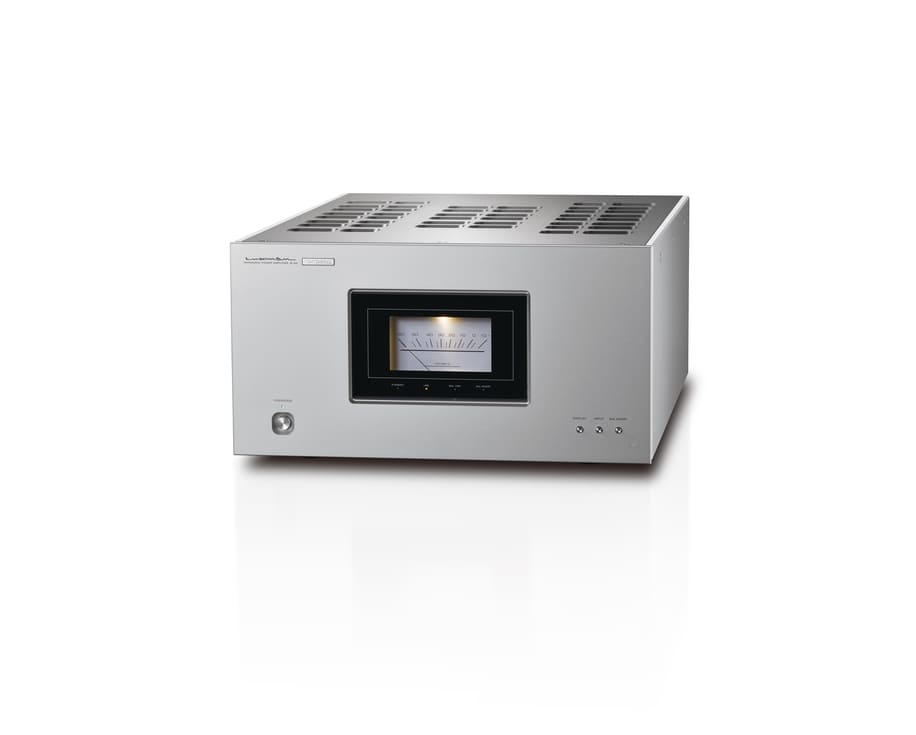
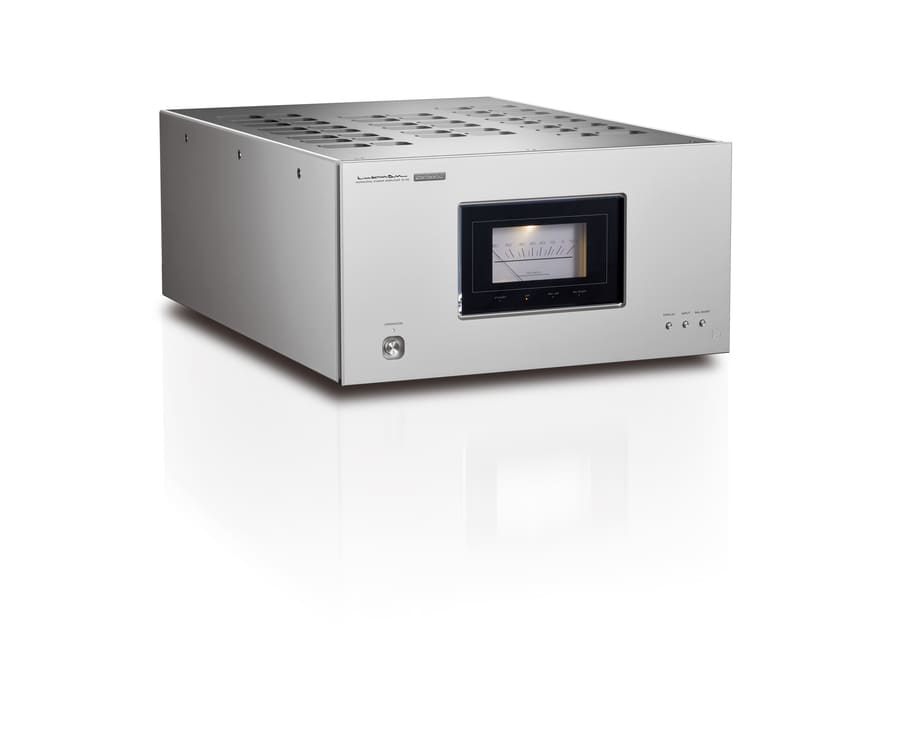
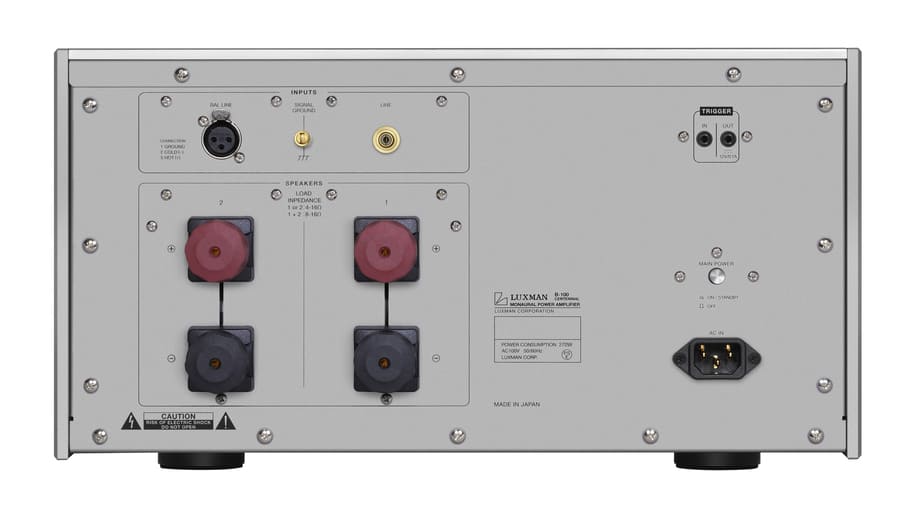
High-end audio manufacturer Luxman has launched its finest-ever power amplifier: the Luxman B-100 Centennial.
The B-100 Centennial – or B-100C – is Luxman’s first mono power amplifier since the B-1000f, which launched two decades ago to mark the company’s 80th anniversary.
Luxman has poured everything into it – its Class A heritage, its latest LIFES 1.1 feedback engine, zero-compromise 4×4 architecture and solid build quality.
The B-100C delivers 125 watts into 8 ohms, rising to 250 watts into 4 ohms, with an instantaneous peak output of 1,000 watts into 1 ohm. Achieving this level of output in a pure Class A design would require an exceptionally large power supply and generate significant heat. Luxman’s solution is an output-stage architecture that combines the benefits of Class A and Class AB operation.
The B-100C operates in pure Class A up to 25 watts (into 8 ohms), with the output devices conducting continuously throughout the signal cycle. Beyond this level, the amplifier transitions into Class AB, allowing it to supply substantially greater power without the heat and power consumption that continuous Class A operation at such levels would entail.
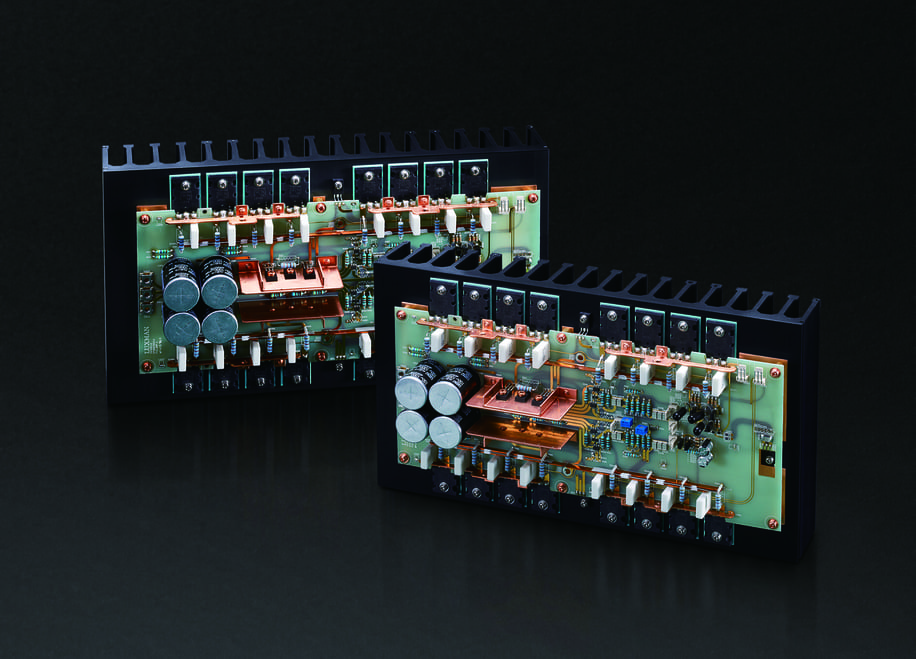
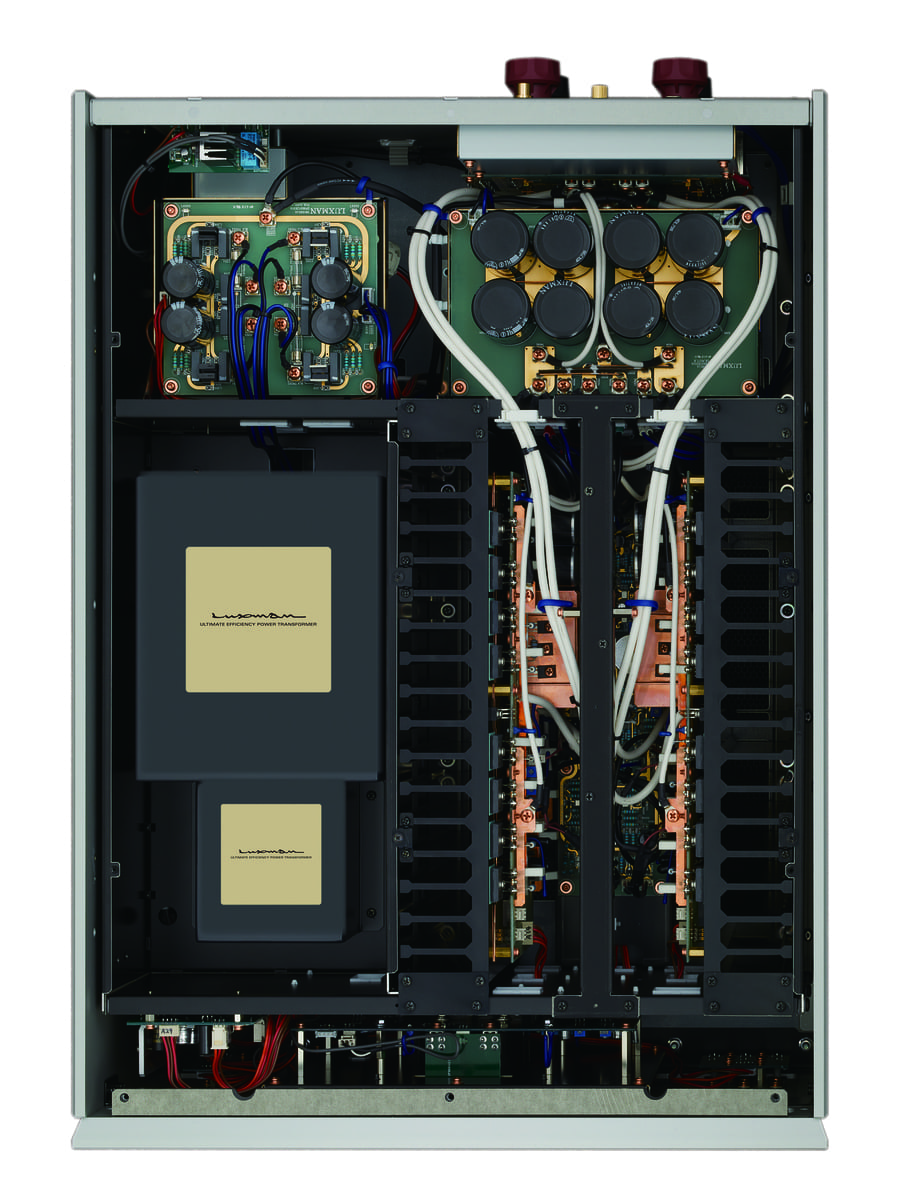
The B-100C’s output stage employs a 4×4 configuration, with four quadruple-paralleled, triple-stage Darlington push-pull modules per amplifier. Its power supply features a highly stable EI-core transformer with flat copper windings, designed to minimise losses and ensure strong coupling, backed by 16 10,000μF filter capacitors providing a total capacitance of 160,000μF.
At the heart of the B-100C’s architecture is LIFES 1.1, the latest evolution of Luxman’s proprietary amplifier feedback circuit. Standing for ‘Luxman Integrated Feedback Engine System’, LIFES builds on the company’s ODNF technology, feeding back only the distortion components detected by comparing the input and output signals, rather than the original music signal itself.
This approach is designed to combine the low distortion, linearity and stability associated with negative feedback with the natural openness and vitality often attributed to non-feedback designs. In LIFES 1.1, Luxman has further refined the circuit by using parallel differential-detection circuitry to reduce distortion and improve precision.
100 micrometre-thick, gold-plated, peel-coat printed circuit boards are used throughout every audio signal stage. By removing the solder mask and residual flux from signal paths, dielectric effects are minimised, which further preserves signal integrity and particularly benefits high frequencies.
To achieve the loudspeaker drive capability demanded of a reference-class monaural power amplifier, every aspect has been engineered for ultra-low impedance signal transmission. Newly developed large-gauge output conductors carry the amp’s output signal with minimal resistance, paired with a newly designed heavy-duty output coil and low-resistance speaker relays.
Every circuit component has been carefully considered – not just major elements such as the power transformer and high-capacity filter capacitors, but every resistor, capacitor and internal connection wire has been meticulously evaluated before selection.
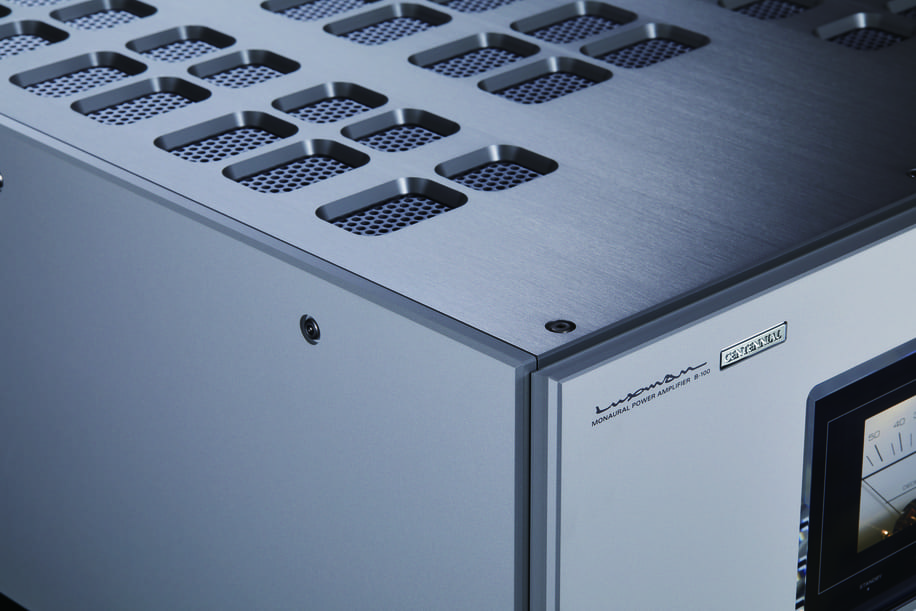
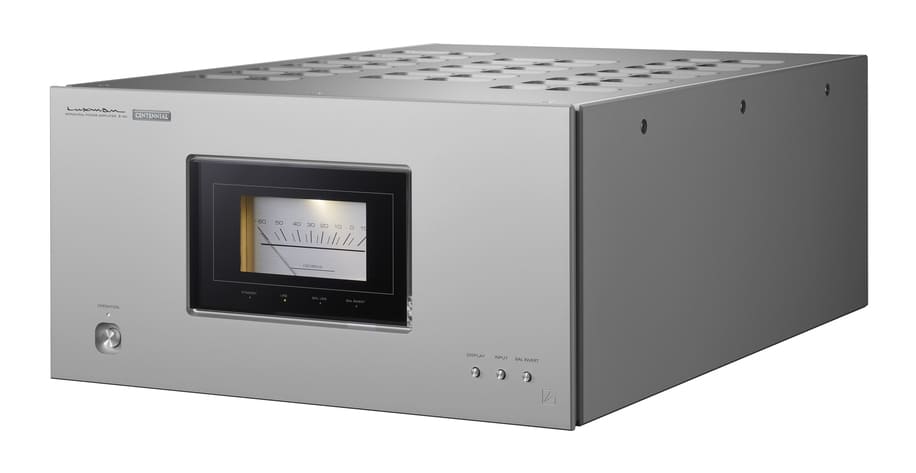
Finished in Luxman’s signature ‘Blasted White’ silver finish, the B-100C features Luxman’s loop-less chassis construction, engineered to eliminate increases in ground impedance caused by chassis currents while isolating the circuitry from unwanted magnetic interference.
Its foundation is a rigid dual-layer chassis base, formed by laminating 2.3mm and 3.2mm steel plates into a robust 5.5mm-thick structure. Supporting the amplifier are specially designed cast-iron density gradient isolation feet, engineered to block external vibrations while efficiently dissipating vibrations generated within the chassis itself.
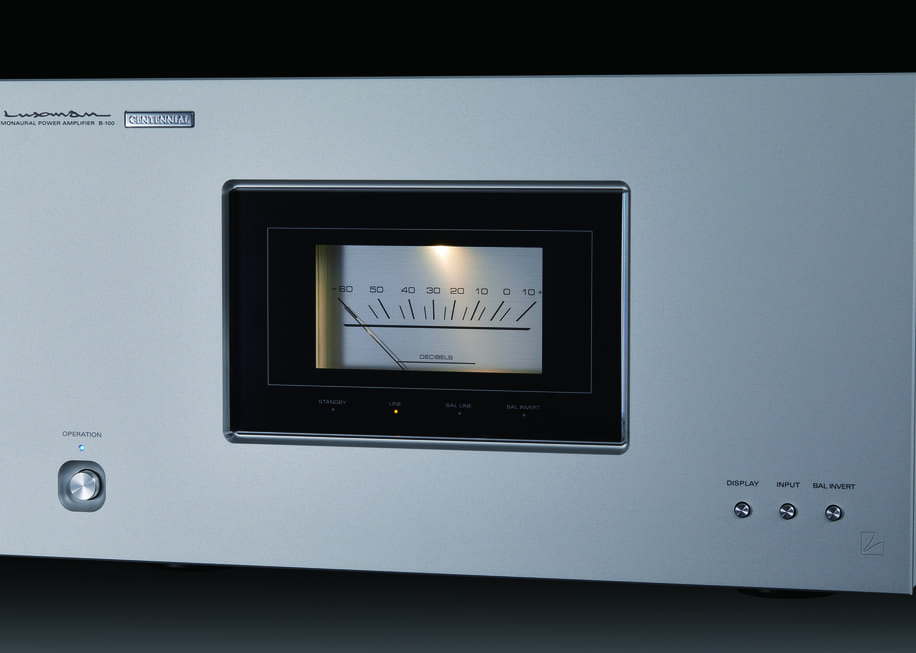
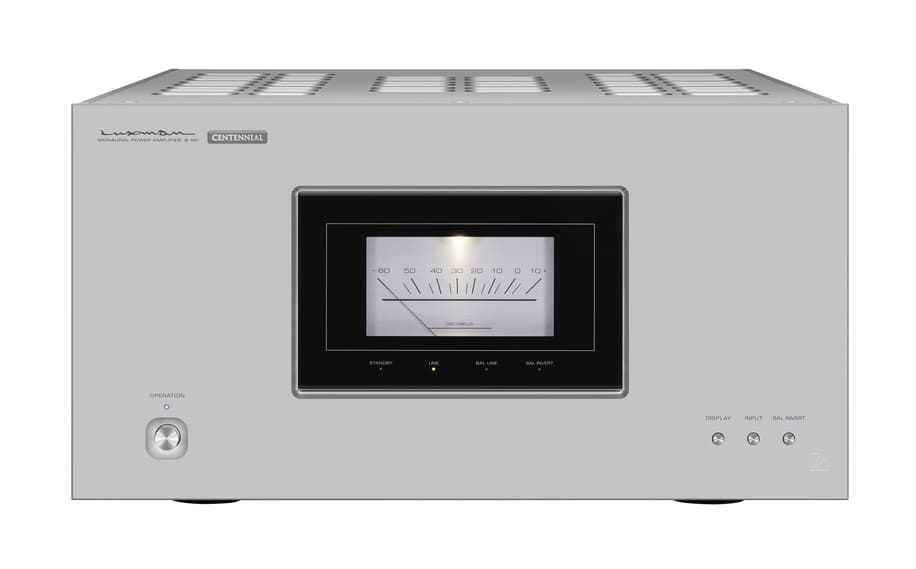
A large analogue meter sits front and centre, showing real-time signal output as its needle dances to the music.
The B-100C monaural power amp is available in the UK from October at an RRP of £44,000 for a stereo pair (or £22,000 each).