
 Daniel J Sait
As LG and Apple announce a new range of connected home products, EI asks whether the involvement of global technology giants is growing the smart home market or potentially holding it back.
Here we go again. Another major technology announcement, another collection of connected devices and another promise to make our homes smarter, simpler and more intuitive.
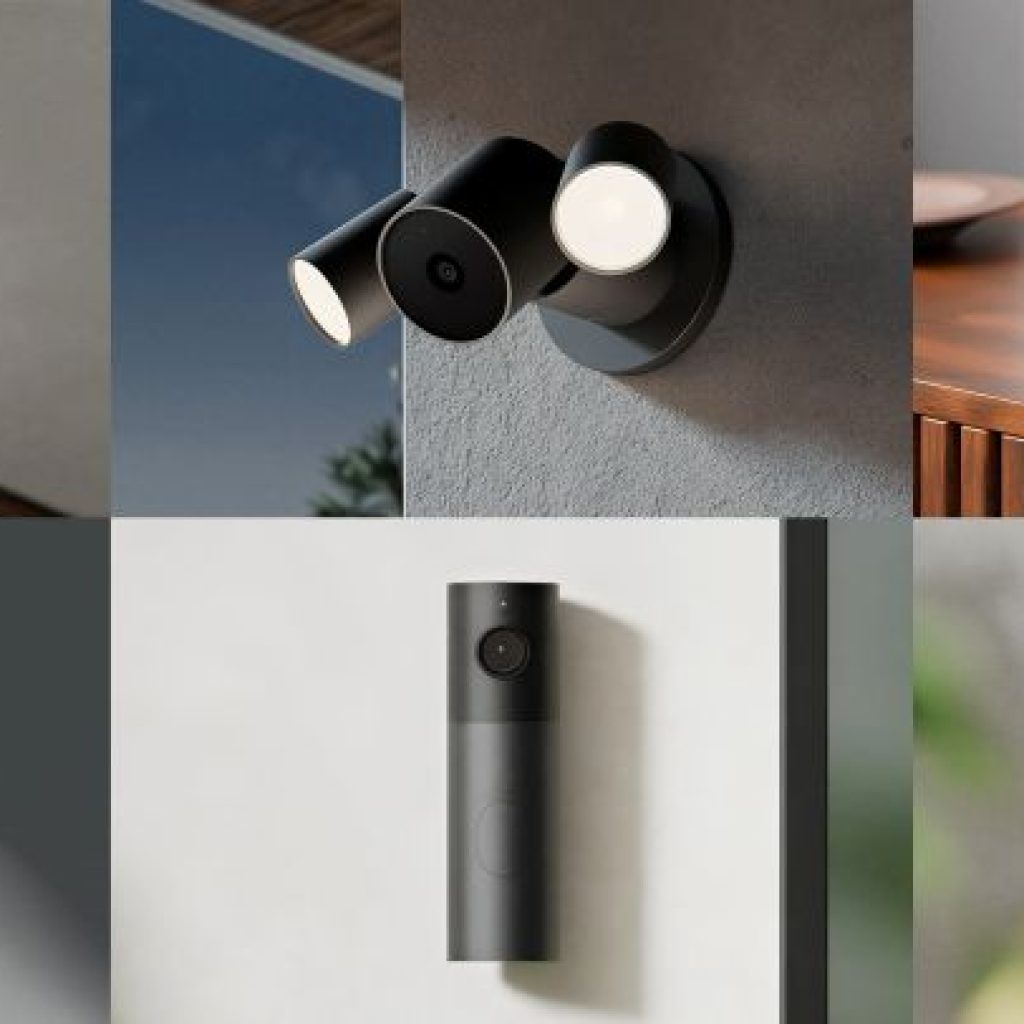
This time it is LG Electronics and Apple, which have announced a jointly developed range of smart home accessories, including indoor and outdoor cameras, a video doorbell, smart lock, thermostat and temperature sensor.
The products have been developed specifically for the Apple Home ecosystem, with LG contributing its experience in home appliances and Apple bringing its expertise in software, connectivity and user experience.
The new range begins arriving in December, with cameras and a video doorbell coming to the UK, while the wider collection will initially be available in North America.
On paper, it all sounds rather promising for end user enthusiasts. Two enormous companies combining their resources to make the connected home more accessible, easier to operate and, importantly, more appealing to ordinary consumers.
But for the professional smart home installation industry, announcements like this raise an interesting question. Are these developments helping to grow our market, or could they actually be doing more harm than good?
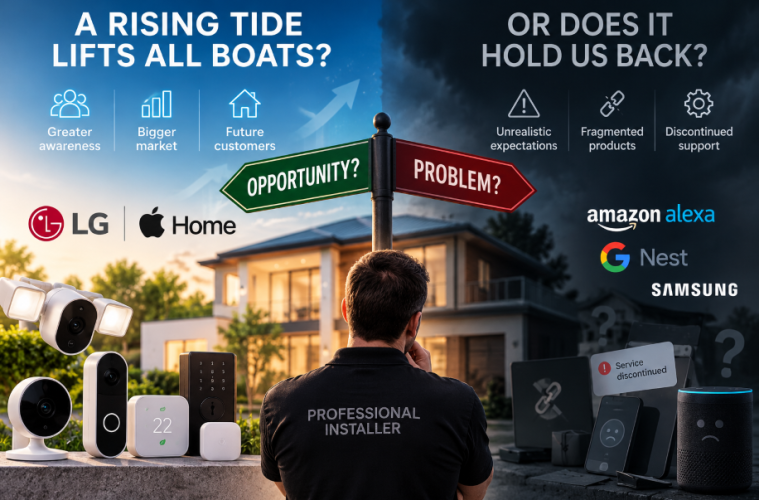
A rising tide lifts all boats?
There is certainly a strong argument that anything which increases public awareness of smart home technology is ultimately good news for professional installers.
Apple and LG have something that even the largest companies in our sector cannot match: extraordinary consumer reach.
If their combined marketing efforts encourage millions of people to consider how connected technology might improve their homes, surely that creates opportunities for everyone?
The theory is someone starts with a smart doorbell, adds a connected thermostat, experiments with lighting control and eventually begins to appreciate the possibilities of a more comprehensive system.
At some point, the limitations of a collection of individual products might become apparent and that is where the professional installer enters the picture.
There is a familiar progression in other areas of technology. People begin with an accessible product, develop an interest and eventually seek something more sophisticated.
Do smart homes follow the same pattern? Data on this is in short supply, with evidence on either side being largely anecdotal.
Another important point to consider, the professional installation industry is not necessarily competing for the same customer who wants to fit a £100 camera or operate a few lights from their phone. But today’s curious consumer could become tomorrow’s professionally installed smart home customer.
In the Hi-Fi world people started off with a modest system and built up, but that does not mean a smart home environment looks the same.
Haven’t we heard this before?
The counterargument is that we have been hearing variations of this story for a very long time.
Google, Amazon, Apple and Samsung have all invested heavily in establishing themselves within the ‘connected home’. Each has promoted a vision of convenient, integrated technology that will fundamentally change domestic life.
There have certainly been successes. Smart speakers, connected cameras, video doorbells and lighting products have become familiar features in many households.
But has that translated into the widespread adoption of genuinely integrated smart homes that was once predicted?
That is much harder to establish.
Amazon’s Alexa brought voice control into millions of homes, but the company has also had to rethink aspects of its strategy and investment in the platform. Google has experienced its own difficulties, including the decision to discontinue Nest Secure, leaving customers with equipment that could no longer perform its original function.
These examples highlight a particular concern. When a consumer buys technology intended to become part of their home, they might reasonably expect it to remain useful for a considerable period.
A smartphone being replaced every few years is one thing. A home security system or heating control installation becoming obsolete because a manufacturer changes direction is quite another.
Professional installers understand this distinction particularly well. They are often expected to support systems for many years, long after the initial installation has been completed.
So what happens when the consumer’s first experience of a smart home involves unreliable connectivity, confusing compatibility, discontinued services or products that fail to deliver on their promises?
Does that experience encourage them to seek professional help, or simply convince them that smart home technology is more trouble than it is worth?
What exactly is a smart home?
There is another issue worth considering, and perhaps it is the most important of all.
Are the technology giants actually selling smart homes, or are they selling collections of smart products?
There is a significant difference.
A camera that sends an alert to a phone is useful. A thermostat that can be adjusted remotely is convenient. A door lock that recognises an authorised smartphone is clever.
But does owning all three constitute a smart home?
From an EI prespective, the answer would be no. The real value comes from bringing different technologies together into a coherent system that responds to how people live, often without requiring them to interact with individual devices at all.
Lighting, shading, climate control, entertainment, security and networking become elements of a wider experience rather than isolated products.
To be fair, Apple and LG are explicitly trying to address this issue by developing products that work together rather than simply sharing a common app. The growing adoption of standards such as Matter and Thread also represents a serious attempt to overcome some of the fragmentation that has troubled the ‘DIY’ market.
These are positive developments and should not be dismissed out of hand.
However, there remains a considerable distance between a handful of devices working together and the level of integration, reliability and personalisation that a professionally designed system can deliver.
The danger, perhaps, is that consumers come to associate the term ‘smart home’ exclusively with relatively inexpensive accessories and the occasional voice command.
If that becomes the accepted definition, does it make explaining the value of professional integration more difficult?
Or does it provide the perfect opportunity to demonstrate what a truly integrated home can achieve?
Competition or opportunity?
There is also the possibility that these two worlds are not nearly as separate as they once were.
As consumer technology improves, the gap between DIY and professional systems could narrow in certain areas. Products that once required specialist knowledge are becoming easier to configure, while interoperability standards are creating new possibilities for combining equipment from different manufacturers.
That could place pressure on some of the more straightforward work traditionally undertaken by installers.
Equally, it could allow professionals to deliver solutions to customers who might previously have considered a fully integrated home beyond their budget.
And perhaps that is where the real opportunity lies. Rather than seeing Apple, LG, Google or Amazon purely as competitors, installers might increasingly find themselves working with technologies that customers already own and understand.
Of course, that assumes these products offer the reliability, flexibility, support and longevity required for professional deployment.
Those are not insignificant considerations.
So, good news or bad news?
The answer is somewhere in the middle, as ever in an industry that is used to fending for itself, smart home installers need to make what they can of these developments.
The involvement of major technology companies undoubtedly brings investment, publicity and innovation to the smart home market. It helps establish connected living as something normal rather than an expensive curiosity reserved for a relatively small number of homeowners.
That has to be worth something.
But there is also a risk that endless promises of effortless automation, followed by experiences that do not quite live up to the marketing, could damage consumer confidence.
Perhaps the most interesting question is whether the professional smart home industry has actually benefited from the enormous consumer investment made over the past decade.
Have Alexa, Google Home, Apple Home and the various connected ecosystems created a pipeline of customers who eventually turn to professional installers?
Or have they established a parallel market that shares much of our terminology but relatively little of our approach?
What do you think, let us know at dan@essentialinstall.com