

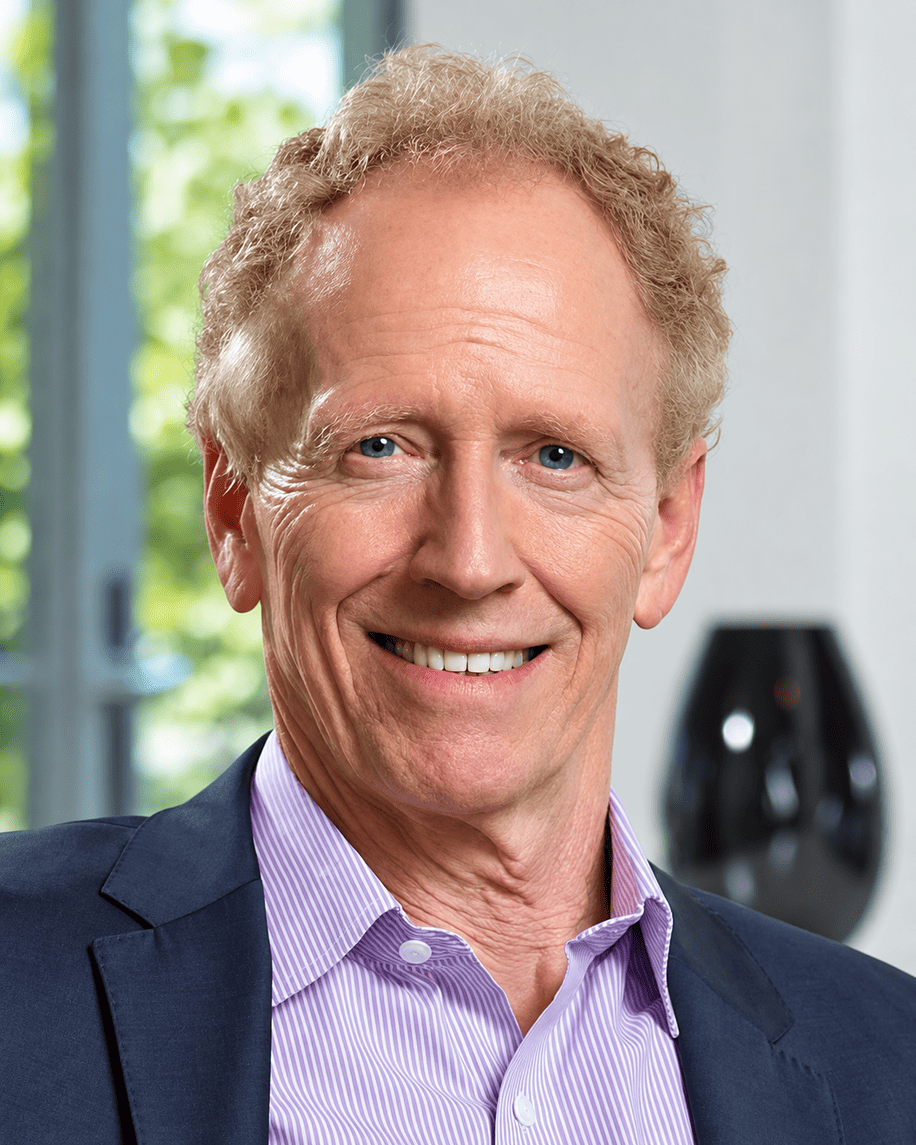
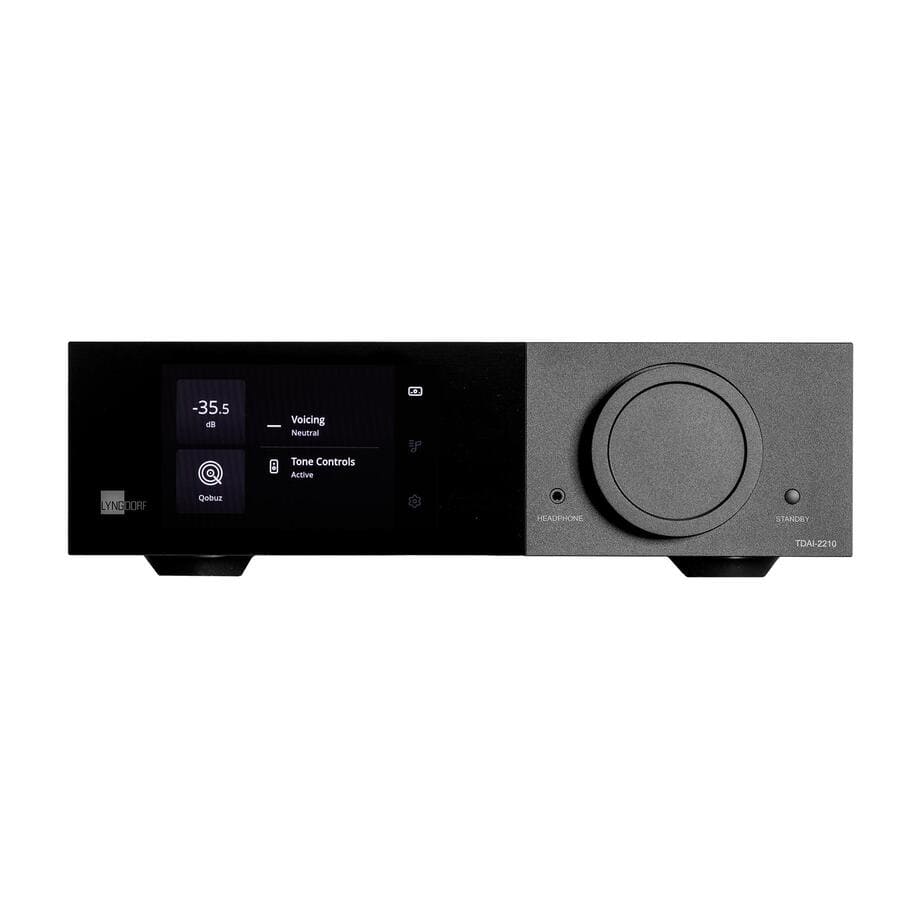
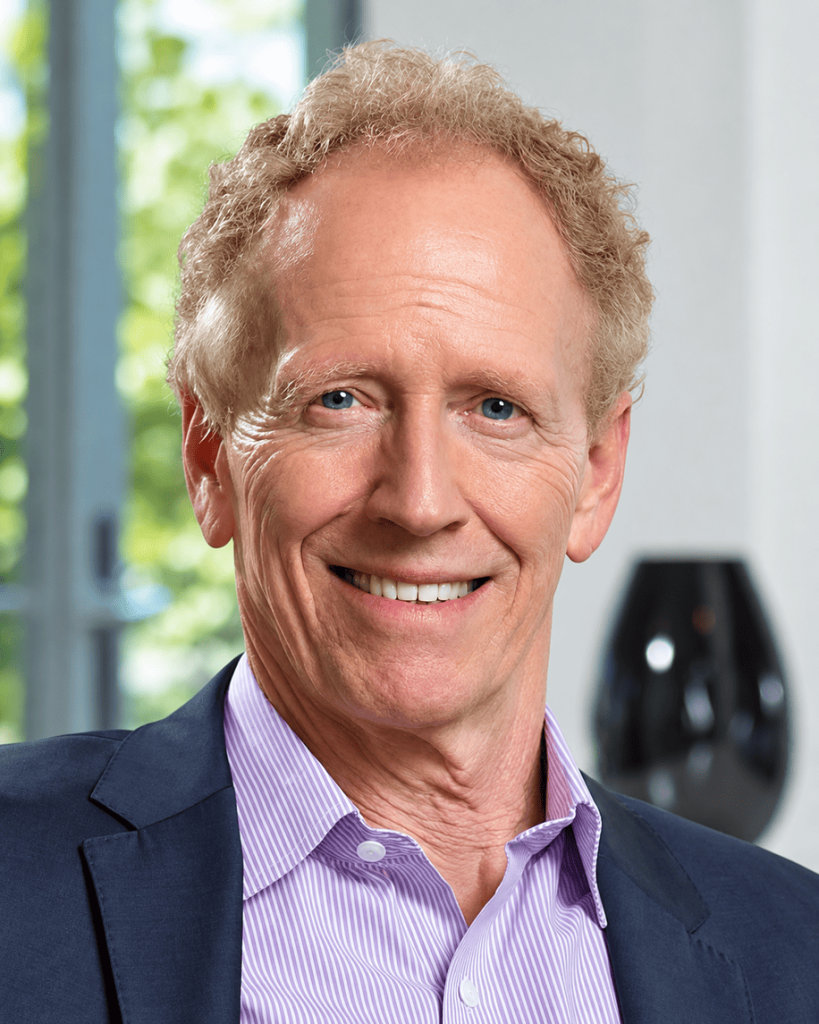
EI is delighted to deliver a fascinating exclusive Install Pioneer interview with this year’s recipient of the CEDIA Lifetime Achievement Award. Peter Lyngdorf is a Danish serial entrepreneur who founded retail chain HiFi Klubben and played a crucial role in establishing Steinway Lyngdorf, Lyngdorf Audio and DALI, as well as co-founding Purifi. Peter’s career has also included the development of Equibit digital amplification and RoomPerfect.
Where and why did your fascination with music and high-quality reproduction begin?
It began in 1963, when I was 10 years old and heard the Beatles on Danish radio. In those days the public broadcaster gave us one hour of pop music a day and I fell in love. I ran errands to earn enough for a Tandberg tape recorder so I could record the songs off the air, because an LP cost 100 kroner and that was a fortune. Then I started building loudspeakers, first for myself and then for friends. My father did not approve of the Beatles or the Rolling Stones and when I left home and got a full-time job at 15 – it was partly because I wanted to play my music all the time.
The fascination with music came first, and the fascination with reproduction came straight after it, out of frustration. What I heard from the radio and the records was never quite what I knew was on them. I have spent the 60 years since trying to close that gap. I call it the Hi-Fi virus and anyone who has caught it will understand. There is no cure.
You entered the audio business in the 1970s and went on to establish HiFi Klubben and then DALI. What did those early years teach you?
In the early 1970s I was driving to England and bringing Hi-Fi back on the ferry, two loudspeakers at a time. I met David Gammon of Transcriptors in a shop on Tottenham Court Road and he sent me 10 turntables on consignment, with no invoice. He got my business going. A few years later I became the European distributor for CerwinVega with six turntables in my bedroom and a 40-foot container of loudspeakers that my bank agreed to store in its canteen. I don’t think I could get a bank to agree to the same deal these days!
The early years taught me more about what people don’t want. I became disillusioned with how Hi-Fi was being sold. Everything was being cheapened; there were fake special offers. It felt unfair to the customers and it didn’t sit well with me. So, in 1980 I started HiFi Klubben as a club, using warranty-card mailing lists, with the idea that we would educate the customer.
A knowledgeable customer is a much better client than one who doesn’t know anything. Two of the first three banks I approached with my idea for a new type of Hi-Fi store said no. The third said, ‘That’s a damn good plan,’ and sent me down to the cashier for a loan check.
DALI came in 1983 when the dollar doubled and I could no longer import American speakers at a sensible price, so we had to make our own. DALI started as a ‘house-brand’ at HiFi Klubben. The lesson there was reliability, repeatability and consistency – without those you can forget everything else. The influence on everything since is direct.
Every company I have started has had two key rules: never lose focus on the customer and always be honest. And the two things I heard from customers in those early years – ‘it sounded better in the shop’ and ‘I can’t tell whether I’m being sold something good or something expensive’ – became the problems I have been trying to solve ever since.
Trying to solve the first problem led to RoomPerfect (room correction technology) and trying to solve the second one is the reason that HiFi Klubben and several of my own speaker companies have been so successful.
Your career has included building your own companies as well as owning and working with established names such as NAD and Snell Acoustics. Which periods or relationships taught you the most?
NAD taught me the most about product. I met Marty Borish in 1976 and joined the product committee. I was not an engineer – and I’m still not – but I was very good at asking questions. My questions were: why do we design an amplifier to drive a resistor, when it is supposed to drive a loudspeaker? And why do we test it with sine waves, when it is supposed to play music? Those two questions produced an amplifier that is still used as a benchmark more than 40 years later.
The lesson is that good engineering becomes a good product when someone insists it be judged under the conditions the customer will actually use it in. Later I became the majority owner of NAD, and to be honest, I lost a great deal of money on it. But I improved the reliability and I learned what it costs to fix a reputation.
Snell taught me the most about the real problem. Bill Osgood and I built loudspeakers that sounded wonderful in our demo room and then went into customers’ homes and sounded ordinary. That was the moment I understood that the room is the key problem in this industry – not the loudspeaker. In December 1992 we showed the Snell DSP 6000, the first full-frequency digital room correction system – it was light years ahead of the market.
The relationship that taught me the most about turning engineering into business was with Lars Risbo. He had an idea for a completely new fully digital amplifier in the 90s. I funded the project and we launched the TacT Millennium, the world’s first fully digital amplifier; Texas Instruments bought the technology in 2000.
Lars and I are still working together at Purifi today, thirty years later. You have to keep asking questions and you also have to find those people in the world who can do something nobody else can and then make sure they have what they need.

You became interested in digital signal processing and room correction at a time when many were suspicious of putting anything digital in the signal path. Why were you convinced you were right?
My ears convinced me, and so did the customers’ living rooms. By the early 1990s I had visited enough homes where excellent equipment sounded mediocre to know that the problem was not going to be solved with a better capacitor or a thicker cable. The room was doing 85 percent of the damage and you cannot fix a room with analogue electronics.
The only tool with enough precision was digital signal processing. So, the question was never whether DSP belonged in the signal path; it was whether we could do it well enough that the solution was better than the original problem.
In the beginning it wasn’t. The early systems corrected the frequency response at the listening position, and every time we did something that measured better there, it did not sound better. That confirmed the audiophiles’ fears – and they were right to be suspicious of that.
But it did not mean the idea was wrong; it meant we did not yet understand what to correct. It took another decade, a team of about thirty engineers starting completely from scratch and Jan Abildgaard Pedersen’s work on measuring in three dimensions with time information intact, before RoomPerfect existed.
What convinced me finally was demonstrations, not arguments. When you sit a sceptical audiophile in a normal living room, play his own record with RoomPerfect bypassed and then switch it in, the conversation is over. They hear the loudspeakers for the first time. I never tried to win the debate about digital in the signal path; I just kept letting people listen. And of course, once the amplifier itself became digital, the question became irrelevant. There is no analogue signal path left to protect.
RoomPerfect. How has your thinking about the relationship between loudspeaker, room and listener evolved over the years?
The biggest evolution in my thinking was from ‘correct the frequency response’ to ‘understand the room’. When we started, everyone – including me – assumed that getting the best measurements of the frequency response at the listening chair would give the best sound. Every time we did something that measured better, it did not sound better. It took years to accept that frequency response tells you a small percentage, maybe 15%, of what you need to know.
What matters is how the loudspeaker and the room behave together in time and in three dimensions. That is why RoomPerfect measures at random positions all over the room with a single microphone and why it corrects only what the room adds and leaves the loudspeaker alone.
We do not use predefined target curves in RoomPerfect because we don’t correct the speaker; the speaker stays the speaker. We’re interested in what is happening in the room and you can’t know that until you are actually in the room measuring.
Are there unsolved problems? Yes, always, that is what keeps me waking up with new ideas even after all these years. That is the part I still find exciting, helping more people have incredible sound in their own spaces.
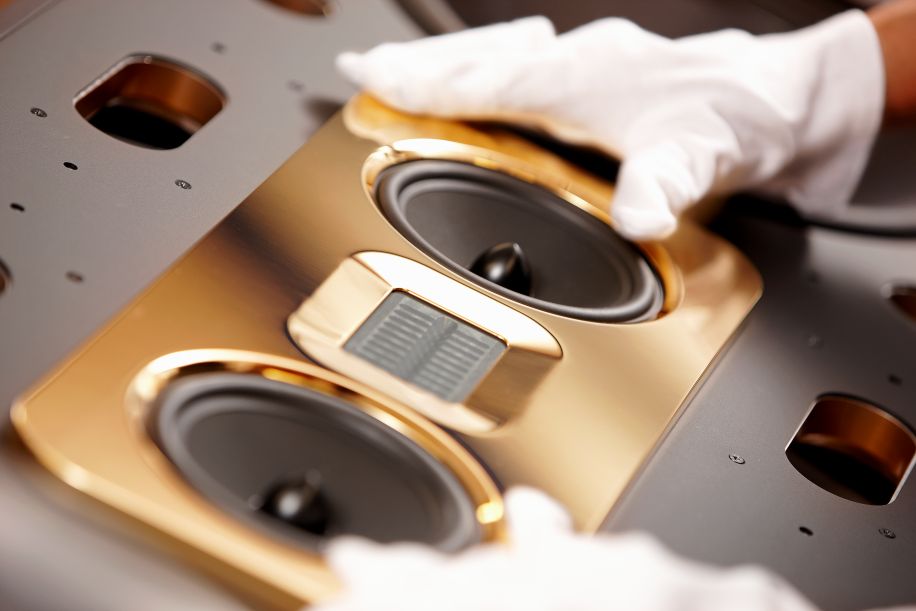
How did the relationship with Steinway & Sons begin and evolve?
It began with a customer. One of our Lyngdorf Audio customers happened to be close to the management of Steinway & Sons, and after we had installed RoomPerfect in his home he was struck by how a piano recording sounded. He made the introduction.
Steinway at that time was looking at how to bring audio alongside their pianos, and from our very first meeting it was clear that we shared the same fundamental values – an uncompromising commitment to quality and craftsmanship, and no interest whatsoever in doing something ‘good enough’. Within less than a year we had a proof of concept playing in New York for Steinway & Sons to audition.
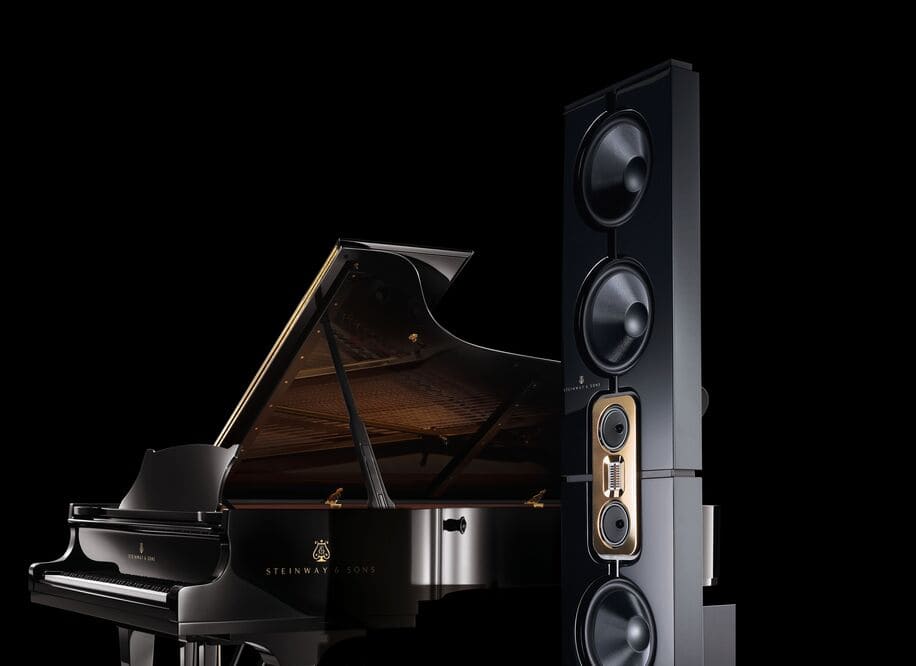
What Steinway demanded was very simple and very hard: the system had to reproduce a Steinway & Sons Model D concert grand to their satisfaction. Not to mine, not to a reviewer’s – to the satisfaction of the people who build and tune the instrument. The moment that mattered was when Steinway’s own team could listen to a recording through the system and tell whether the piano had been made in Hamburg or in New York. Before that, the difference was only audible with a live instrument in the room.
They were convinced from our first demonstration and their CEO offered us the full ‘Steinway & Sons’ name for our products – the first time in more than 150 years that it had gone on anything other than a piano.
Did it change my definition of high-end audio? Yes, because of the responsibility I felt then – and still feel today – to protect the Steinway name. For this reason, I truly wanted to rethink the entire process which also meant that our collection for Steinway & Sons had to be a closedloop system. With an integrated system approach, we can control many more variables and leverage each technology to its fullest. That gave us incredible freedom to design in a different way.
We must ensure that any speaker which carries the Steinway & Sons name lives up to their level of performance. To do this, you must protect the entire path – source, amplification, loudspeaker and room – working as one system and never compromised.
This summer in Vienna we played a Steinway & Sons Spirio Model D piano in unison with our Model C sound system, and I told the audience that if they bought the piano with our speakers, we would throw in the orchestra for free. It got a laugh, but I think the audience also got the point. Working with Steinway & Sons’ new Spirio pianos, we’re able to reproduce an orchestra experience with live piano in people’s homes – now that is truly extraordinary.
When developing something genuinely new, how do you distinguish between an idea that is simply technically interesting and one that can meaningfully improve the experience?
I have a very unscientific test: does it sound definitely better, in a normal room, to a normal person? Not ‘measurably different’. Not ‘better in the anechoic chamber’. Definitely better, in the kind of room our customers actually live in. There is nothing more satisfying than when we achieve something that is definitely better. In all the decades I’ve been in this business, I don’t think I’ve ever said no to an idea which truly improves sound.
I also go for improvements that are not individually audible – but things we may only assume are improvements or only barely measurable. This is in the belief that if you remove many tiny distortions which you may not hear, the sum of all those micro improvements will be audibly better. My teams know this and it also encourages them to think outside the box and not be afraid to try new directions.
I still like to listen to our products when they are being developed and wear the ‘customer’s hat’. I am not an engineer, which I have come to think of as an advantage: I have no attachment to the cleverness of a solution, only to whether it works.
As a non-engineer, I also get to ask all kinds of questions. Why? What does the listener get? Would they pay for it if they could not read the spec sheet? If you think you have a really good product, make sure it is still a really good product in places other than your own listening room. Most ‘technically interesting’ or ‘measuring perfectly’ ideas fail that test.
What do you think the best integrators contribute to the final performance of a system?
Everything after the factory gate. I can build the finest loudspeaker in the world in Denmark, and the integrator decides whether it ever sounds that way in the client’s home. We’ve been careful in building our network of partners because exceptional products only reach their full potential in the hands of exceptional integrators.
The best of them do three things: they understand the room before they choose the equipment, they take calibration seriously rather than treating it as the last hour of the job and they know the client – the music they love, how they live, what they will actually use. Those people are the closest to the customer, and in my companies the people closest to the customer have always been the most valuable people we have.
At my companies I like to invert the traditional management pyramid – the people closest to the customers should be on top and those in top management are at the bottom working to support those serving the end customers.
Where manufacturers could do more: honestly, we could stop making the integrator’s job harder. Too many products are designed to impress on paper and then need heroics to work in a real installation. Our whole philosophy is the opposite – RoomPerfect exists so that a system can be installed in an imperfect room and still be right.
We could all do more on training, on making calibration less dependent on a single expert, on giving integrators real acoustic knowledge rather than product brochures. And we should listen to them more. The integrator hears the complaint the manufacturer never hears. A good manufacturer treats that feedback as free research and development.
After more than five decades in audio, what problems or opportunities still excite you?
The loudspeaker driver, first of all. On the amplifier side, I said years ago that the Purifi amp is so good you no longer have to talk about quality and I still believe that. The amplifier has stopped being the main problem. But the driver can still be the worstperforming component in any system.
When our team at Purifi built the measurement rig they call the Red Box – two years of work – we found distortion in loudspeaker motors that conventional measurements simply do not show. There is still a great deal to do there and I find that thrilling.
The second thing is scale. The problems we have solved for a client with a large budget are exactly the same problems a young person with a pair of small loudspeakers in a flat has. The room does not care what you paid for it. I would like to see the technology that makes a Steinway Lyngdorf system work in a difficult room reach a much wider audience.
And then there is the same thing that excited me at ten years old. I still put on a record I know well and hear something I have not heard before. As long as that keeps happening, I will keep going. Any sensible person who has never caught this HiFi virus would say I am crazy. They are probably right. I am too old to do something only for money and I have never had the good sense to stop – and I doubt that will ever change.
What music are you enjoying at the moment? What do you listen to it on?
It all started with the Beatles; I still love classic rock and that will never change. I love so many different genres of music though – each one moves you in a different way. I always return to recordings with real dynamic range, because that is where the emotion in music lives – the difference between a whisper and a full orchestra is the whole point and any recording that has been squashed flat loses me within minutes. Classical, orchestral, classic rock, live performances: I am not a snob about it: a good pop record, well mastered, can be as thrilling as anything. It’s been fun to see the resurgence of vinyl as well.
Did you know that Argon Audio, another Danish company of mine, sold over 70,000 turntables last year and we’re on track to sell nearly 100,000 next year? That’s extraordinary to me – and I love it because it means that people are still investing in Hi-Fi for pure enjoyment, listening to great music in their homes.
I’m in the process of updating my home theatre – or rather putting it back together. I use my home as a place to experiment with new ideas as often as I use it to simply enjoy music. I’ve been testing out some new speaker ideas recently but I’m ready to put the theatre back to its normal state for listening.
I have a Steinway Lyngdorf system with the bass in the corners and a 300 Hz crossover to the main loudspeakers, with RoomPerfect doing the rest and I always listen in stereo first before I let anyone hear a multichannel mix. The most important thing about it is that it is a ‘real’ room, not a laboratory. If a system does not work in a real room in my home with real furniture and a real family, then I have no business selling it to anyone else.”