
 Staff
StaffNevil Botschinsky, Information Display Business Development Manager at LG, explains why installation is key to long term success with displays.

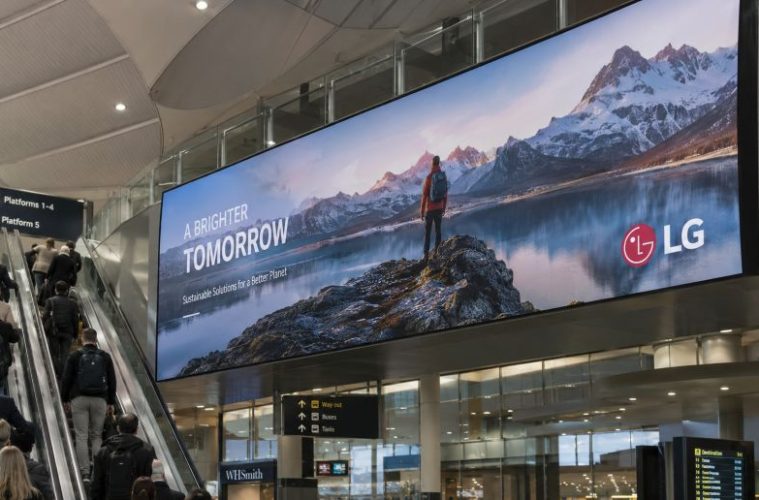
Displays are a normal part of modern life; they’re everywhere, from information boards communicating crucial information, such as flight times in airports or stock prices in an office, to eye-catching advertisements in busy shopping centres or at sporting events.
They’re incredibly effective. Yet this ability to transform a space means that any maintenance issue or malfunction will have a noticeable impact. Think of a busy train station, with commuters gathered around the departures board as they wait for their train home, or a company that has spent a substantial budget on an advertisement in a busy public space. If those screens fail, customer complaints and financial loss can quickly follow.
To minimise disruption, ease of repair is an essential consideration for a modern display, alongside other features capable of ensuring value across its lifecycle, from installation efficiency to long-term operational performance.
Laying the foundation for success
When deciding which model best suits the needs of a business, it’s best to take a big-picture approach (if you’ll pardon the pun) that starts at the very beginning.
Firstly, it’s fundamental to consider whether the device is compatible with VESA (Video Electronics Standards Association) or a similar standardised mounting system. The alternative, using a non-standard system for mounting, can create unexpected issues and delays when problems occur.
For example, if a repair is needed, specialist parts might have to be ordered, extending disruption. In contrast, with a standardised structure in place, installation, removal for maintenance and model replacement all become quicker and more efficient.
Modern displays increasingly anticipate these issues. An all-in-one ultra-stretch design, for example, can reduce the process to three simple steps: attaching a rear frame to the mounting system, adding the LED modules and connecting the cable. This cuts installation times, reduces cost and risk, and makes for an all-round simpler process.
Maintaining seamless operations
Ultimately, the flexibility of this infrastructure relies on more than the mounting equipment. Cabling should also be simplified, while reducing the number of external components can cut installation time and lower the probability of configuration errors.
Single AC power connections can help here. Using an embedded controller means there’s no need for a separate control unit, while investing in built-in audio reduces the number of external components required.
Another key capability for a seamless display is front servicing. This enables the main circuit board and LED module sections to be accessed and repaired from the front of the device, instead of requiring removal from the mount. Individual LED panels, for example, can be quickly taken out and repaired, significantly improving the product’s service life and reducing the time spent on maintenance.
Imagine you’ve been called to work on a display in a hard-to-access location, whether it’s positioned high on an external wall or mounted above a busy passageway. Complete removal and repair of the device could create significant disruption, requiring a team of maintenance workers and engineers. Another concern is that the longer the process takes, the more the device will be handled, increasing the risk of damage. Shortening the time required is therefore beneficial not only for reducing disruption on the day, but also for the long-term health of the hardware.
Why size and quality aren’t enough
Even with a three-step process and front-access maintenance, each installation can still present unique challenges. A key example is the time pressure created by requirements such as overnight installation to minimise disruption. To navigate the complexity of new technology, each stage must be strategically planned. This should involve questions about the installer’s level of experience, site access and the best angle for maximum visibility.
So, when choosing displays, it’s important to think about more than just picture quality and size. If downtime is frequent, these factors become relatively insignificant. By understanding the technicalities behind installation, integration and maintenance, however, each stage can become more seamless.
For operators, the right hardware choice means lower costs across the device’s lifetime and fewer disruptions to the display. As technology continues to modernise and keep pace with users’ expectations, this approach will also enable easier management and help prepare installations for the streamlined deployment and integration of innovative new hardware.