

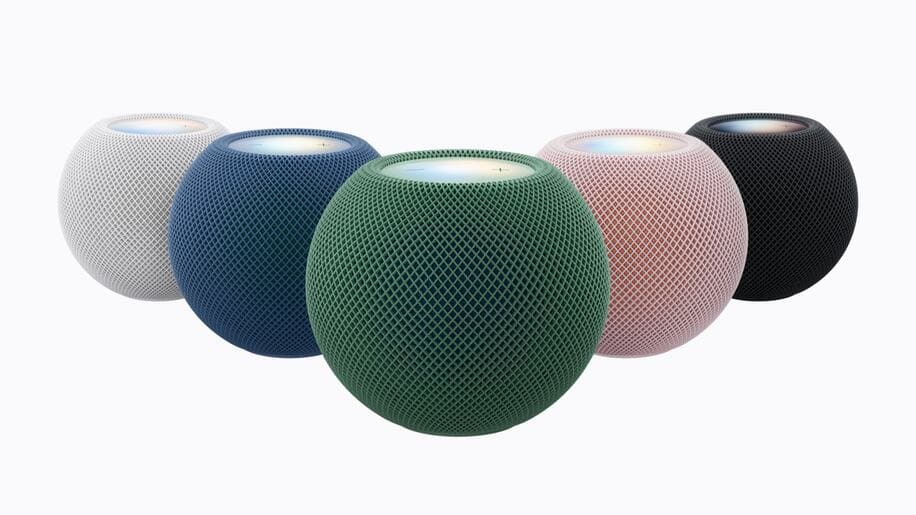


Nikolaos Tzoumerkas, Lead Market Analyst, Futuresource, offers some thoughts on the recent HomePod mini 2 launch assessing the brand’s wider ambitions in the smart home market.
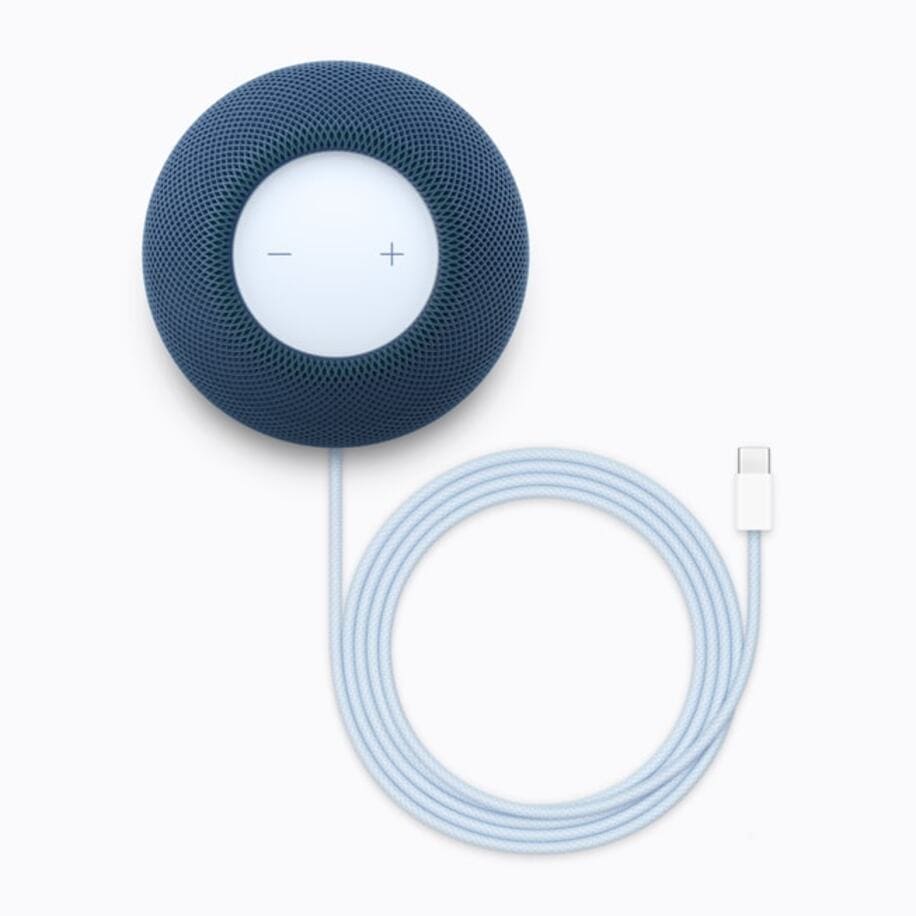
Apple announced its new HomePod mini 2 yesterday, equipped with the S10 processor, improved computational audio, expanded integration with Macs and support for the company’s forthcoming AI-enhanced Siri experience. However, the significance of the launch extends beyond the smart-speaker category itself. It is no coincidence that Apple unveiled HomePod mini 2 alongside HomeView and a new Apple TV 4K. Taken together, the three products point towards a broader effort to strengthen Apple’s position in the connected home, with Siri AI increasingly providing the intelligence linking personal devices, entertainment and smart-home control.
Apple has positioned HomePod mini 2 at $149, representing a $20 increase over its predecessor’s most recent retail price of $129 and a 50% increase on the original HomePod mini’s $99 launch price. This premium positioning also places Apple above its main competitors, with Amazon’s Echo Dot Max priced at $119.99 and Google’s latest Home Speaker at $99.99, representing premiums of approximately 24% and 49%, respectively.
The higher price reflects Apple’s familiar emphasis on ecosystem integration, privacy and premium positioning, as well as the increased capabilities of the device. Nevertheless, it could limit HomePod mini 2’s appeal among price-sensitive consumers, particularly as rival products offer generative AI functionality at lower price points. The delayed arrival of Siri AI also raises questions over whether consumers will perceive sufficient additional value at launch.
Higher component costs may have contributed to the increase, but the pricing also underlines Apple’s decision to position HomePod mini 2 as more than an entry-level smart speaker. Increasingly, its role is as an audio and voice endpoint within a wider Apple home ecosystem. Expanded stereo and surround-sound functionality further supports this strategy by giving consumers more reasons to install multiple HomePods around the home. Over time, paid AI capacity and Apple’s wider range of services could also generate additional recurring revenue, although the scale of this opportunity will depend on pricing and consumer adoption.
HomePod’s role is expanding beyond the smart speaker
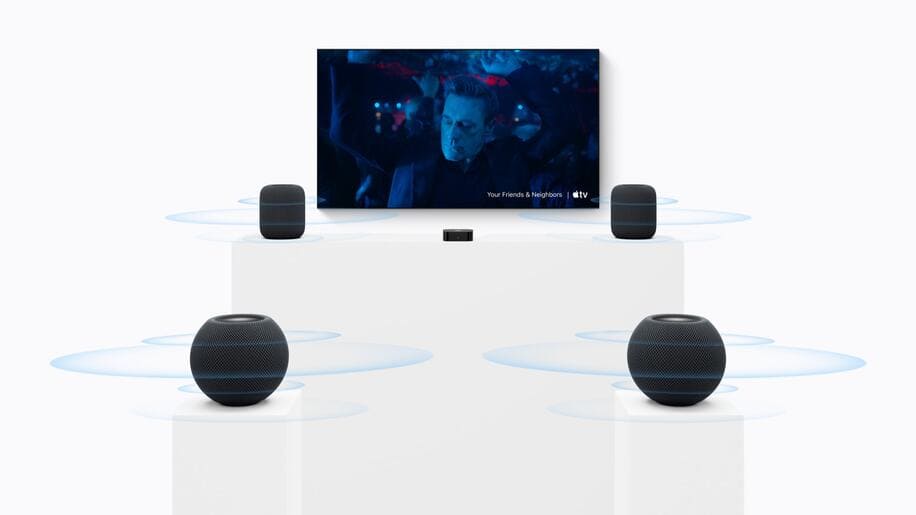
Beyond operating as a standalone speaker, HomePod mini 2 can be used as a stereo pair or as part of a multiroom audio system. For the first time, four units can also be combined to create a four-speaker surround-sound system with the latest Apple TV 4K, which Apple announced at the same time. Users can mix pairs of HomePod mini 2 and full-sized HomePod 2 speakers, provided that the front and rear pairs match, while the speakers and Apple TV can identify their position in the room and calibrate audio levels accordingly.
This development reflects a broader shift towards modular home audio, in which consumers can build home-theatre systems incrementally using wireless speakers that work independently but can also form part of a larger entertainment setup. We will examine this trend in greater detail in our forthcoming Home Audio market report.
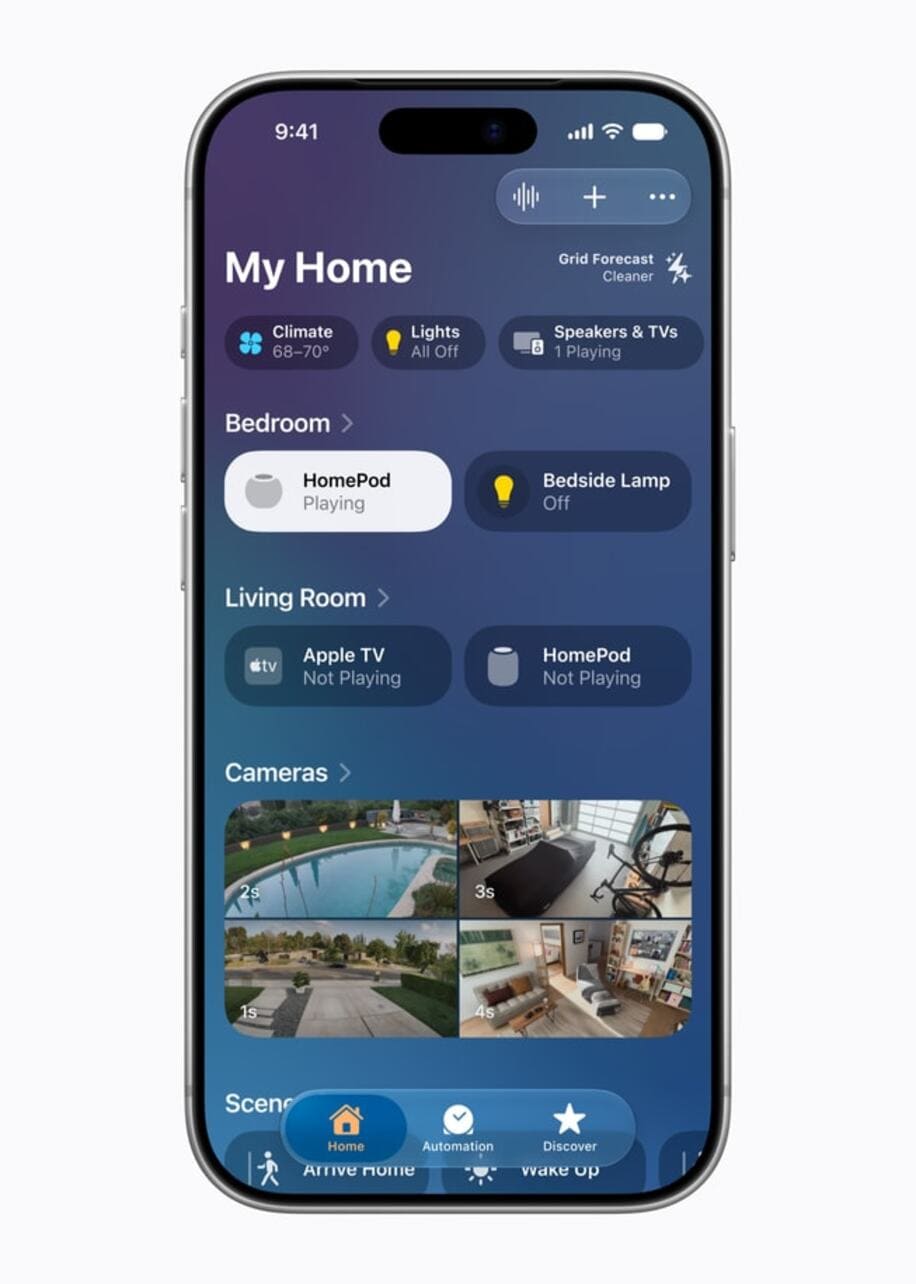
More strategically, however, the closer relationship between HomePod and Apple TV illustrates how Apple is attempting to make ownership of one Apple home product increase the usefulness of another. HomePod provides the audio and ambient voice interface, Apple TV anchors the television and entertainment experience, while the newly announced HomeView adds a dedicated shared visual interface for the household. The iPhone and iPad, meanwhile, remain the personal devices that provide identity, apps and user context.
Seen through this lens, HomePod mini 2 is less an isolated attempt to reinvigorate Apple’s smart-speaker business and more another building block in an increasingly interconnected Apple Home proposition.
AI gives smart speakers a new strategic role
The smart-speaker market has been on a declining trajectory since 2022, but the emergence of generative AI is giving major technology companies a new reason to invest in the category. Rather than simply providing another cycle of product upgrades, AI has the potential to redefine the role of the smart speaker from a relatively simple command-and-control device into an ambient interface for a much broader digital ecosystem.
This creates both opportunities and risks. If consumers recognise meaningful everyday benefits from AI-enhanced smart speakers, the technology could stimulate replacement demand and help reinvigorate a contracting category. Consumers would gain more capable devices, while vendors would strengthen their presence within the home and potentially create new opportunities to monetise services.
However, demonstrating that value will be critical. Consumers who have become accustomed to using smart speakers primarily for music, timers, weather updates and basic smart-home control will need convincing that generative AI materially improves the experience. If the benefits remain difficult to understand or inconsistent in practice, AI alone may not be sufficient to reverse the market’s decline.
Siri AI could transform HomePod’s role in the household
HomePod mini 2 aims to deliver a more intelligent and personalised voice-assistant experience through Apple’s forthcoming Siri AI capabilities. These include more natural conversations, greater contextual understanding and the ability to respond to follow-up questions, moving Siri beyond the traditional command-based interactions associated with earlier generations of voice assistants.
Siri will also be able to draw on relevant information from a user’s messages, calendar and compatible apps to provide more personalised assistance and perform tasks across applications, such as creating reminders or managing shopping lists. Support for recognising up to six household members should enable responses to be tailored to different users, while improvements to natural-language understanding promise to make activities such as music discovery more intuitive.
This personalisation is particularly important to Apple’s wider home strategy. The challenge for any household AI assistant is reconciling a communal device with highly personal information. Apple’s advantage is that HomePod does not need to operate as an isolated computing platform: it can draw upon the identity, information and services already associated with the iPhone, iPad and the wider Apple ecosystem.
If Apple can make this work effectively, HomePod potentially evolves from a speaker that happens to contain Siri into an ambient access point for Apple Intelligence throughout the home.
Significant limitations remain
Despite the potential of these AI capabilities, HomePod mini 2 faces several limitations that could constrain its initial adoption and weaken its value proposition.
Most significantly, the enhanced Siri AI experience will not be available at launch and will instead arrive through a future software update, with Apple yet to confirm a specific release date. This leaves the company at a temporary disadvantage to Amazon and Google, which already offer generative AI functionality through their smart-speaker platforms.
Access to Siri AI also requires a compatible iPhone or iPad belonging to the homeowner, while more advanced personal-context capabilities depend upon an Apple Intelligence-capable device. While this increases ecosystem dependence, that dependence is arguably as much a feature of Apple’s strategy as it is a limitation of the product. HomePod is increasingly valuable when considered as part of an Apple household rather than as a standalone smart speaker.
Geographic availability presents another challenge. The initial release supports English across only eight markets and excludes the EU, restricting its early addressable audience in Europe. Apple’s plans for daily usage limits on some cloud-based AI features, with additional capacity potentially available through paid subscriptions, also raise questions about the longer-term cost of accessing the product’s full capabilities.
Collectively, these restrictions could weaken HomePod mini 2’s near-term competitive position, particularly given its premium price and the increasing availability of AI-enabled alternatives at lower price points.
The bigger play is Apple Home
Ultimately, HomePod mini 2 is better understood as part of Apple’s attempt to deepen its ecosystem within the home than as another attempt to win the smart-speaker market in isolation. The simultaneous introduction of HomePod mini 2, HomeView and the new Apple TV 4K makes that broader ambition much clearer.
Each product addresses a different part of the household experience. Apple TV anchors entertainment on the biggest screen in the home; HomeView provides a shared visual interface for information, communications and smart-home control; and HomePod provides distributed audio and an ambient voice interface. The iPhone and iPad remain the personal computing and identity layer connecting those shared household devices to individual users.
Siri AI has the potential to become the connective tissue between these different surfaces. Apple’s longer-term opportunity is therefore not simply to sell more smart speakers, but to extend its ecosystem from the personal devices consumers carry and use into the environment around them.
From this perspective, the strategic battle is becoming less about who owns the smart speaker and more about who provides the intelligence, identity and interface through which consumers interact with the connected home. HomePod mini 2 may therefore be more important to Apple as a node within that ecosystem than as a product category in its own right.