

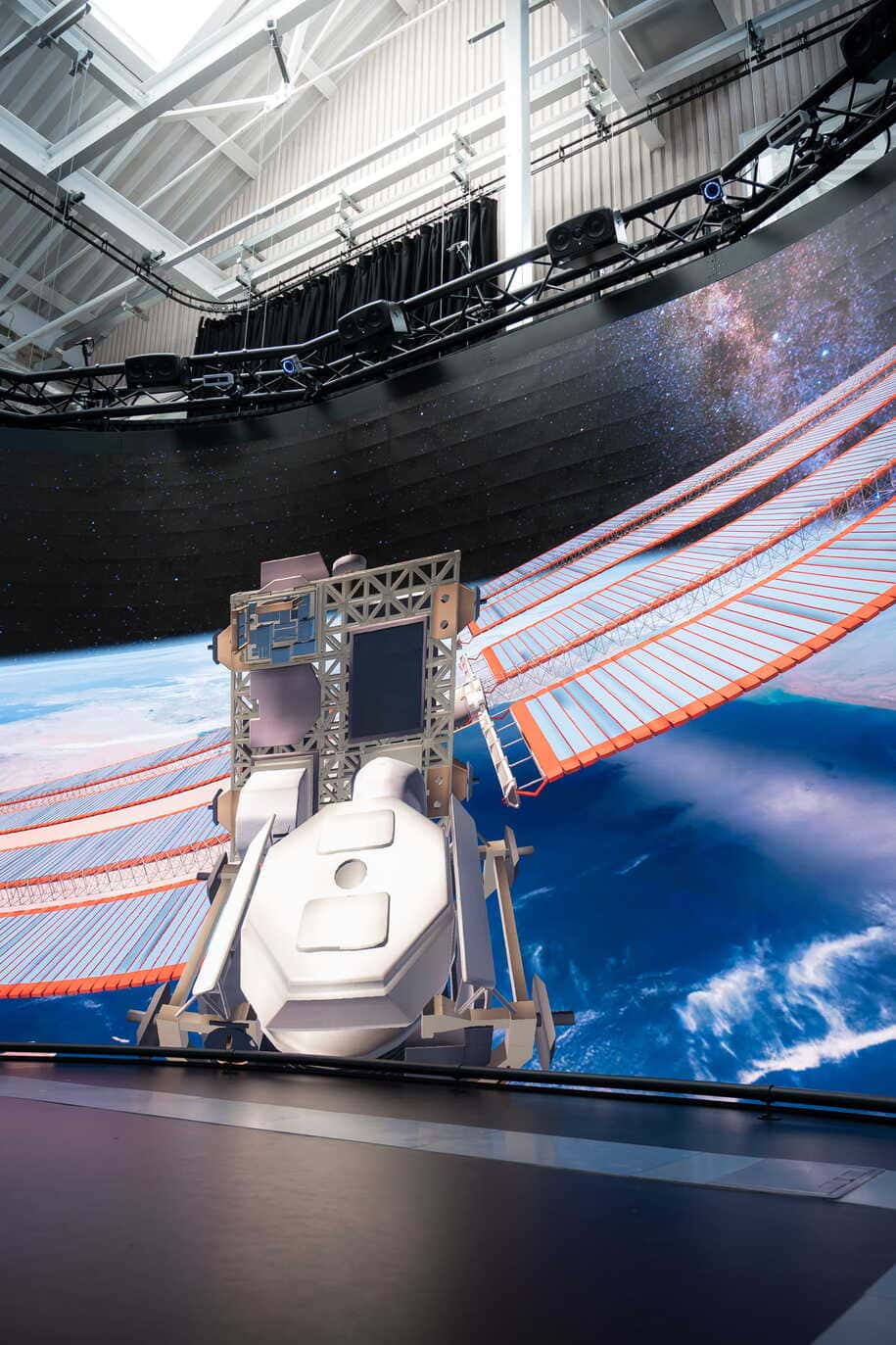
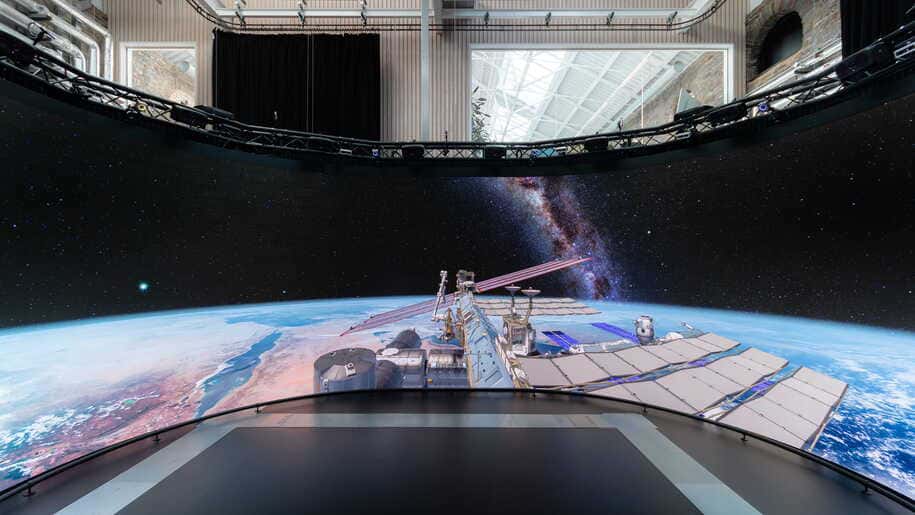
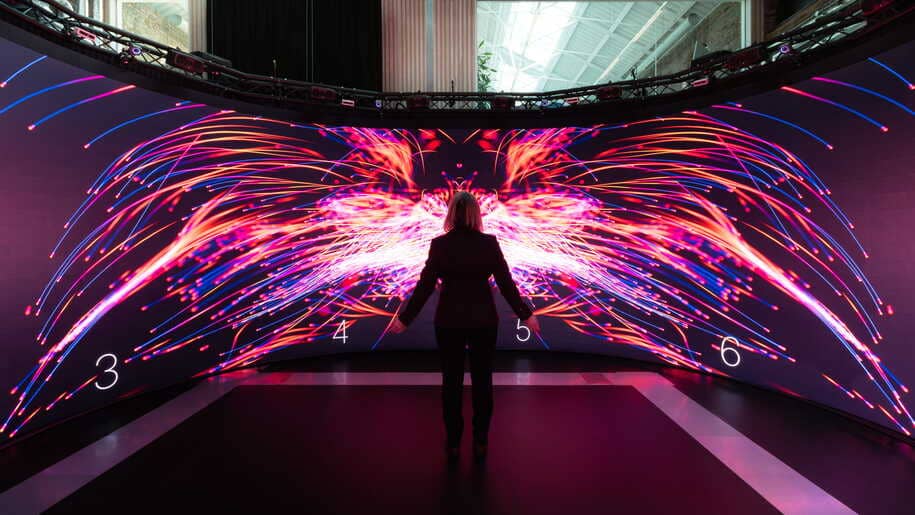
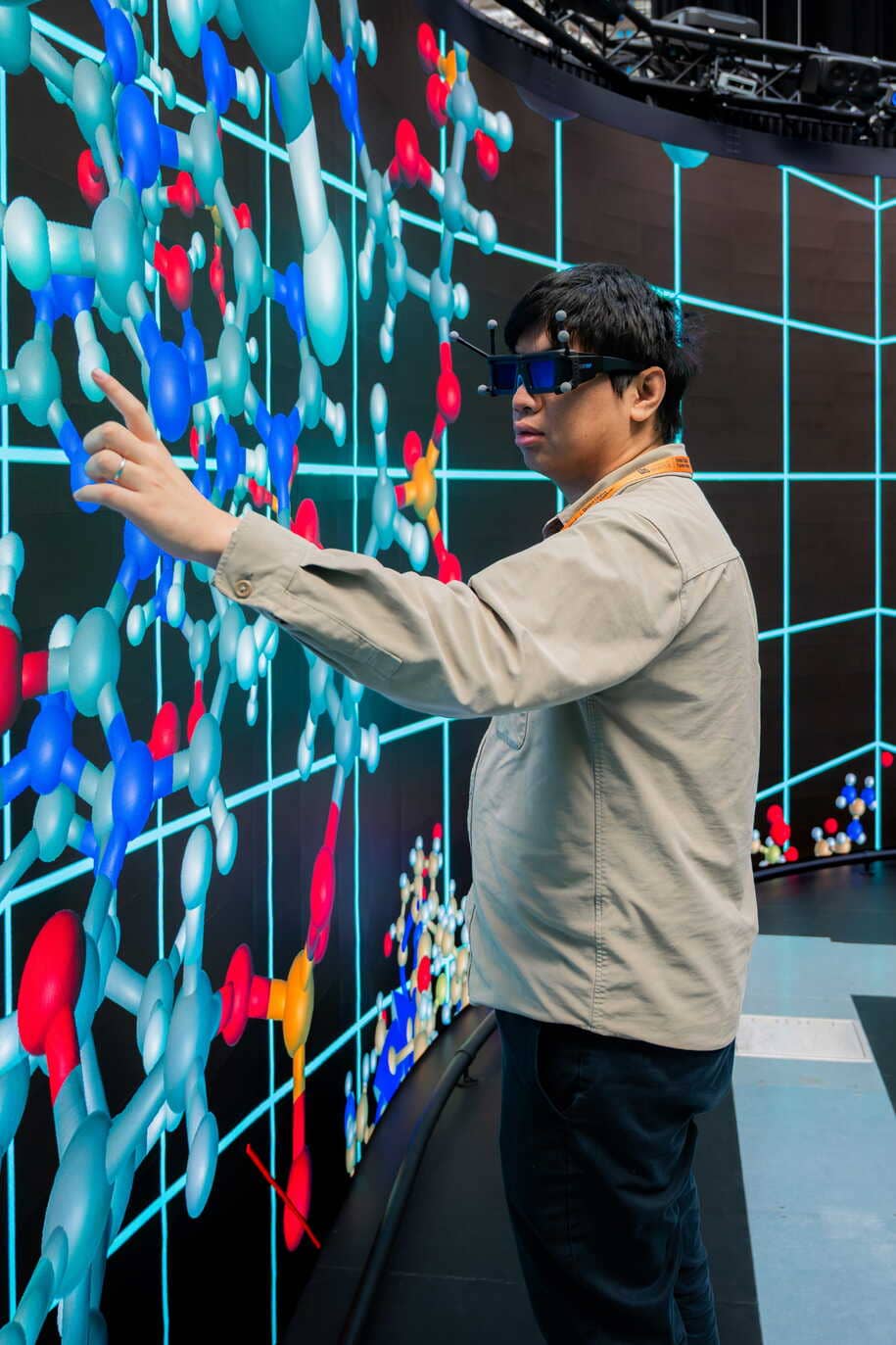
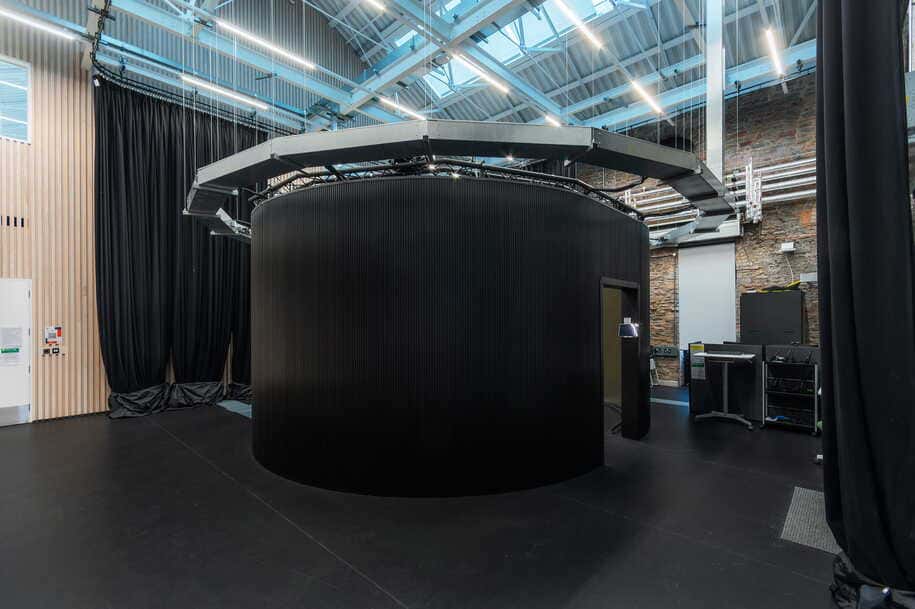
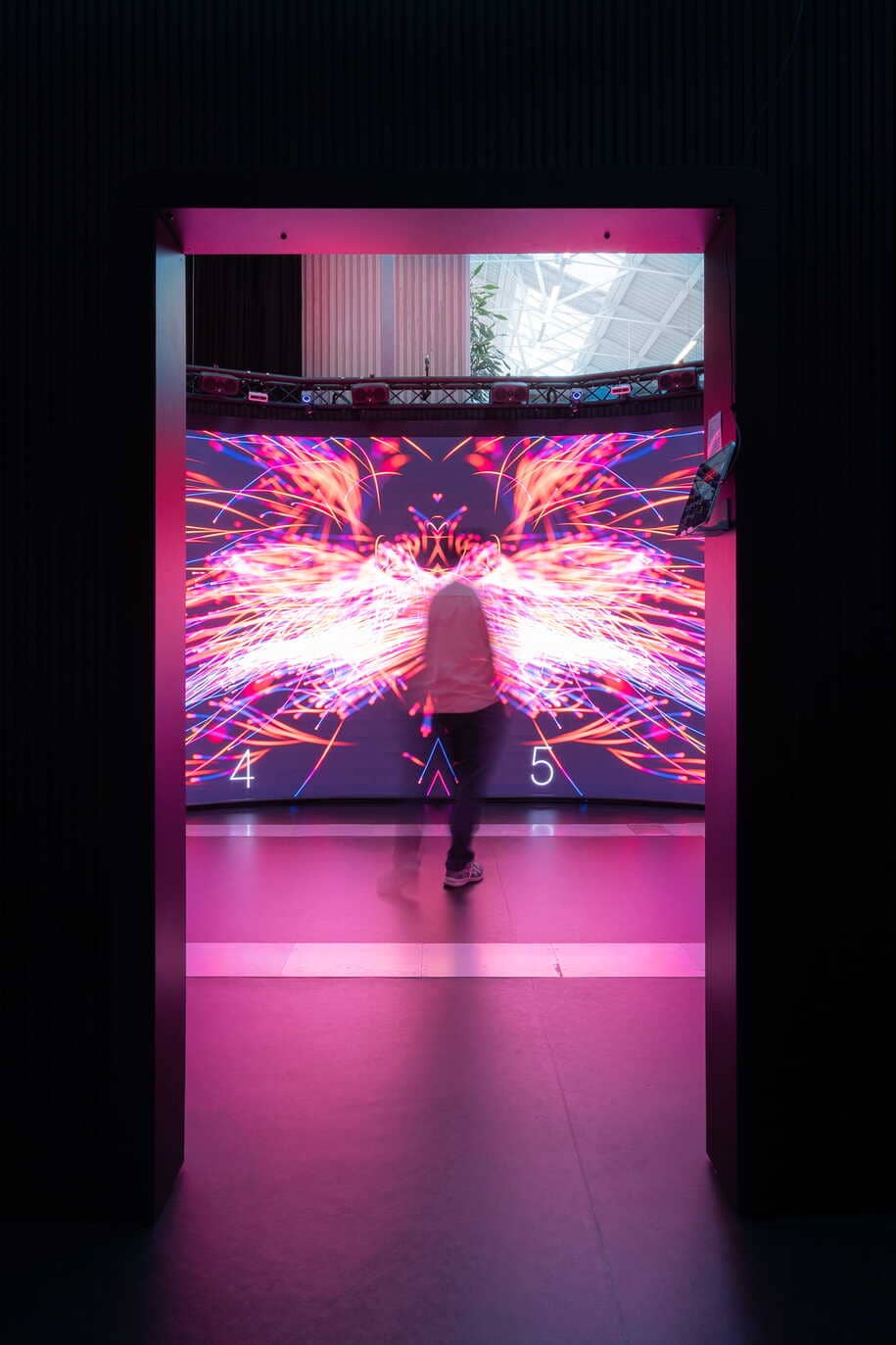
ClearLED has worked with immersive visualisation specialist Mechdyne to deliver a bespoke 360° LED display system for the Reality Emulator at the University of Bristol’s Digital Futures Institute (BDFI).
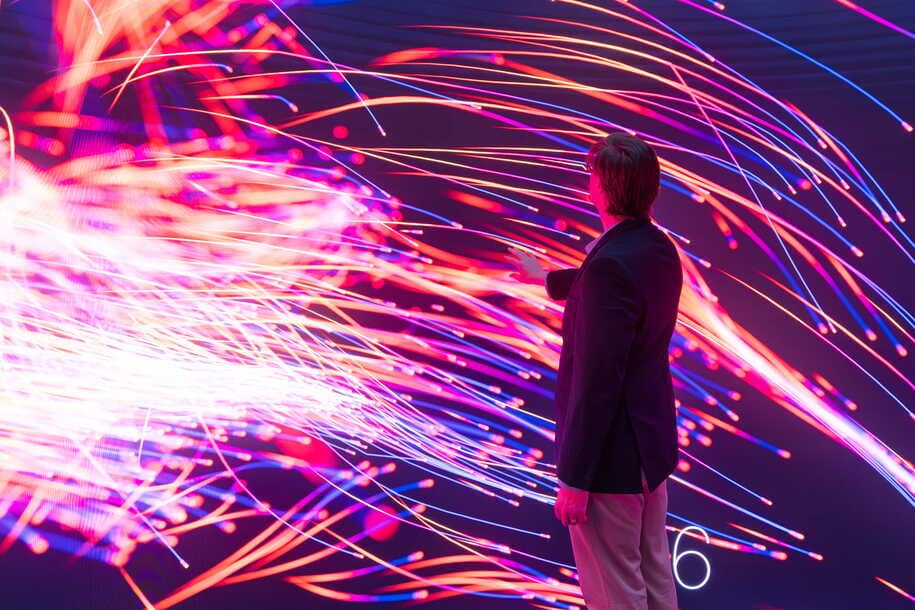
The room-sized immersive environment allows researchers to explore complex datasets, simulations and virtual environments, with applications ranging from emergency response training and urban planning to architectural design and artificial intelligence.
Unlike conventional flat-panel LED installations, the Reality Emulator required a continuous display surface combining curved sections for immersion with flat areas for the accurate presentation of engineering data.
At the heart of the installation is ClearLED’s Ribbon Series Indoor LED platform, featuring a 31-million-pixel display constructed from 1,562 flexible modules. With a 1.2mm pixel pitch, the modules form a continuous, egg-shaped environment designed to eliminate visible interruptions between display surfaces.
“We decided ClearLED was the best supplier for this project because of the quality and reliability of the technology,” says Richard Cashmore, Sales Chief of Staff at Mechdyne Corporation. “We’ve worked with ClearLED for a number of years, we trust them, and we know they deliver what they say they’re going to do.”
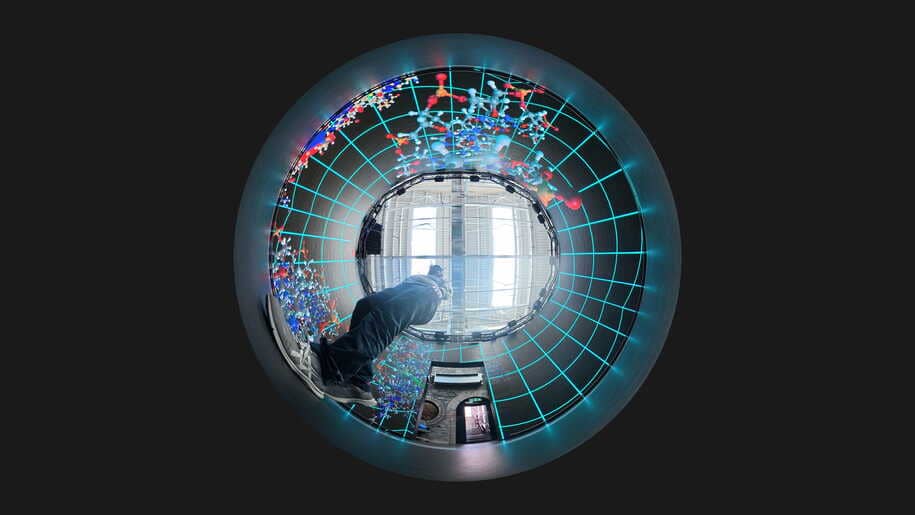
The display features a 7680Hz PWM refresh rate and operates at 120Hz, supporting stereoscopic 3D viewing through synchronised shutter glasses, delivering 60Hz to each eye. Combined with eye tracking, motion tracking and live game-engine rendering, the system enables users to interact with digital environments in real time.
The installation also uses flip-chip LED technology with glue-on-board protection, designed to improve durability, energy efficiency and colour performance.
To minimise installation challenges, the complete system was assembled and factory tested at Mechdyne’s technology centre in Iowa before being shipped to Bristol. A high-performance computing platform handles digital-twin calculations, while a graphics cluster renders the content displayed across the LED environment.
Since completion, the Reality Emulator has supported research into AI, simulation and interactive digital environments, including scenarios that would be impractical or potentially dangerous to recreate physically.
“We wanted to take people into new places, new situations – potentially dangerous situations that you wouldn’t be able to put human participants into. The possibilities really are endless,” says Dr Richard Cole, Senior Lecturer in Digital Futures at the University of Bristol.
The project highlights the potential for integrated LED display engineering and immersive visualisation technologies in research, training and simulation environments, as well as future applications in museums, entertainment and commercial installations.
For ClearLED, the installation also demonstrates the company’s capabilities beyond its established architectural display projects, particularly in applications requiring complex geometry and close-viewing image quality.