

At the heart of that transformation is what AVPro says is the world’s largest single-site 10G SDVoE AV-over-IP network.
It is true that EI does not normally feature case studies around stadiums, but with the FIFA World Cup in full flow and the flexible AVPro platform available for all sorts of projects in the UK from Aldous Systems, we could not resist.
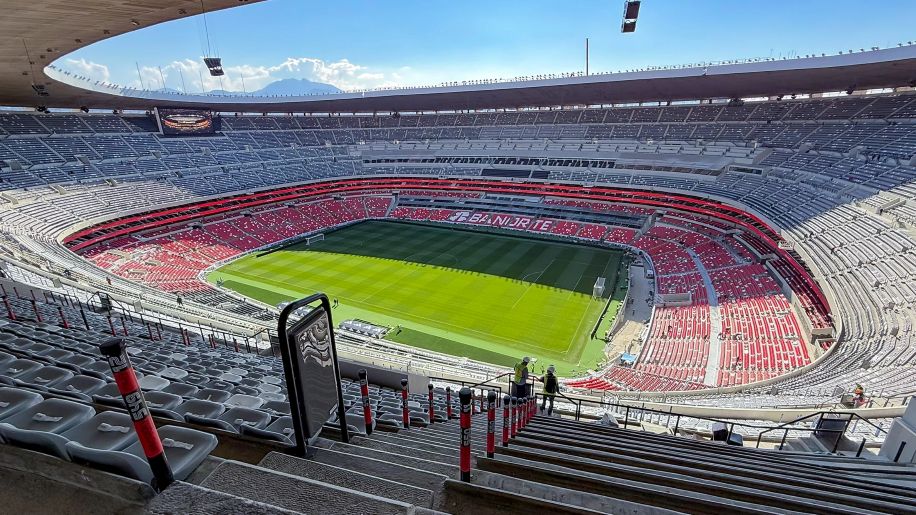
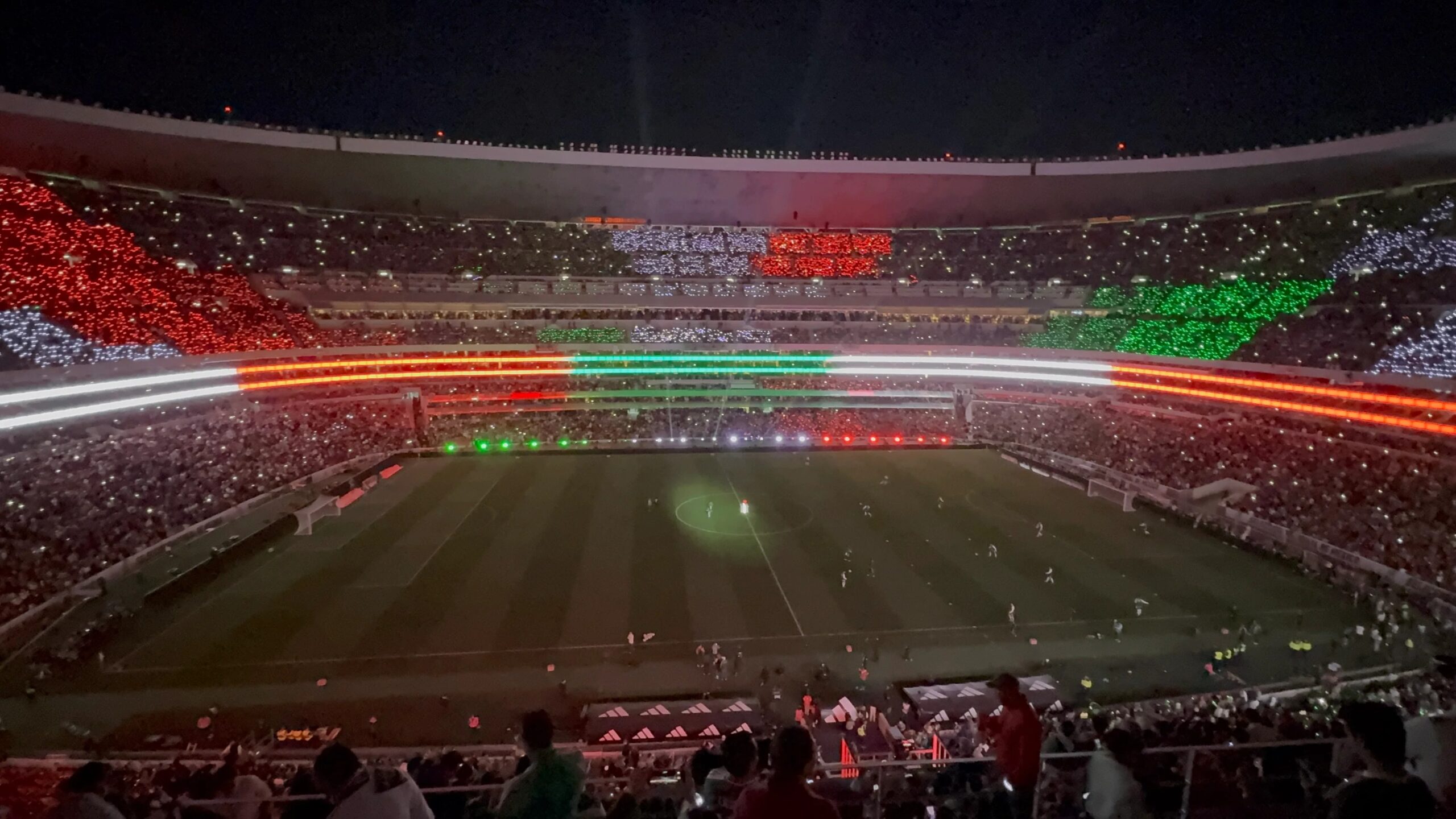
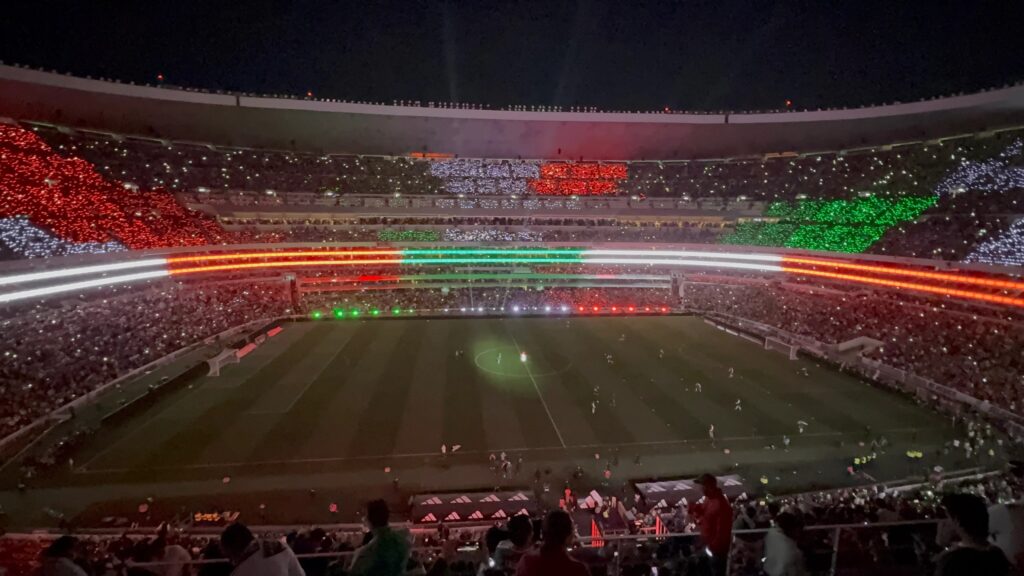
When it comes to legendary sporting venues, few can match the history and stature of Estadio Azteca in Mexico City. Now known as Estadio Banorte, the venue has hosted some of football’s most memorable moments and remains one of the most recognisable stadiums in the world.
Opened in 1966 and sitting more than 2,200 metres above sea level, the stadium is the largest in Latin America and the only venue to have hosted the final of football’s biggest international tournament twice. The venue has recently undergone a major technological transformation designed to modernise the fan experience while future-proofing operations for years to come. The venue now features what AVPro says is the world’s largest single-site 10G SDVoE AV-over-IP network.
A Stadium-Wide Challenge
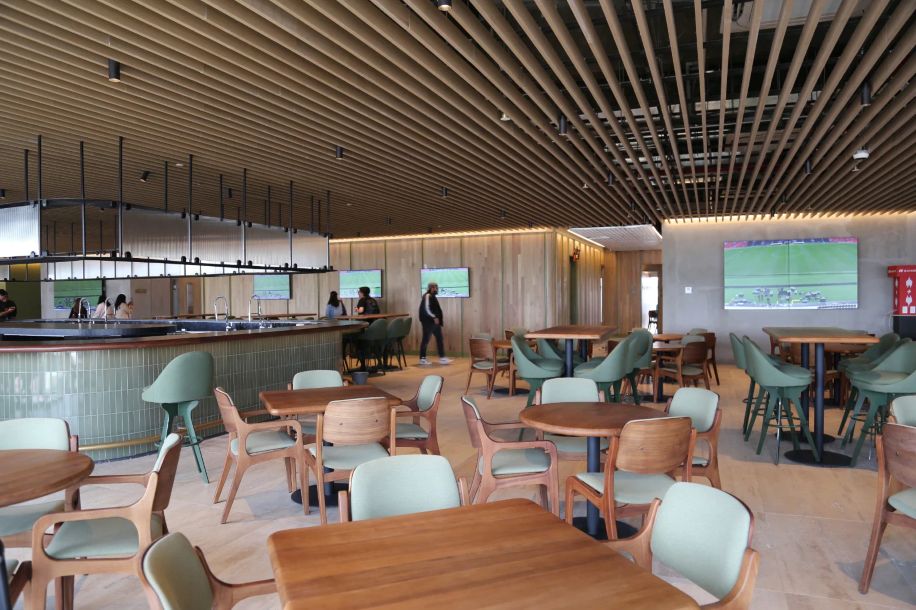
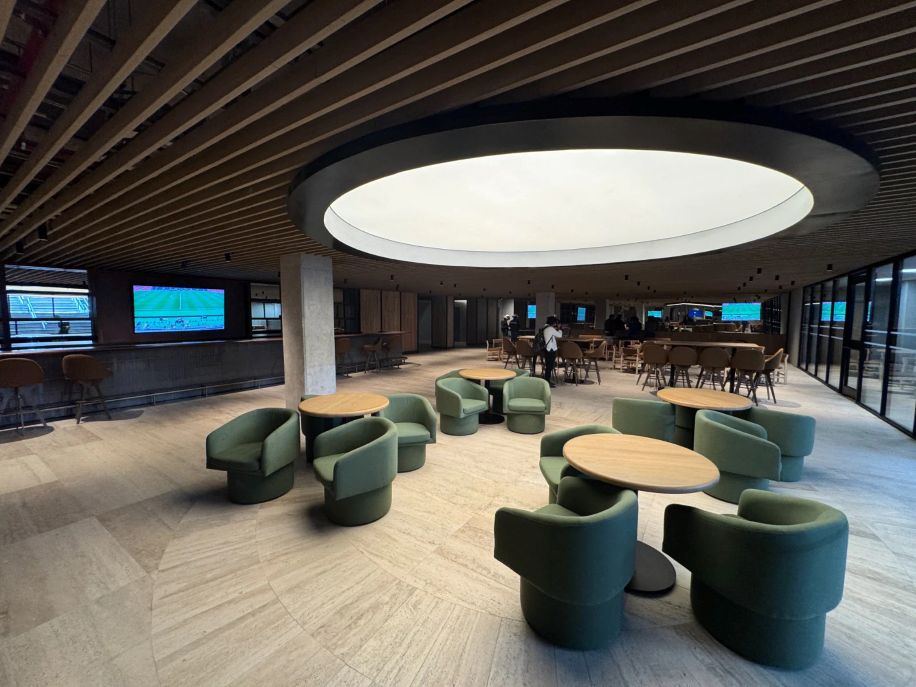
Modern sports venues place enormous demands on video infrastructure. Fans expect access to live action, replays, wayfinding information, sponsorship content and venue messaging wherever they are in the building. Whether in hospitality areas, concourses, suites or premium lounges, every display must deliver content instantly and reliably. For a venue the size of Estadio Banorte, that challenge becomes exponentially more complex.
The project team, led by integrator Pop Media Technology, worked alongside AVPro, Mexican distributor Duoson and brand representative Polaris Controls to create a unified video distribution platform capable of serving every corner of the stadium from a single infrastructure.
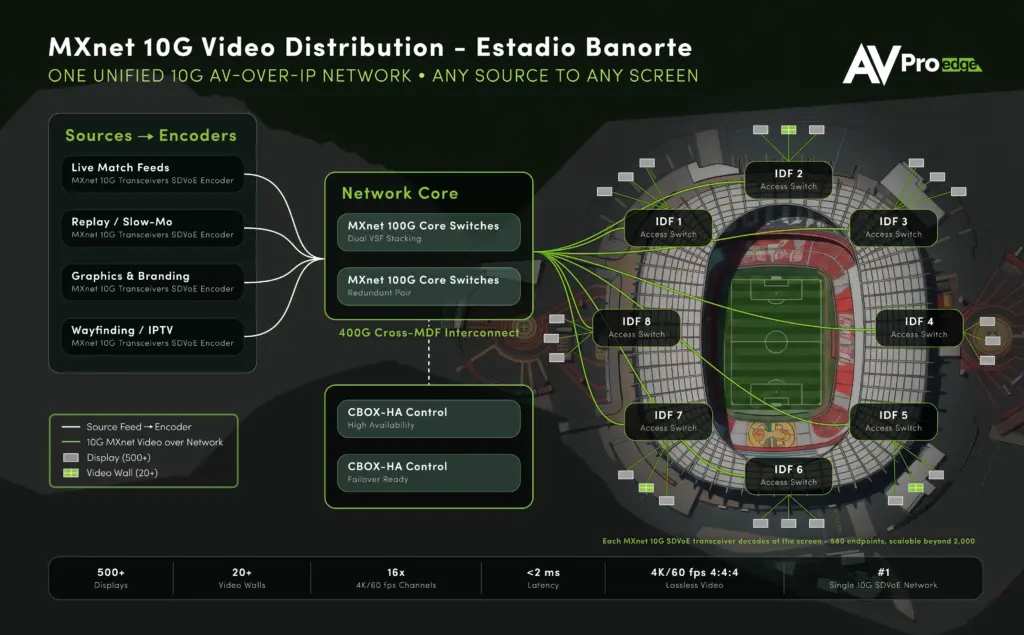
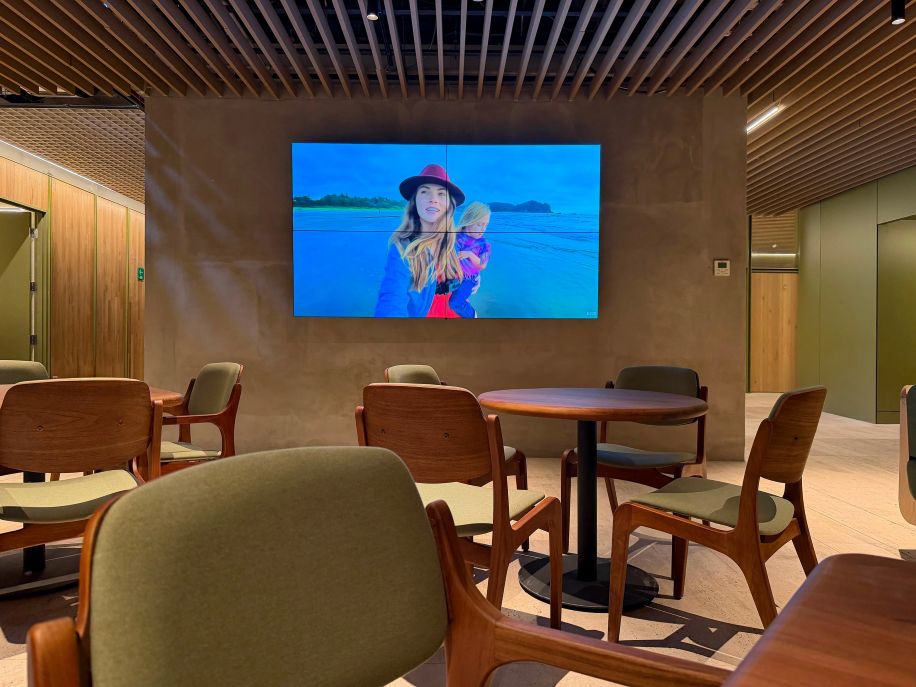
The result is a network supporting more than 500 displays and over 20 video walls, all operating as part of one coordinated system.
Rather than deploying multiple independent networks across different areas of the venue, the project team created a single AV-over-IP environment that allows any source to be routed to any screen throughout the stadium.
For operators, this means live feeds, replays, graphics, digital signage and information content can be distributed wherever required with minimal delay and maximum flexibility.
Building Confidence Before Installation
Large-scale deployments inevitably bring risk, particularly when installation schedules are compressed by wider construction works.
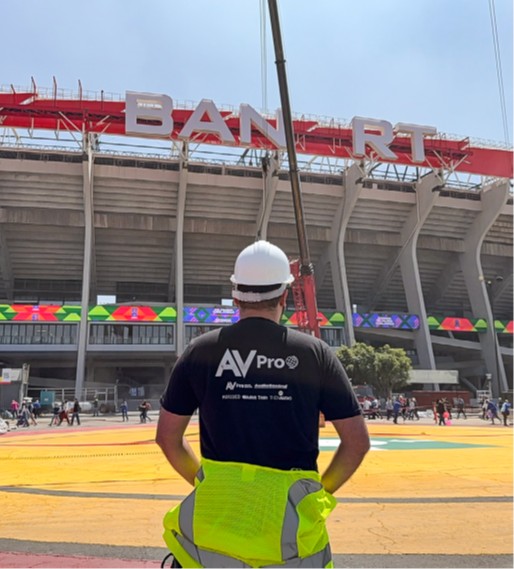
To minimise potential issues, AVPro recreated the entire system in its laboratory before any equipment arrived on site.
Kevin Wang, who played a key engineering role in the project, explains that the design evolved significantly as customer requirements developed.
The engineering team spent seven days constructing the complete system within AVPro’s testing facilities before undertaking a further 14 days of integration testing. This approach allowed the team to validate network performance, test system behaviour and identify potential issues before deployment began. The extensive preparation paid dividends once installation commenced, helping ensure a smooth implementation and reducing the likelihood of costly delays during commissioning.
One Ecosystem, One Network
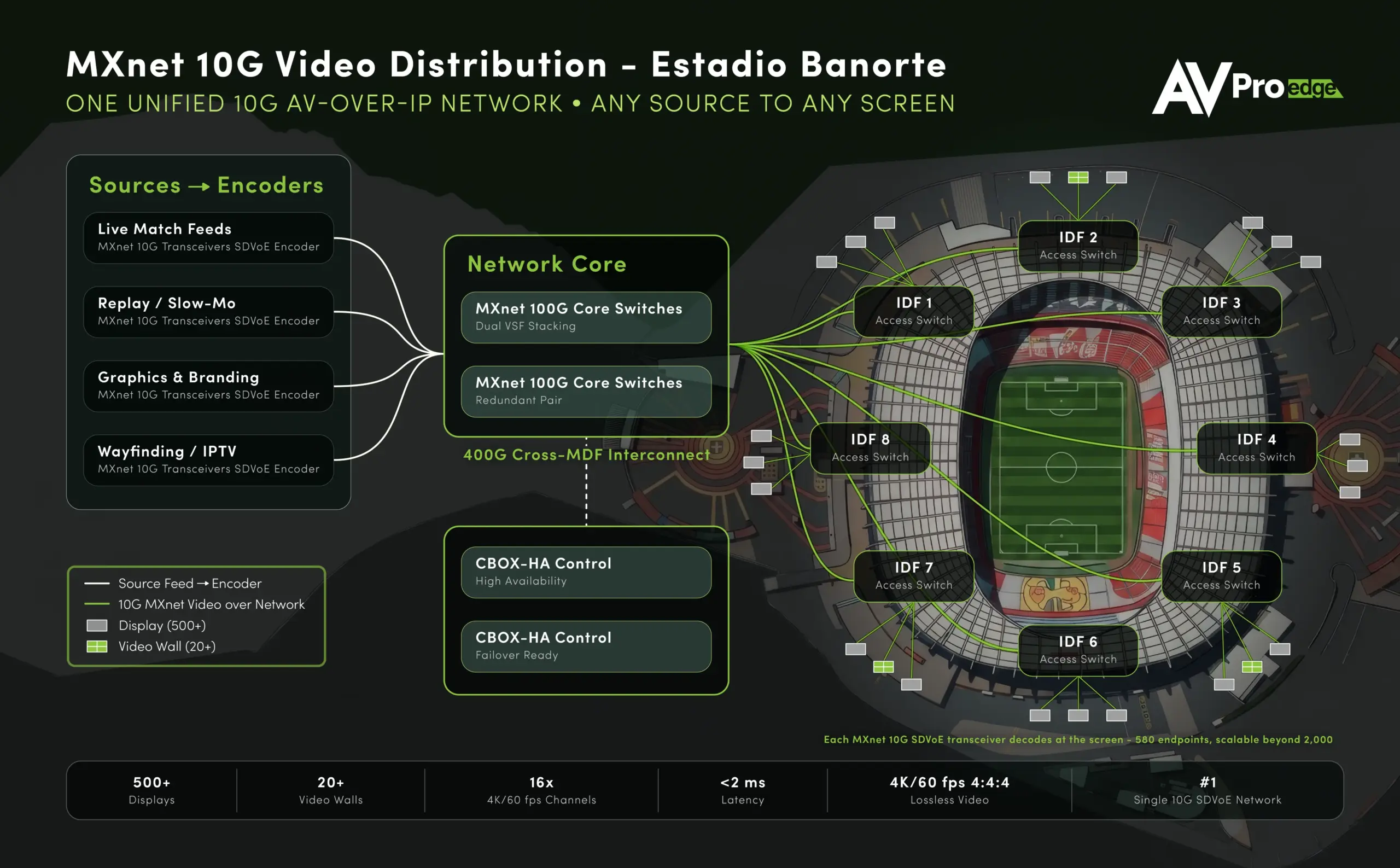
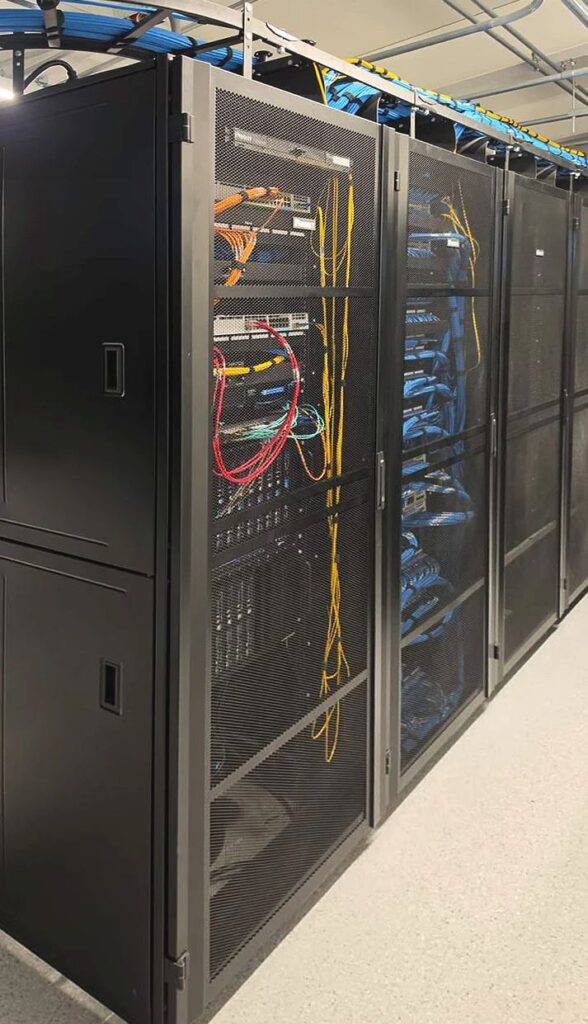
A defining feature of the project is the decision to deploy a complete AVPro ecosystem rather than integrating products from multiple manufacturers. The solution centres on MXnet 10G SDVoE transceivers located behind displays throughout the venue. These are supported by MXnet 100G core switches, MXnet access switches and dual CBOX-HA control systems providing high-availability management and failover protection.
Together, these elements form a fully integrated video distribution infrastructure capable of handling large numbers of simultaneous streams across a shared 10Gb network.
Because every endpoint operates on the same platform, operators can route any source to any destination across the stadium without concern for compatibility or system limitations.
For fans, the technology largely remains invisible. What they experience is synchronised content appearing on screens throughout the venue with performance that feels instantaneous.
Delivering Content at Scale
One of the most impressive aspects of the deployment is its ability to move huge volumes of video traffic across a single network infrastructure.
Instead of requiring dedicated cabling for every display, multiple independent streams are transported across the shared network. Individual decoders then pull the specific feeds required for each display or video wall.
The platform delivers lossless 4K video while maintaining latency low enough to ensure content appears virtually simultaneously across the venue.
In practical terms, this means a goal scored on the pitch can be shown throughout the stadium without the distracting delays that often occur across large-scale display networks.
The approach also provides significant operational flexibility, enabling venue staff to change content across hundreds of endpoints with just a few commands.
Engineering for Reliability
While displays and video walls attract the most attention, the underlying network infrastructure is arguably the true achievement of the project.
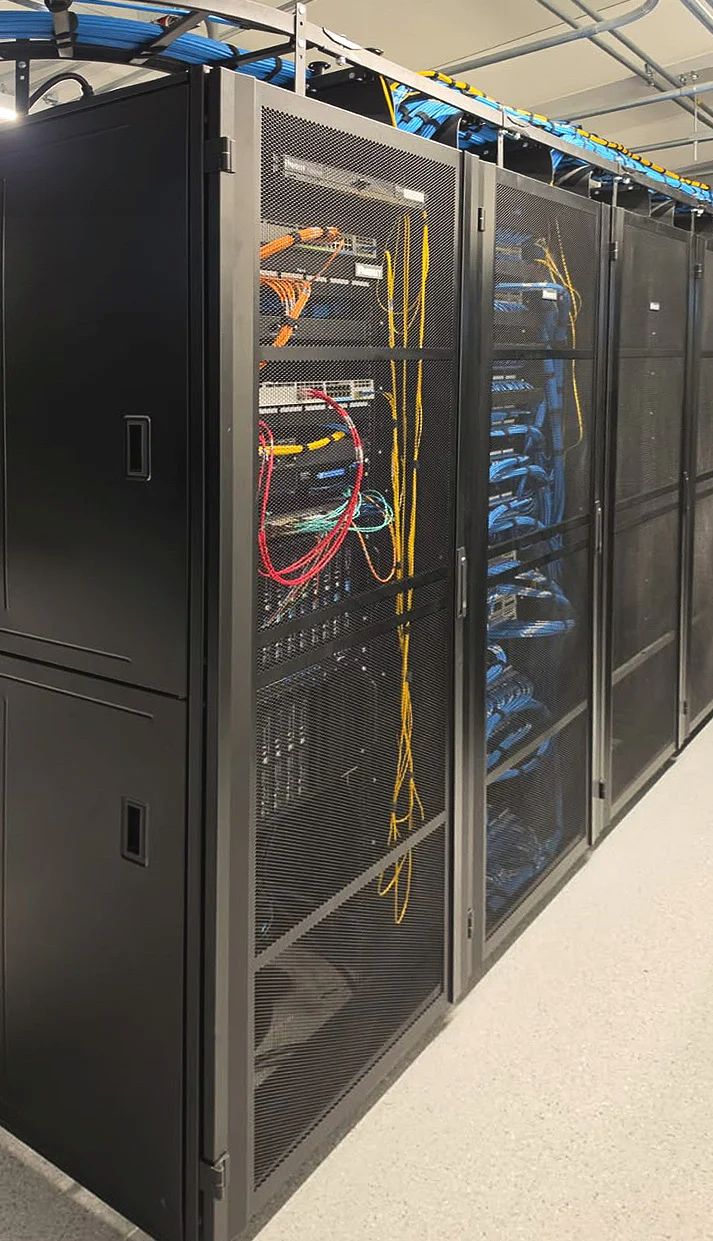
AVPro designed and deployed the complete supporting network, including a dual-stacked core architecture, a 400G interconnect linking the stadium’s main distribution points and 23 separate distribution areas reaching throughout the venue.
Redundant 100G uplinks provide resilience across the system, ensuring reliable operation even in the demanding environment of a major sporting venue.
By engineering the network, switching platform, encoders and decoders as a single solution, the project team avoided many of the integration challenges that often affect large installations involving multiple vendors.
According to Octavio Villa, Deputy General Manager at Pop Media Technology, one of the greatest challenges was delivering the installation within a highly compressed programme while major renovation works were taking place elsewhere in the stadium.
Careful coordination between construction teams, fibre infrastructure deployment, hardware installation and commissioning proved essential in ensuring the project was completed on schedule.
Setting a New Benchmark
Phase One of the project includes 16 channels of 4K60 encoding feeding 580 decoder endpoints across a single continuous network.
According to AVPro, this makes Estadio Banorte the largest single-site 10G SDVoE AV-over-IP deployment currently operating anywhere in the world.
The system has undergone extensive testing, including full-load factory validation, large-scale switching trials and interoperability testing alongside IPTV and Samsung VXT digital signage platforms.
Importantly, the infrastructure has been designed with future expansion in mind. The architecture is capable of scaling beyond 2,000 nodes, with future phases expected to increase the deployment to approximately 1,500 endpoints.
For the wider AV industry, the project demonstrates the growing maturity of AV-over-IP technology and its suitability for some of the largest and most demanding venues in the world.
More than simply a large installation, Estadio Banorte provides a glimpse into how future stadiums may distribute and manage video content. By combining scale, flexibility and reliability within a single network architecture, the project establishes a new benchmark for what can be achieved using modern AV-over-IP infrastructure.