

 Staff
Michael Buratto, Senior Director of Product Management, ADI, explains best practice for Acoustic Design in the modern Smart Home environment.

A homeowner can invest in a high-end home cinema, complete with powerful speakers and an impressive surround sound system, and still find that dialogue gets lost, bass sounds uneven or movie nights disturb the rest of the household. For integrators, situations like these highlight an important part of the design process that can easily be overlooked. The room itself plays a significant role in how a system performs.
As homeowners look for more immersive entertainment experiences that fit naturally into their living spaces, acoustic design is becoming an important consideration in smart home projects. Integrators must look beyond equipment specifications to understand how sound interacts with the environment, how the space will be used and how performance can be achieved without compromising the homeowner’s vision for the interior.
Every room has its own acoustic characteristics. Dimensions, ceiling height, windows, flooring and wall materials all influence how sound travels and reflects. Hard surfaces can make dialogue less clear or music sound harsh, while room dimensions can contribute to uneven bass. Understanding these factors early helps integrators identify where improvements are needed and make more informed decisions about the system as a whole.
The homeowner’s plans for the space should guide those decisions. Will the room be dedicated to movies, or will it also serve as a family space for music, gaming and everyday activities? Will listeners be seated in one main position, or should the system perform well across a larger area? Those conversations establish the priorities; acoustic measurements, room modelling and listening tests then help integrators assess the space and determine how best to meet them.
Acoustic performance also needs to work alongside interior design. A dedicated cinema may accommodate visible acoustic panels as part of its overall aesthetic, while a living room or open-plan space may call for a more discreet solution. Acoustic elements can be coordinated with wall finishes, cabinetry, ceiling features and furnishings to complement the interior while improving the listening experience. Rather than treating panels as something to conceal after the room is designed, integrators can work with the design team to make them part of the scheme from the outset.
Achieving this balance is easier when integrators collaborate with architects, interior designers and builders from the outset. Early planning creates more opportunities to coordinate treatment placement, speaker locations, materials and infrastructure before construction is complete. Waiting until the finishing stages can limit the available options and lead to unnecessary costs or compromises.
Make the right choices
Material selection requires similar care. A decorative finish or fabric covering may look appropriate, but its appearance alone does not indicate how effectively it will absorb sound. Performance depends on the material, its construction and where it is installed. For discreet installations, the complete assembly matters: a finish placed over an acoustic treatment must be suitable for that application, rather than selected on appearance alone. Each treatment should address a specific acoustic need while supporting the intended design.
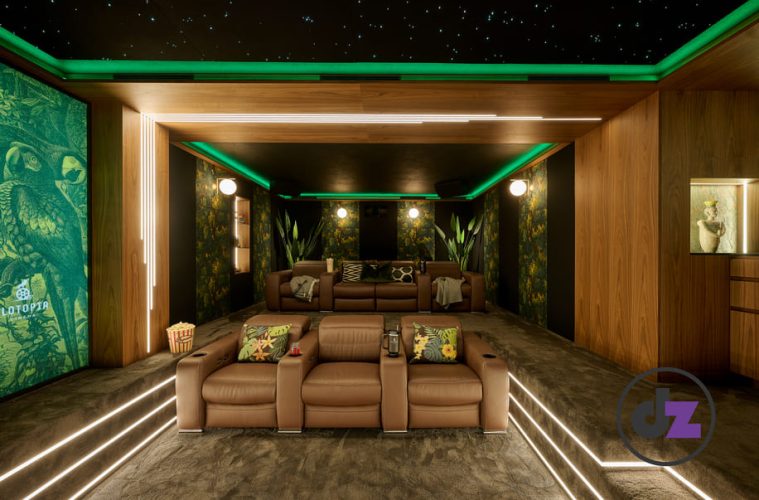
Dedicated home cinemas bring these considerations into sharp focus. The aim is to create an immersive experience where dialogue remains clear, sound effects feel impactful and audio performs consistently across the seating area. Compact dimensions, reflective surfaces and limited speaker placement options can make that challenging.
Different treatments can help address different issues. Absorption reduces unwanted reflections, while diffusion scatters sound to maintain a sense of spaciousness. Bass trapping may help manage low-frequency build-up. The right combination depends on the room, and these measures should be considered alongside speaker and subwoofer placement and system calibration. Sometimes, simply adjusting the position of a speaker or subwoofer can improve performance without requiring extensive additional treatment. The goal is a balanced listening environment, rather than adding treatment to every available surface.
Another important consideration is the difference between acoustic treatment and sound isolation. Treatment helps shape the sound within a room, while isolation addresses how much noise travels into adjacent bedrooms or living areas. If limiting sound transfer is a priority, the walls, doors, ceilings and broader construction may need attention. Clarifying these expectations early helps ensure the proposed solution meets the homeowner’s needs.
Outside dedicated home cinemas, integrators face a different set of challenges. Open-plan living areas, kitchens and family rooms often combine hard floors, large windows and fewer physical boundaries to contain sound. These spaces also need to accommodate conversation, relaxation and other everyday activities. The goal is to improve music and dialogue while keeping the room comfortable and functional for the people using it.
Thoughtful speaker placement, suitable acoustic materials and attention to furnishings can all contribute to a better result. Integrators should also consider how audio fits alongside other home systems. HVAC noise, lighting fixtures and ceiling infrastructure can influence the listening experience or restrict installation options, making coordination with other trades an important part of the process.
As smart home systems become more sophisticated, integrators have an opportunity to bring greater value to projects by considering how technology performs within the spaces people actually live in. Audio is a clear example of this relationship. Speakers, amplification and control systems all contribute to the experience, but their performance is influenced by the environment in which they operate. Brands such as Triad offer options for different installation settings, with the right solution guided by the room, the system and the homeowner’s priorities.
The most successful projects bring these considerations together early, connecting equipment choices with room design, construction and everyday needs. With thoughtful planning and collaboration, integrators can create spaces that sound as good as they look, whether that means delivering an immersive cinema experience or making music and conversation more enjoyable throughout the home.