

 Daniel J Sait
The trifecta of reliability for LAN, BMS and security described by Gary Banfield, Technical Lead at Webro Cables & Connectors.

In an age of wireless convenience, Webro Cables & Connectors explains why the critical systems of a property—data, control, and safety—still belong on copper and fibre.
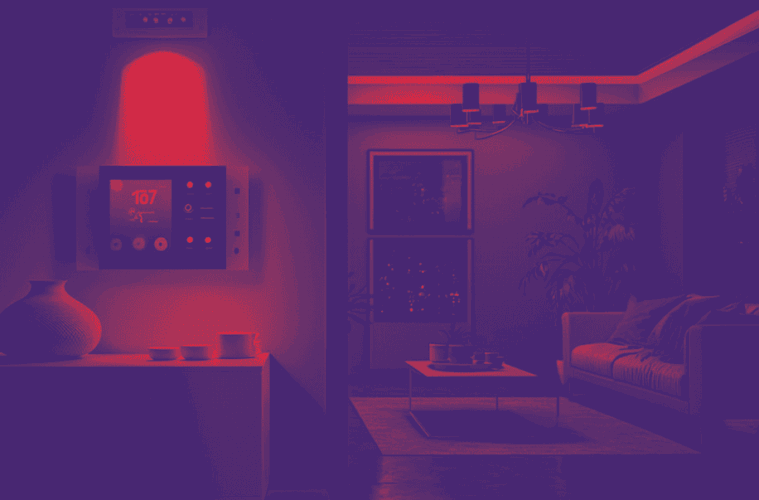
The modern building is no longer just four walls and a roof; it is a living ecosystem. From commercial high-rises to luxury residences, we now expect our environments to respond to us—lighting that adjusts to the time of day, blinds that close at sunset, HVAC that maintains the perfect temperature, and security systems that watch over us tirelessly.
As a leading distributor of cables and connectivity solutions, Webro Cables & Connectors Ltd works closely with electrical contractors and high-end AV installers who build these ecosystems. And while wireless technology offers convenience for guest access and personal devices, we have seen a definitive truth emerge: when it comes to the backbone of a property—the data infrastructure, the building management systems, and the security network—wireless is a risk, and hardwiring is the only guarantee.
Here is why the three critical pillars of modern property technology still belong on structured cabling.
1. LAN Infrastructure: The Backbone of High-Performance Data and Video
For the high-end AV installer, structured cabling engineer and electrical contractor handling data distribution, the Local Area Network (LAN) is the central nervous system of the property. It is no longer just about email and web browsing; it is about transporting 4K/8K video, high-resolution audio, and latency-sensitive data.
The AV Challenge: In a high-end home cinema or a commercial boardroom, video distribution is non-negotiable. High-bitrate, uncompressed video signals require massive bandwidth. While “wireless HDMI” exists, it is susceptible to interference from microwave ovens, neighbouring Wi-Fi networks, and even physical obstructions like people moving around a room.
Hardwired AV over IP (Audio/Video over Internet Protocol) solutions, utilizing Cat 6 or Cat 6a solid core cabling, are the industry standard for a reason. They offer:
- Zero Latency: No lip-sync issues or lag during video conferencing.
- Deterministic Performance: The bandwidth is dedicated; it does not fluctuate based on network traffic.
- Scalability: Adding another screen or source is a matter of terminating another cable, not fighting for wireless spectrum.
For the electrical contractor, specifying a structured LAN infrastructure with high-quality copper ensures that the property is ready for the bandwidth demands of tomorrow. A property wired with Webro’s Cat 6 or Cat 6a and fibre solutions is a property that will handle 10-gigabit networking for the next two decades.
2. Building Management Systems (BMS): The Art of Reliable Control
The modern luxury residence and commercial building are defined by their automation. Lighting control, motorised blinds, and HVAC (Heating, Ventilation, and Air Conditioning) are no longer standalone systems; they are integrated into a cohesive Building Management System (BMS).
The Challenge: These systems rely on constant, uninterrupted communication between sensors, controllers, and actuators. If a wireless lighting module fails to receive a signal, the room stays dark. If a thermostat loses its connection to the HVAC controller, the building becomes uncomfortable, and energy bills spike.
Wireless protocols (like Zigbee, Z-Wave, or Wi-Fi) are convenient for retrofitting a single light bulb, but they suffer from:
- Signal Congestion: In a commercial block, hundreds of overlapping radio frequencies create an unreliable environment.
- Battery Dependency: Wireless sensors require battery changes. In a commercial setting with hundreds of endpoints, this is a significant maintenance liability.
The Hardwired Solution: Hardwired BMS systems, using dedicated specialised cables offer unparalleled stability. DALI (Digital Addressable Lighting Interface) lighting systems, for example, thrive on structured wiring. By using dedicated cables, electrical contractors can ensure that lighting, blinds, and HVAC respond instantly and consistently—without the need for IT departments to troubleshoot “dropped” wireless connections.
For the building occupier, a hardwired BMS means a home or office that feels intuitive and responsive, rather than a collection of “smart” gadgets that occasionally go offline.
3. Security: The Non-Negotiable Foundation
Security is the one area where reliability is not a luxury; it is a necessity. For residents and commercial property owners, the integrity of CCTV, access control, and intruder alarms is paramount.
The Wireless Vulnerability: Wireless security cameras and access control systems are improving, but they carry inherent risks. They can be jammed using cheap, readily available devices. They rely on local Wi-Fi—if the router goes down, so does the security system. Furthermore, wireless signals broadcast data through the air, creating potential vulnerabilities for eavesdropping.
The Hardwired Advantage
A hardwired security infrastructure eliminates these vulnerabilities.
- CCTV: Using coaxial cable for traditional analogue HD systems or Cat 6/6a for IP-based PoE (Power over Ethernet) cameras ensures that power and data are delivered over a single, secure line. PoE allows for centralised battery backup (UPS) at the switch, meaning cameras stay operational even if mains power is compromised.
- Access Control: Hardwired door strikes, card readers, and intercom systems are inherently more difficult to bypass than their wireless counterparts.
- Physical Security: For the electrical contractor, a wired security system provides a physical layer of security. The data stays within the copper; it cannot be intercepted from a car parked outside the property.
For the resident or building occupier, a hardwired security system is not just a deterrent—it is a guarantee of uptime and privacy.
4. The Installer’s Advantage: Fewer Callbacks, Higher Value
For the electrical contractor and AV installer, the choice between wireless and hardwired often comes down to the bottom line.
While wireless might seem ‘faster’ to install initially, it often results in:
- Prolonged Commissioning: Hours spent configuring mesh networks, updating firmware, and hunting for signal dead spots.
- Unreliable Callbacks: The infamous “it was working yesterday” calls from clients whose wireless network interference changed after a neighbour installed a new router.
Hardwiring, using Webro’s extensive range of Cat 6, Cat 6a, coaxial, BMS, and security cables, shifts the labour from troubleshooting to installation. Once the cable is pulled, terminated, and tested, the job is done. It doesn’t require a reboot. It doesn’t suffer from interference from the new microwave in the kitchen. This allows contractors to hand over a project with absolute confidence and move on to the next one, building a reputation for quality and reliability.
Conclusion: A Hybrid Approach Built on a Wired Foundation
Webro Cables & Connectors Ltd understands that wireless technology has its place—namely, for guest networks, tablets, and personal devices. However, for the critical systems that define a property’s value, comfort, and safety, there is no substitute for the certainty of a physical connection.
- LAN Infrastructure demands the bandwidth of Cat 6, Cat 6a and fibre.
- Building Management Systems demand the stability of specialist control cables.
- Security demands the integrity of coaxial and PoE-enabled copper.
For contractors and installers, specifying premium cabling is a statement of quality. For property owners, it is an investment in a building that is not just smart, but genuinely intelligent—secure, comfortable, and ready for the future.