

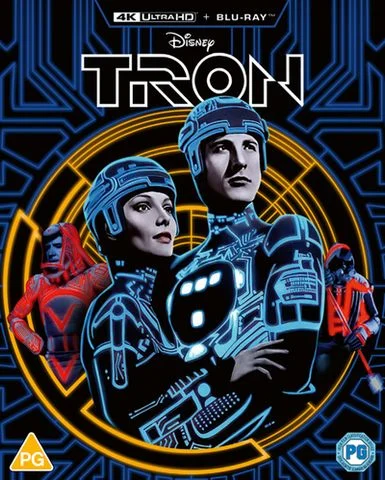


This was a thought uppermost in my mind recently when I watched the latest entry in the Tron series, Tron: Ares. A closer examination of why the main emotion it created was a desire to rewatch the 1982 original seemed logical. In the home cinema industry, understanding what makes great movies is a major key to success. We create the systems, but we are offering entertainment in much the same way as the content creators.
First up, a quick qualification: not all older movies are better than modern ones of course. Some modern films are fantastic. For me, the recent 28 Years Later releases show what can be achieved when a clear vision is backed up with ambition. It is also worth saying that in the more ‘popcorn’ genres, I am not against the use of CGI where it works and is appropriate. However, there is a phenomenon worth exploring that has implications for what we use in demos and how we understand and communicate what is so great about movies to customers.
This reaction is far more common than nostalgia alone can explain. Tron (1982) still feels ‘cooler’ than Tron: Legacy and, in my opinion, way cooler than Tron: Ares not because it looks more realistic, but because it has clarity of vision and a constraint-driven identity—two things modern blockbuster filmmaking often struggles to preserve or sometimes even recognise.
The making of a high-concept movie like Tron offers lessons for modern filmmakers. It presents a singular visual idea, ruthlessly executed. The original Tron does not just use a visual style—it is a visual style. The black voids, hard geometric shapes, stark colour coding (blue vs red vs yellow) and human faces composited into an abstract world all serve the same conceptual goal: this is not reality. The film never tries to soften or ‘naturalise’ its digital world. It commits fully to abstraction.
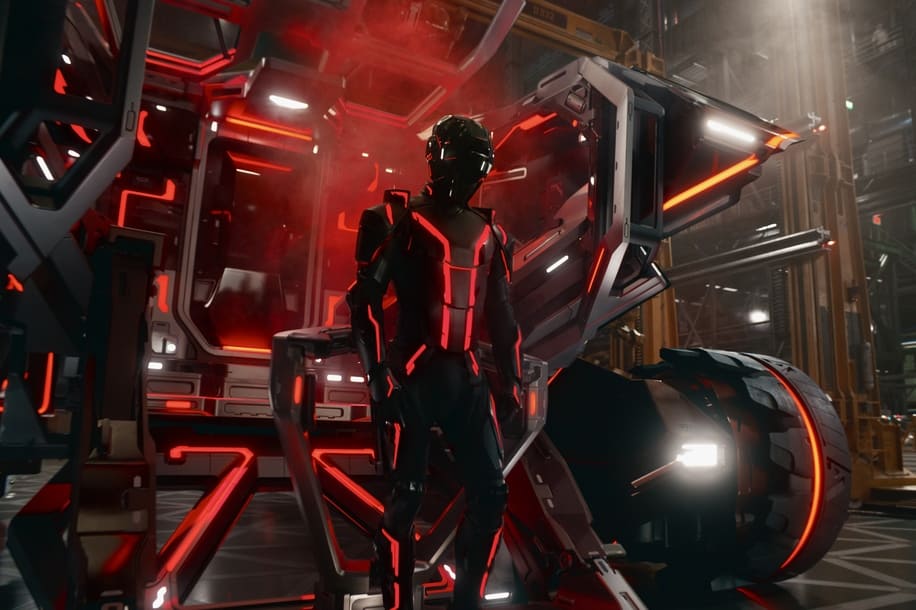
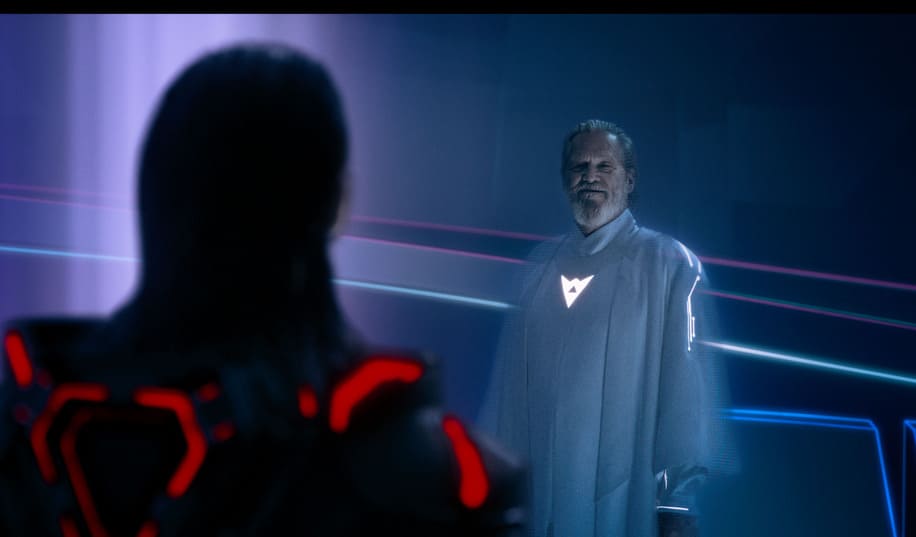
By contrast, Legacy and Ares chase photorealism. Surfaces are metallic, smoky, textured and lit like almost any other modern sci-fi film. The world becomes recognisable and therefore forgettable. When everything is glossy, dark and volumetric, nothing stands out. The lesson here is simple: a strong aesthetic is not about detail—it is about difference.
A level playing field?
To be fair, some of the ‘look’ of Tron was forced by the limitations of its time, but those limitations demanded bold choices. The filmmakers could not fall back on CGI, so they improvised and in doing so created something human and unique.
The 1982 Tron was technically primitive by modern standards, but that was its advantage. No dynamic lighting, no complex shaders and no procedural environments. Instead, the filmmakers leaned into graphic design, composition, negative space and colour contrast.
Modern Tron films and their ilk are technically dazzling but visually overstuffed and often try to do too much. Endless detail that the eye cannot prioritise pushes the audience away. Cool comes from confidence and vision, not just technical capability.
It is not just the visuals either. In the original Tron, there are clear rules, stakes and consequences. The MCP is a clever idea, not just a villain. In later films, the Grid becomes vague and the rules bend for spectacle. Everything gets bigger, threats escalate, but meaning loosens. Storytellers take fewer risks and therefore engage less. Ultimately, a compelling world is not immersive because it is ‘realistic’—it is immersive because it is legible and relatable.
Arguably, even ‘good’ sci-fi films such as Oblivion, Blade Runner 2049, The Creator, Star Wars and Dune look expensive but sometimes feel unauthored because they share a similar visual language. Long-term audiences respond to authorship, not polish. Photorealistic CGI dates quickly because technology advances, rendering styles shift and ‘realism’ exposes its own artificiality over time. A unique visual style ages gracefully because it never pretended to be real. It has its own visual grammar and becomes iconic rather than obsolete.
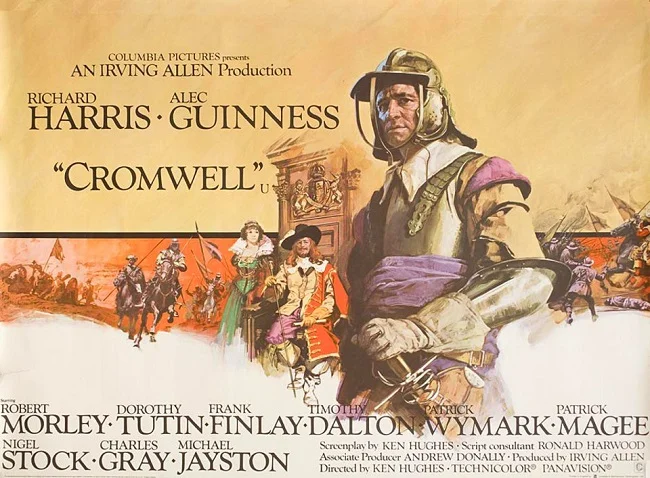
This issue extends far beyond sci-fi. Budget constraints and the temptation to repeat known formulas using owned IP encourage shortcuts and familiar techniques, adding to a soup of mediocrity. Move into the ‘real’ world and consider Cromwell (1970). Directed by Ken Hughes, this sweeping historical epic features barnstorming performances from Richard Harris and Alec Guinness and a world that feels authentic. Real locations, large-scale set-piece battles and correct period costumes create a backdrop that genuinely transports the viewer.
Are we expecting filmmakers to return wholesale to casts of thousands and extensive location shooting? No, not realistically. But more of it would be welcome. A useful comparison, ironically made for television, is Game of Thrones, which successfully blended modern techniques with real locations and large sets to create a believable world.
As makers of home cinema systems, it is worth remembering what truly makes movies experiences iconic and memorable rather than merely impactful.