

 Daniel J Sait
Senior Director Product Management, Eric Fritz at ADI, gives the benefit of his insight in the world of exterior AV and automation.
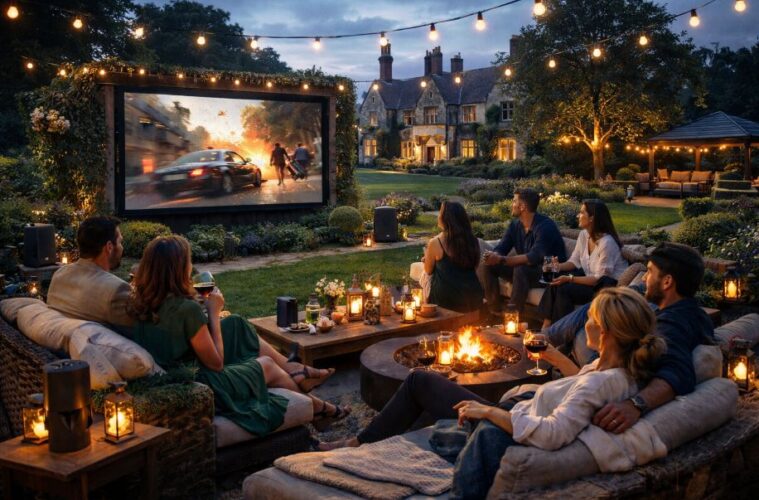
Outdoor environments are increasingly treated with the same level of intention and sophistication as interior spaces. What were once seasonal or secondary areas are now central to how people live, gather and entertain. This shift has expanded expectations for outdoor AV and automation from standalone products towards integrated systems that support year-round usability, elevated aesthetics and evolving outdoor layouts.
Control Is The Foundation Of Experience
Across design-forward projects, control and customisation are no longer enhancements; they have become foundational. Outdoor lighting and audio are now approached as cohesive systems defined not just by fixtures and speakers but by how they respond to time of day, patterns of use and desired ambience.
This mirrors broader design trends: minimal interfaces, zone- and scene-based control and automation that reduces manual adjustments without compromising aesthetics. Outdoor pathways, architectural details and gathering areas often require different lighting behaviours depending on the moment – subtle illumination for safety, warmer scenes for dining or dramatic effects for events. The same is true for audio, where volume and dispersion shift between quiet evenings and large gatherings.
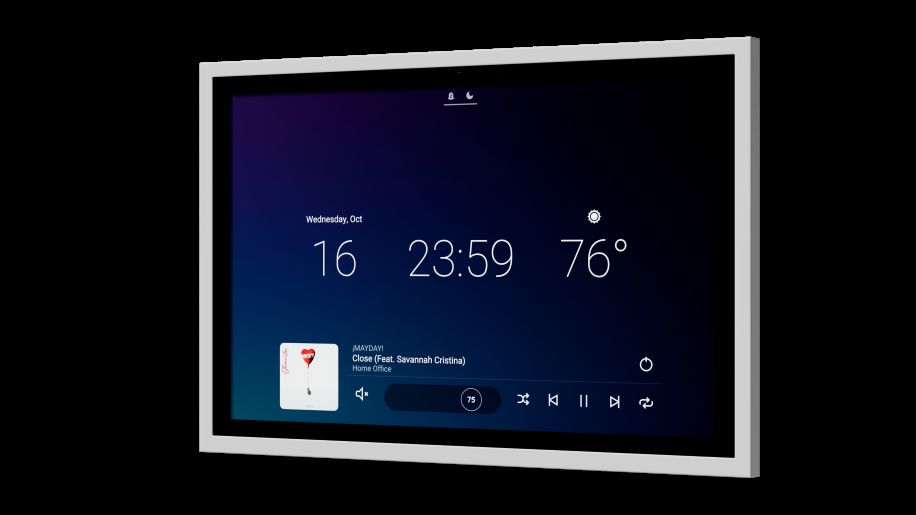
Control now defines the user experience itself. Intuitive operation, flexible zoning and software-driven personalisation make it possible to manage increasingly complex outdoor environments without intimidating homeowners. Once a space is lived in, the value of automation becomes clear – lighting and audio adjust naturally to real-world use rather than being treated as occasional enhancements.
Adaptability as a Differentiator
Outdoor spaces are dynamic – trees mature, decks expand and fire pits are added. The landscape an integrator encounters during installation may look entirely different a few years later.
In response, manufacturers have developed speakers and lighting solutions that can be relocated, swapped or scaled without extensive rewiring. Integrated lighting-and-speaker designs further increase versatility while reinforcing the need for thoughtful infrastructure and cabling that anticipates future changes. For integrators and designers, adaptability is becoming as important as durability or performance. Systems that accommodate these shifts offer long-term value and reduce disruptive retrofits.
Outdoor Audio: From Patio Speakers to Landscape Experiences
The evolution of outdoor audio shows how expectations have changed. Historically, outdoor audio meant a single pair of patio speakers pointed at a deck or pool. Today, outdoor living includes multiple functional zones and higher expectations for aesthetics and immersion. Consumers increasingly expect audio coverage across entire properties – gardens, fire pits, sports courts, boat docks and courtyards are all considered active listening zones. Meanwhile, outdoor speakers have become a natural part of the landscape rather than conspicuous hardware.
Key trends shaping this shift include:
- Distributed Multi-Speaker Systems: Modern systems place sound precisely where it is needed rather than projecting broadly at high volume. Each speaker operates at a lower level, improving clarity and reducing noise spillover.
- New Mounting and Design Options: Speakers may be staked in garden beds, recessed into covered patios, surface-mounted on exterior walls or hung like pendants from pergolas or tree limbs. Many integrate lighting, allowing them to serve both functional and architectural roles.
- Visual Integration: Beyond basic finishes, speakers can be colour-matched to exterior surfaces, mulch, stonework or marine structures, helping them disappear into the environment.
- 360-Degree Ambient Sound: Bollard-style speakers that disperse sound in all directions support ambient audio along pathways and perimeters. Combined with directional speakers, they create layered soundscapes that feel natural rather than overpowering.
Together, these advancements have transformed outdoor audio from an afterthought into a core element of outdoor experience design.

Lighting, Customisation, and Architectural Cohesion
Outdoor lighting is undergoing a parallel transformation. Increasingly, lighting is viewed as part of an integrated system shaped by the relationship between design, placement and control rather than by individual fixtures alone.
Minimalism continues to influence expectations, with cohesive fixture families, subtle finishes and precise dimming replacing visually dominant hardware. Adaptability is equally important: as landscapes and structures change, lighting systems must adjust through scenes and software rather than through physical rewiring. Lighting that responds to daily rhythms and seasonal patterns enhances comfort, efficiency and emotional impact.
Year-Round Usability and Weather Considerations
As outdoor entertainment becomes a year-round expectation rather than a seasonal luxury, weatherproofing and reliability have moved to the forefront. Enclosure strategies, heat and moisture management and winterisation considerations now shape system planning, alongside automation that adjusts to daylight shifts and seasonal use patterns. When lighting and audio adapt automatically to dusk, temperature changes, ambient noise or event schedules, outdoor spaces feel intuitive and dependable even in challenging climates.
The Bigger Picture: Outdoor Spaces as Connected Environments
The broader trend across outdoor AV and automation is a shift towards connected, controllable environments. The goal is no longer simply placing technology outdoors but designing spaces where lighting, audio, control and architecture support everyday living and long-term adaptability. In this context, the conversation is less about equipment and more about how people use outdoor spaces – and how thoughtful integration enhances those experiences seamlessly in any season.