
 Daniel J Sait
With LG, Samsung and other big players launching domestic robot concepts, this subject will keep coming up over the next few years, but will robotics be an I, Robot nightmare or a Bicentennial Man love story?
Every few years, the smart home industry has to deal with new ideas that can either help or hinder the market. Voice control, AI, the metaverse, even tablets when they came out introduced the help or hinder factor. Now robotics will get its turn. And as mobile robots begin to creep from tech shows into domestic marketing campaigns, it is fair to ask whether this is a genuine shift or just another distraction waiting to fade away.
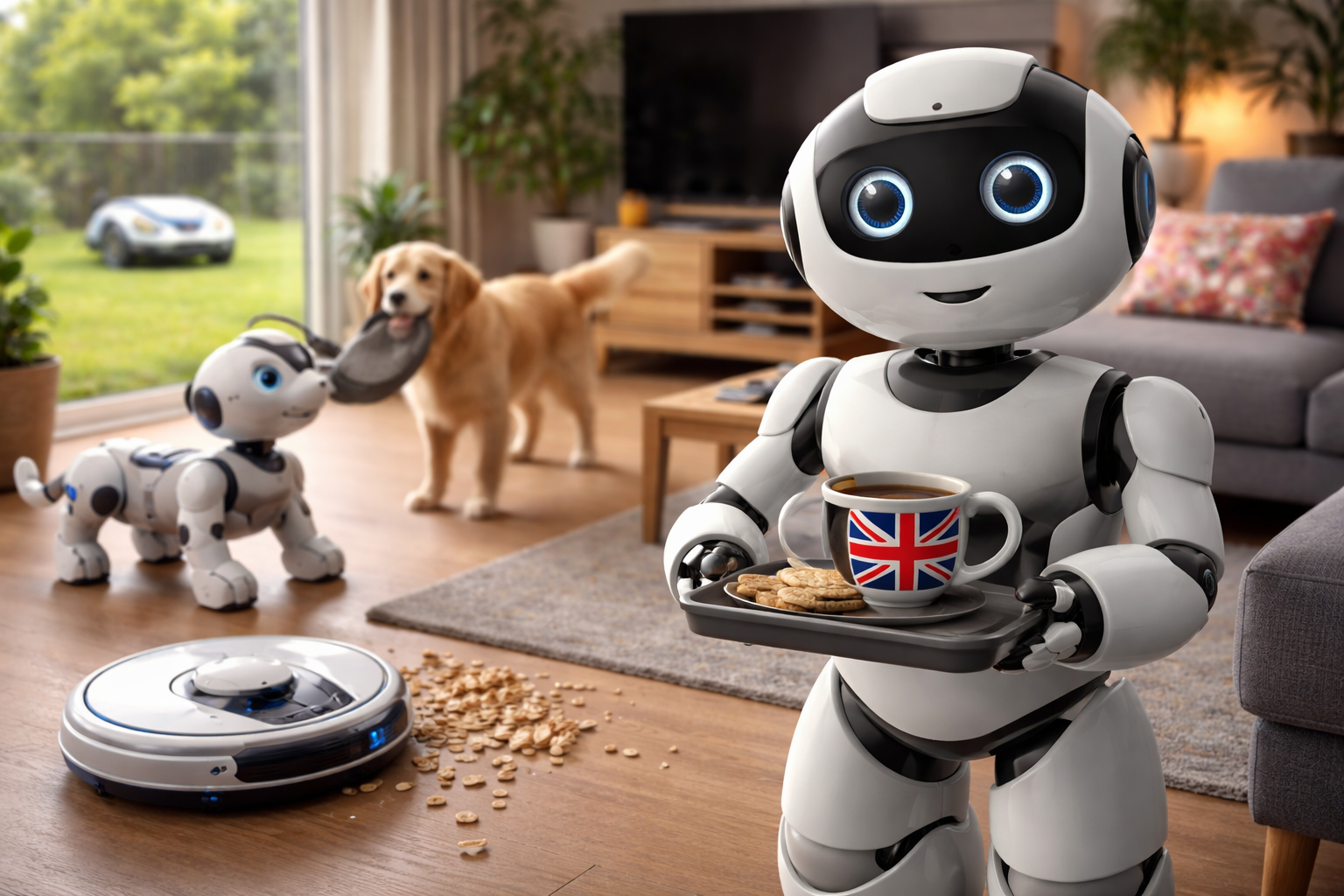
On the surface, robotics feels inevitable. We already accept robot vacuum cleaners and autonomous lawn mowers as part of everyday life. They work, ‘mostly’ and solve a clear problem or do a specific task that often some humans don’t enjoy. But when manufacturers start talking about robots that patrol homes, deliver objects or act as companions, the industry enters much murkier territory.
LG has its CLOiD concept, Samsung its Ballie, and Ecovacs Robotics, a global brand in robot vacuum and multifunction cleaning robots, has recently expanded its portfolio to include window cleaners, lawn robots and a robotic pool cleaner as well as an AI personality robot. Other notable introductions include 1X Technologies, a well-funded humanoid robotics company developing NEO, a general-purpose home humanoid robot expected to enter the market around 2026. Also, Linkhome AI recently introduced both humanoid and quadruped home robots designed for basic assistance, environmental inspection and companionship.
So technology moves on, but the challenge for robotics in the smart home is not technology, it is relevance. Homeowners in our market are not looking for novelty. A ‘Metal Mickey’ type companion might be fun at first, but how long before it just gets annoying, especially if it can’t actually do that much. Homeowners are looking for reliability, value and solutions that genuinely make life easier without adding friction. Many early robotic concepts look impressive on a stand but struggle in real homes with real layouts, real families and real expectations.
That does not mean robotics has no future in residential systems. Far from it. But its impact looks like it will be gradual and crucially, contextual.
MEGAHELP OR MEGATRON?
In the short term, robotics looks like it will remain largely consumer-led. Plug-and-play products will dominate, often bought online and used in isolation. Some will work well enough to justify their cost. Others will quietly end up switched off in cupboards. That phase is unavoidable and necessary. It is how categories mature. But I guess the trick is when or how do installers get involved, if at all?
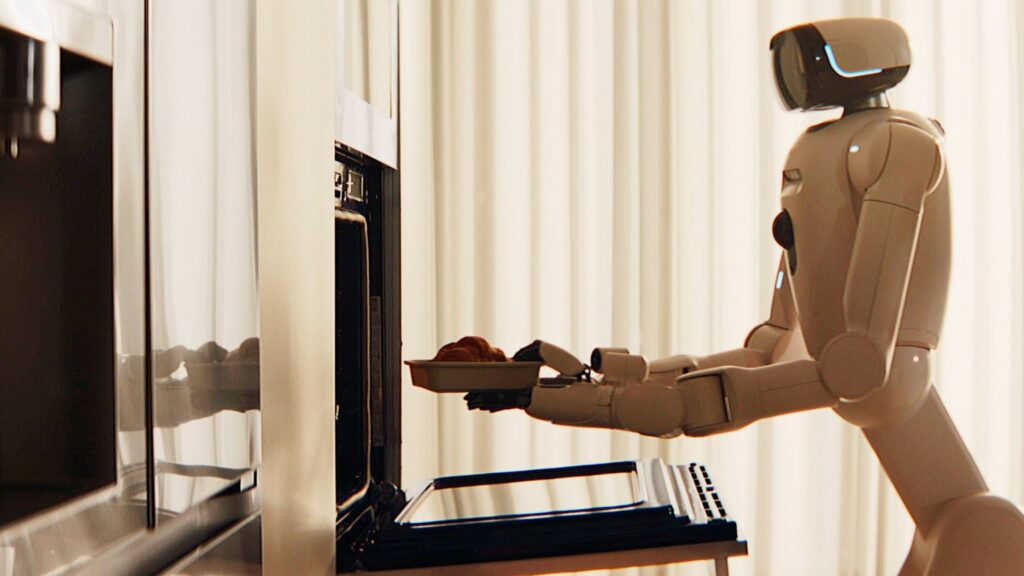
Where things become more interesting is when robotics starts to intersect properly with home automation. A robot that moves around a property is not just a gadget. It could be a mobile sensor platform. It can see, hear, measure and report. When that information is tied into security, lighting, heating and monitoring systems, it becomes something far more useful, and something our sector could get involved with and improve potentially.
Robotics will not succeed as a standalone category. If it is to succeed, it will be part of a designed system. Navigation, behaviour, privacy, scheduling and interaction with other technologies all require careful consideration. Out-of-the-box settings are rarely enough in complex homes and that is before clients start asking why a robot behaves one way at night and another during the day.
There is also a strong case for robotics in assisted living and lifestyle support. An ageing population wants independence without complexity. Robots that can check rooms, relay alerts or assist with daily routines could add genuine value, but only if they are robust, discreet and properly integrated. That does not happen without professional involvement.
Of course, some robotics products will remain gimmicks. That is not a criticism, it is simply reality. Every emerging category produces noise before clarity. The winners will be those that quietly do useful jobs, integrate cleanly and earn their place in the system rather than demand attention. For installers, the opportunity is not about selling robots. It is about designing experiences. If it catches on, robotics will become another layer in the smart home, much like sensors or voice interfaces. When it works well, clients may barely notice it. They will just notice that their home feels more responsive, more aware and more helpful.