
Ollie French, Commercial Director, Future Automation, reveals that customers are expecting 100in displays as the new standard for their projects.

It was less than a decade ago when we highlighted that 75in was becoming the new 65in. Our internal enquiry data showed a clear trend towards larger displays for residential and commercial projects. Since then, this shift has only accelerated, growing faster than anyone could have predicted. A decade ago, a 75in display was considered a statement piece, with 100in displays reserved for the most exclusive projects. As 75in displays have swiftly become the norm, we’re now experiencing the next shift, which could influence the entire industry in the coming years. 100in+ display mounting enquiries are showing the same trend that 75in displays did a decade earlier.
Today, a 100in+ flagship from Samsung or Sony can be specified at a fraction of the price it was a decade ago. It’s no coincidence, then, that enquiries for this size of display have dramatically increased. It’s the same curve playing out again.
In this article, we’ll cover how this shift is changing the calculations that used to govern how displays are mounted, concealed and serviced.
Thinner, Lighter, Larger
It’s common for integrators to shop by diagonal size, looking for a mount that specifically mentions the target inch measurement. However, as 100in+ displays are dramatically thinner and lighter than they were when they were first introduced, many of these displays are compatible with mounts that were previously described as suiting much smaller screens.
In 2026, 100in offerings from Samsung, TCL, Hisense and Sony have shaved 30–100kg compared with models released between 2013–2016, alongside more than 95% off the original price tags of those early flagships. A 2013 Samsung 110in flagship weighed around 116kg without its stand and cost roughly £100,000. A comparable 100in flagship today weighs around 60kg and costs a fraction of that. Previously, these gigantic displays would require a team of installers to lift the display into position, or the installer would simply be resigned to using the included stand. The weight reduction has opened up a wealth of mounting possibilities for installers that would previously have required a purpose-built solution.
Installation & Servicing Considerations
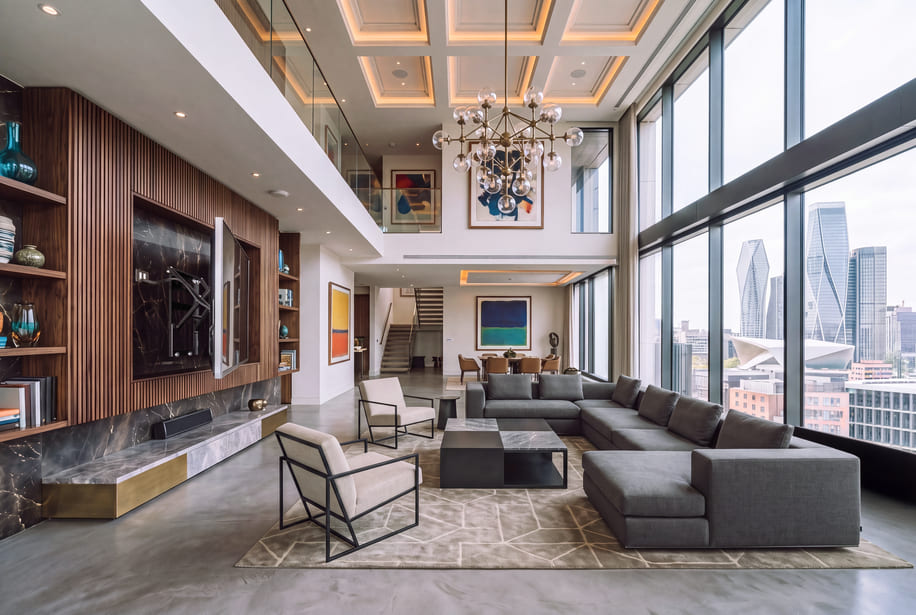
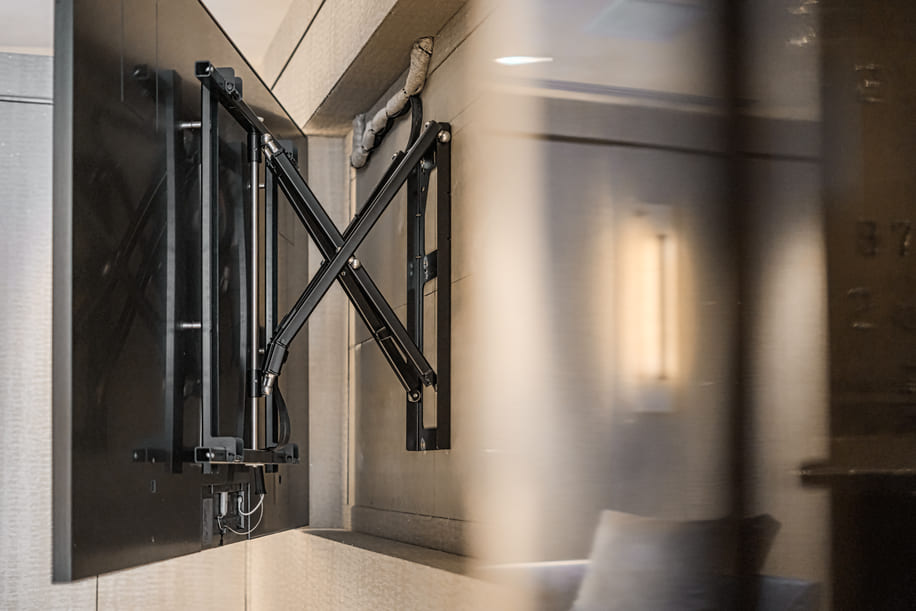
Although 100in+ displays are lighter than ever, many now span over 2.5 metres and are just 6cm thin. This can make them much more fragile to handle. While many TV manufacturers include their own mount in the box, they don’t allow for easy access to the rear of the display after it has been installed. This can make ongoing servicing and routine maintenance a much riskier task. Every time you remove the display from the bracket, you risk damaging it while it’s not on the wall. Pull & Swivel mounts offer the ability to service these behemoth displays without removing the display from the wall.
Although the weight has been drastically reduced, it’s still important to consider that pairing a 100in display with an articulating service bracket will create a lever effect when the display is pulled away from the wall. It’s therefore important to use the correct fixings and structure if you’re planning on using an articulating service bracket.
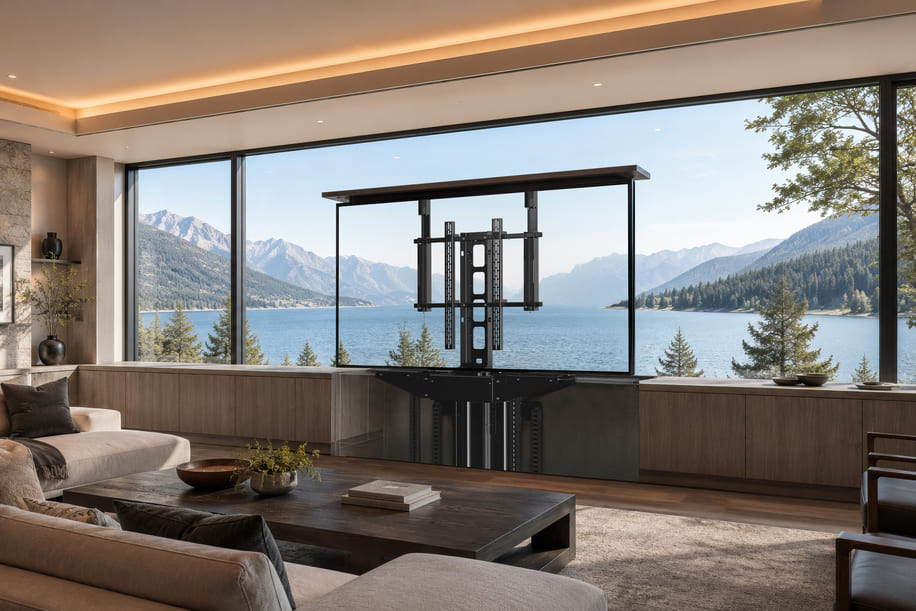
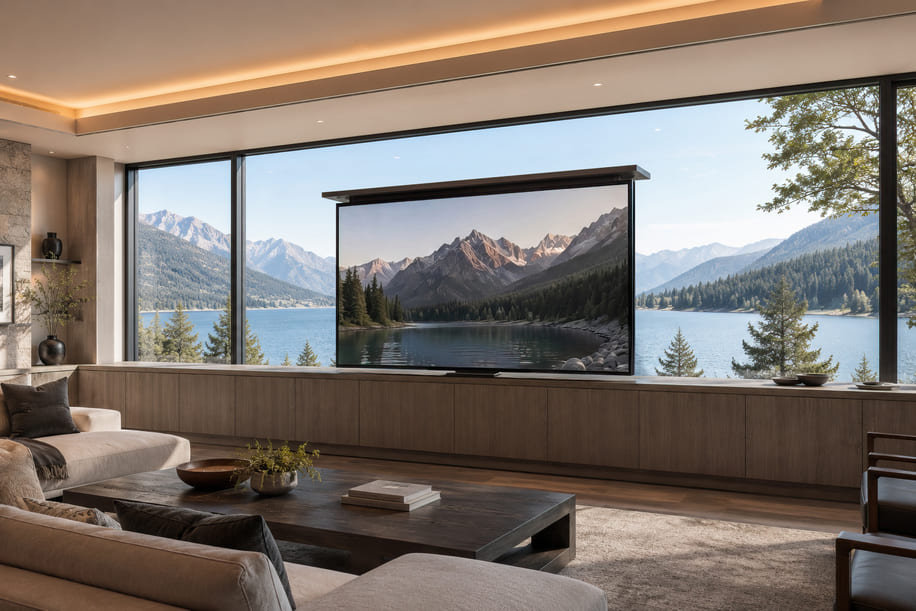
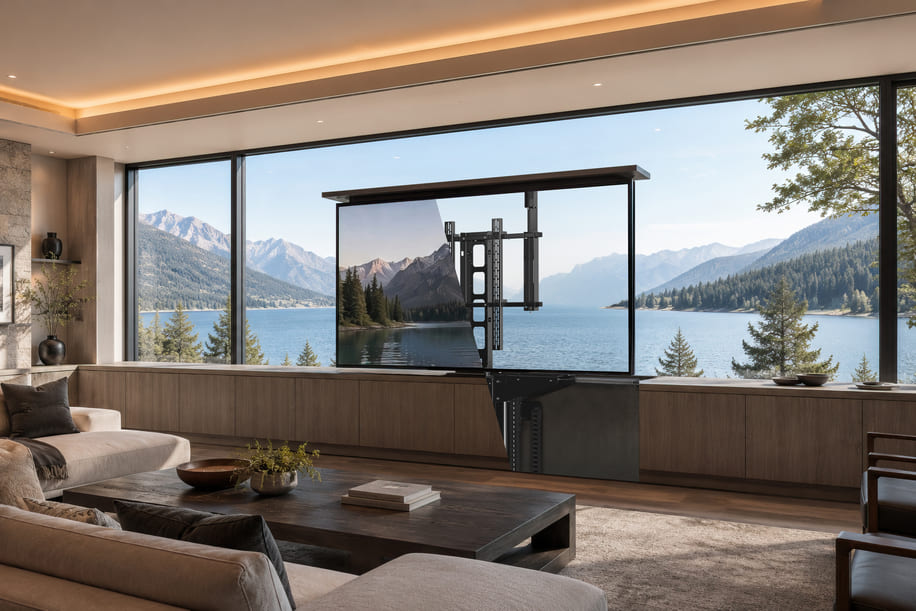
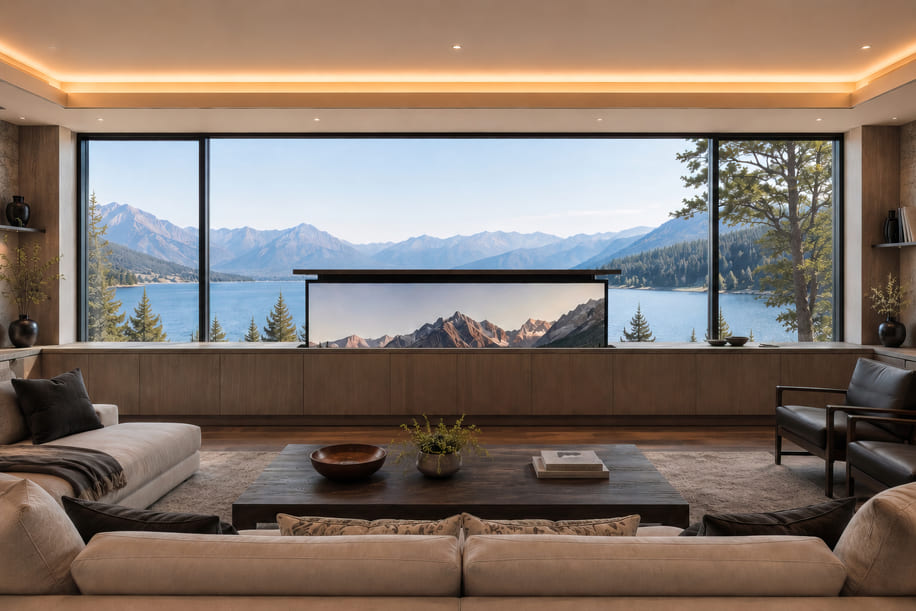
Viewing heights and neck strain can also become practical considerations for integrators looking to conceal such large displays from view when they aren’t in use. If your display is 150cm tall and you want to reveal it from inside a cabinet, that cabinet needs to be at least the same height. Integrators have therefore started using clever tricks such as recessing display lifts into the ground to create the illusion that the display is being revealed from an impossibly low cabinet. As display sizes trend larger and the demand to conceal technology continues to increase, understanding unique ways to conceal technology in a space is a key differentiator.
How Manufacturers Are Evolving
Catering for much larger displays has required engineering teams to completely reimagine or adapt the mounts and brackets they create to meet this growing demand. Offerings have had to expand to include standardised mounting solutions for LG, TCL and Samsung’s largest displays. Some existing ranges, such as the PS80-CUSTOM, which were originally designed for 80in displays, are more than equipped to handle the size and weight of these new 100in+ displays, requiring only new mounting bracketry to be compatible.
While some ranges require only minor revisions, concealment solutions such as display lifts require much more intensive engineering overhauls to adapt to these larger displays.
Historically, anything above 75in often meant leaving the standard product range and moving into a bespoke solution, with the cost and lead time that implies. As larger panels have become mainstream, manufacturers have been standardising pricing and specifications for mechanisms up to and beyond 98in, making previously complex projects, such as display lifts in mid-sized commercial spaces, far more commercially viable than in the past. Complete overhauls of lift systems such as the LSH range have been required to keep pace. Previously, these heavy lift systems would be designed from scratch by an engineer, taking weeks. Now, these lifts are able to enter production right away, significantly speeding up lead times for projects.
What This Means for Specification
For integrators, the practical takeaway is to treat display size and weight as two separate specification questions rather than one. It’s worth checking whether a mechanism’s true constraint is its functional range of motion or genuine weight capacity, since the two often diverge more than the headline size rating suggests. As 100in+ displays move from luxury outlier to realistic project spec, the brackets, racking and furniture supporting them will need to keep pace. As these solutions become mainstream, it’s important to consider how easily they allow for future servicing, upgrades and the seamless, hidden aesthetic that luxury AV clients now expect as standard.
Are We Nearing the Practical Limit?
Display manufacturers have mentioned scope to produce single-pane displays at over 140in using newer fabrication techniques. However, at this scale, even getting the display through a doorway becomes a practical challenge for an integrator. This is where we envisage tiled display solutions becoming more popular in residential spaces, as technological advancements will lead to their prices also falling. While their installation is labour-intensive due to the need to align and mount them accurately, they offer a more scalable solution for the luxury residential and commercial markets.