


At Gunwharf Quays in Portsmouth, Holovis and Panasonic combined projection, sound, live performance and storytelling to create an immersive family attraction designed around a simple principle: some experiences are more powerful when they are shared.
Immersive technology is often associated with individual experiences; think headsets, personal screens and digital environments designed for one user at a time. At Gunwharf Quays in Portsmouth, Holovis took a different approach.
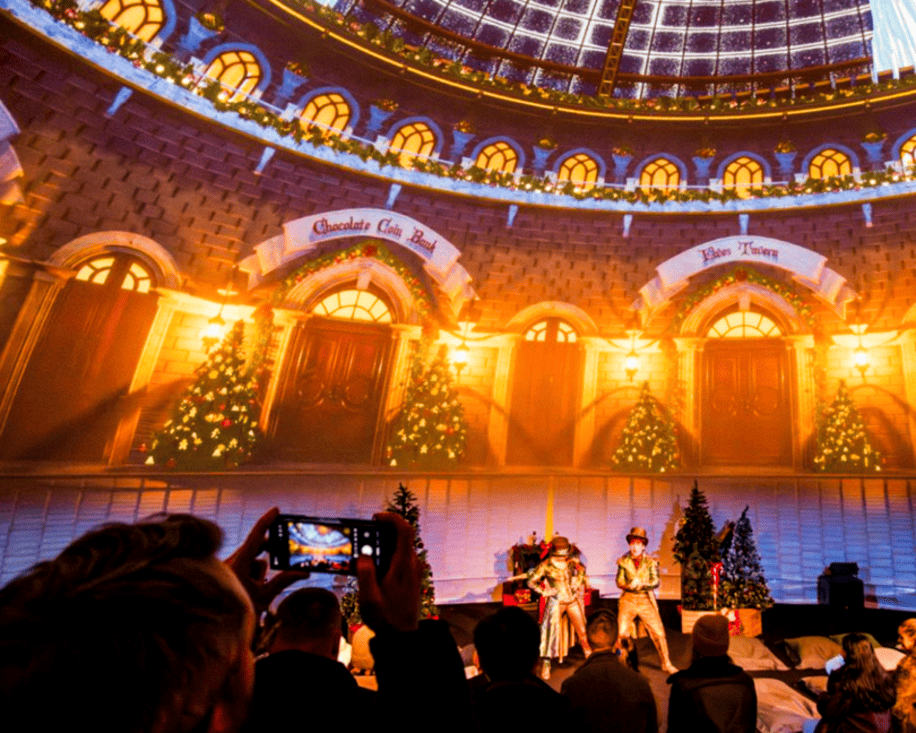
Visitors to the ApolloDomes installation were invited to step together into a fully immersive environment, surrounded by light, sound and storytelling. Inside the large-scale projection dome, visuals extended across the field of view, unfolding across the curved interior to create a sense of movement, presence and scale.
Delivered by Holovis in partnership with Landsec, the installation featured six Panasonic PT-RZ24K 20,000-lumen, WUXGA 3-Chip DLP laser projectors.
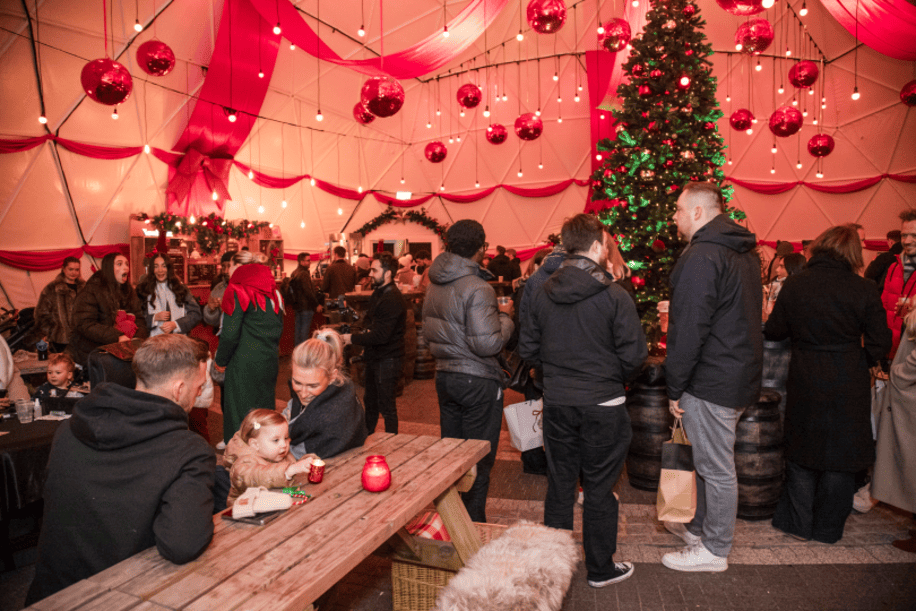
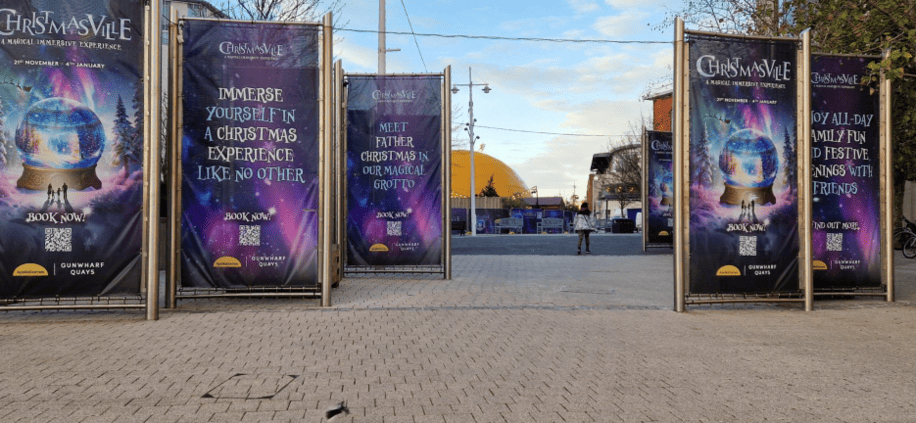
Located at Gunwharf Quays, the experience was designed primarily to attract families to the destination by offering something memorable they could enjoy together. While visitors might also shop during their time at Gunwharf Quays, the dome was not conceived as a retail environment in itself. Instead, it formed part of the wider experience of visiting the area.
“We’re seeing a real appetite for experiences,” explains Matt Dobbs, Business Development Manager at Holovis. “It’s about repositioning retail and creating reasons for people to come back out and spend time in these spaces with their friends and loved ones.”
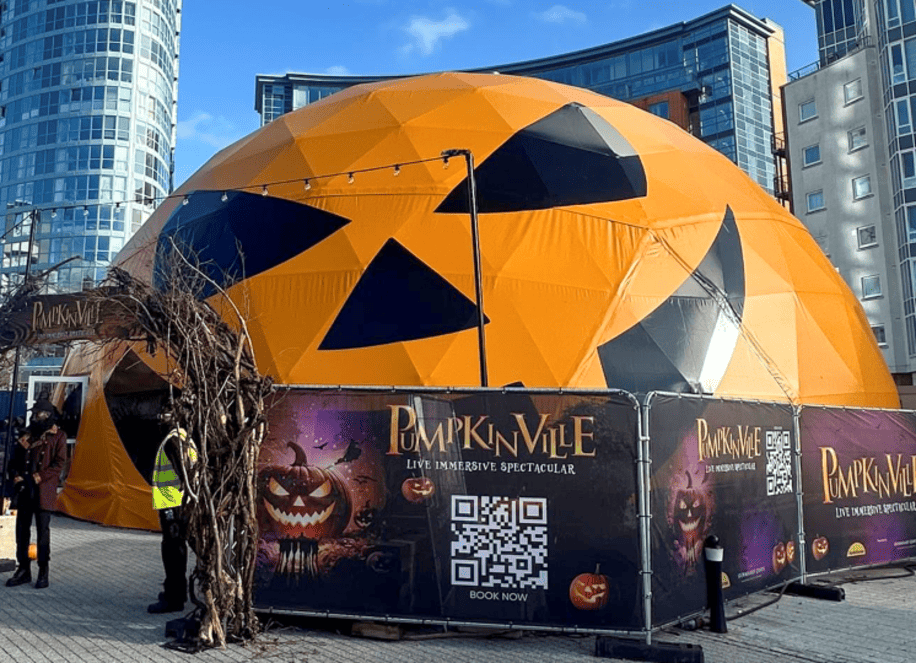
Holovis developed a large-scale geodesic dome structure capable of housing fully enveloping projection while remaining flexible enough for temporary or semi-permanent deployment. At Gunwharf Quays, the dome hosted a series of seasonal experiences, ranging from festive productions to Halloween-themed shows.
The experiences brought projection together with live performers, narrative storytelling and sound design to create an environment that felt closer to immersive theatre than traditional digital signage.
“It’s about bringing technology and theatre together,” Alex Kunawicz, Head of Marketing at Holovis, explains. “Ultimately, it’s not about the technology, it’s about the experience.”
Unlike wearable solutions such as VR headsets, which can separate individuals into their own virtual environments, the dome creates a collective space. “If you want a connected, family experience, the last thing you want to do is put your head into a headset,” Matt notes.
Inside the dome, multiple projectors must work together seamlessly to create a single, continuous image across a curved surface. This requires precise alignment, geometry correction and edge blending so that transitions between projected images remain invisible to the audience. At the same time, the system must operate reliably in a public-facing environment, often running continuously throughout the day.
To meet these demands, Holovis deployed a multi-projector solution based on Panasonic’s high-brightness 3-Chip DLP laser projection technology. Designed for demanding, continuous-use environments, the platform combines durable imaging performance with the precision required to produce a seamless image across the dome’s curved interior.
Equally important was the way content itself was designed for the space. Rather than relying on large, flat areas of colour that can reveal seams between projections, the creative team incorporated texture and movement into the visuals, helping to disguise transitions and maintain a cohesive image.
“It’s about understanding the medium,” Alex explains. “If you design the content in the right way, the technology disappears.”
The compact footprint of the PT-RZ24K helped Holovis integrate high-brightness 3-Chip DLP projection within the physical constraints of the dome while keeping the technology unobtrusive.
While projection formed the visual backbone of the experience, sound played an equally important role in reinforcing immersion, guiding attention, enhancing storytelling and helping to ground audiences within the environment.
For the project, audio systems from KV2 Audio were selected to deliver high-quality sound within the constraints of the dome structure. With limited space and a need to keep equipment unobtrusive, the system provided coverage using compact, carefully positioned loudspeakers, including CS6 tops, ESD 1.15 subwoofers and ESD 6 surrounds.
“You’d be forgiven for wondering where the speakers are,” notes Tom Weldon, Director at KV2 Audio, who helped select the technology deployed at the installation. “The goal is always the same: if you’ve done it right, people don’t notice the technology at all.”
Although the dome installation was created for a particular experience at Gunwharf Quays, its technical design also required considerable flexibility. Projection offered important practical advantages within the temporary or semi-permanent structure. Compared with large-scale fixed display installations, the projection system could be integrated within the physical geometry of the dome while keeping the technology largely out of sight.
“These systems are running all day, every day,” Alex explains. “You need technology that can perform consistently in that kind of environment.”
The PT-RZ24K is engineered to reduce the risk of interruption through its Multi-Laser Drive Engine with failover circuitry, helping to minimise brightness loss if an individual laser diode fails. A Backup Input function can also switch automatically to a secondary signal if the primary input is interrupted.
Meanwhile, the hermetically sealed optical block and high-efficiency liquid-cooling system support up to 20,000 hours of maintenance-free projection, providing the operational reliability required for demanding, continuous-use environments.