 Daniel J Sait
An Optimal Audio ecosystem provides flexible multi-zone sound and straightforward control at new Italo-Corsican bar-restaurant Revellata in Laval, France.
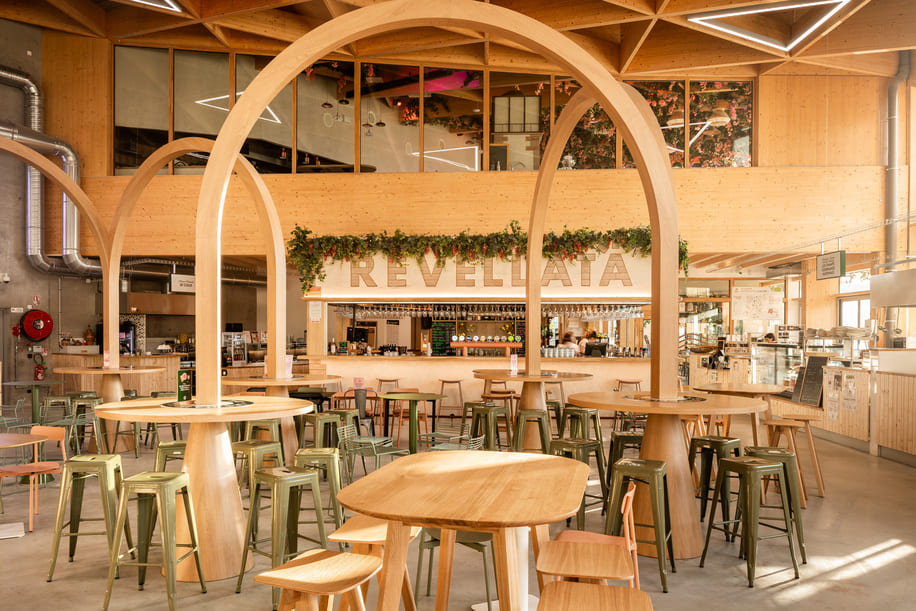
From the first aperitivo to the last table cleared, Revellata is built for the unhurried evening and sound is a big part of that. The new Italo-Corsican bar-restaurant in the heart of Les Halles de Laval set installer EMS Le Mans a deceptively simple brief: fill eight distinct zones with sound as polished as the interiors and leave behind a system that staff can run without a manual in hand.
Supplied by Audio-Technica, an Optimal Audio ecosystem fit the bill, providing even coverage throughout the venue alongside intuitive control via the browser-based WebApp.
Each of the restaurant’s eight zones performs a distinct function, calling for more than a single shared source. Optimal Audio’s Zone 8 provides onboard DSP and independent source allocation across all eight zones, with each configured precisely for its purpose with its own EQ and speaker presets. Zones can be controlled individually, in groups or across the whole venue. Lobby, bar, dining room, terrace or stage – each receives its own treatment rather than one feed for all.
With such physically different spaces, powering them cleanly presented its own challenge. Behind the scenes, four SmartAmp 30s drive low-impedance and 70V–100V loads alike at up to 250W a channel, with DSP tuned to the Optimal Audio range so the appropriate EQ and driver protection come as standard. Four channels apiece gave EMS Le Mans the flexibility to mix localised and distributed layouts wherever each room demanded.
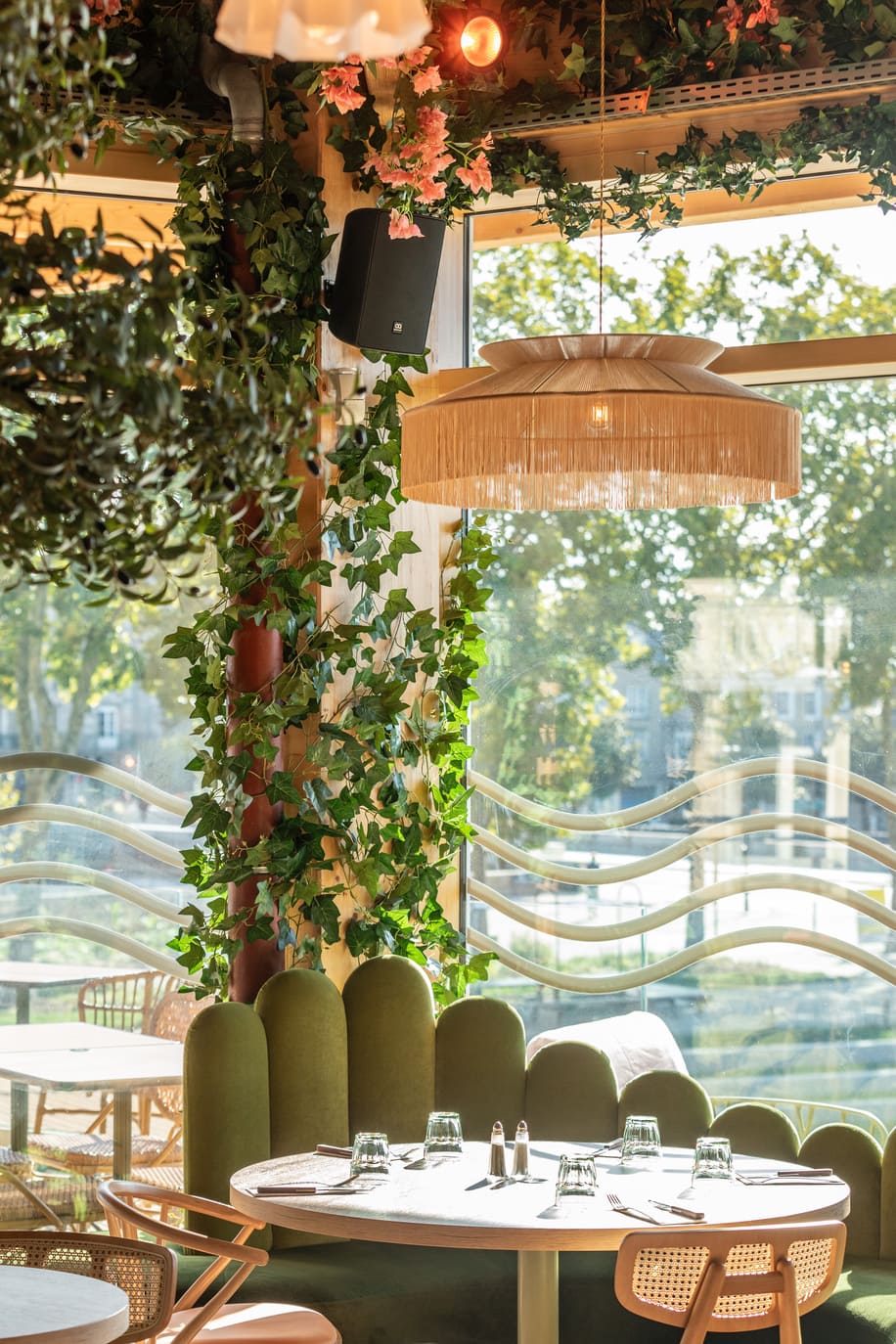
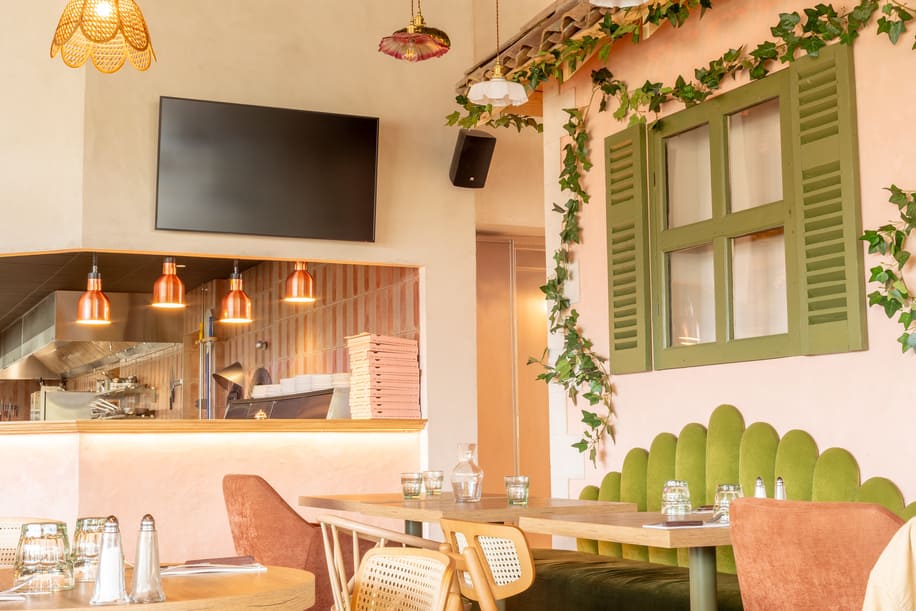
Never originally intended for sound reinforcement, the venue’s greenery and wooden beams called for a clever approach to coverage. More, smaller loudspeakers were the answer, delivering even sound throughout. In total, 32 Optimal Audio Cuboid 6 and a pair of Cuboid 3 loudspeakers are distributed across the zones, with painted grilles helping them disappear into the interior. Full-range, two-way passive enclosures built for short-to-medium throw, the Cuboids provide plenty of headroom for clear vocals, crisp highs and strong bass performance.
The client also insisted that the stage be fully equipped so visiting bands could turn up without their own PA. Two Cuboid 8 loudspeakers running in stereo provide reinforcement for live nights, with a Sub 10 recessed beneath the stage to support the low end.
Keeping Control Simple
Complementing the sound itself, EMS Le Mans delivered simple control in the form of WebApp, Optimal Audio’s browser-based control environment. Designed to be easy and intuitive enough for any member of staff to operate, the platform was a key factor in the choice of system.
“Optimal Audio was the first brand where I found a zone controller with a built-in web interface,” explains EMS Le Mans’ Corentin Deleplancque. “I had installed a four-zone matrix on a smaller project before, and I thought of Zone 8 for Revellata straight away.”
The entire configuration was built through WebApp, with every zone, input and output set from any device on the network and nothing to download or install.
WebApp’s automated routines also set the table before anyone arrives. The day was scheduled once so that presets, sources and levels move automatically between lunch and dinner service, with the system resetting to its base configuration each morning. Staff are presented with a clean touchscreen showing volume, source and preset recall, while everything else is tucked safely behind a PIN.
Corentin is quick to credit the results: “I find the sound quality excellent, and I’m delighted with WebApp, which allows the team to operate the system with confidence, without having to tinker with the equipment rack.”
He adds: “It makes it easy to add the features my client will inevitably request down the line.”
For integrators, the Revellata project is a useful example of how hospitality AV increasingly needs to balance performance with operational simplicity.
Restaurants and bars may require sophisticated zoning, DSP and flexible source management behind the scenes, but front-of-house teams need technology that simply works.
Systems that can combine those two requirements give integrators an opportunity to deliver more ambitious audio experiences without adding complexity for the end user.