

 Daniel J Sait
Dedicated home cinemas and high-performance media rooms remain a cornerstone of the CI industry, but client expectations continue to evolve. Adrian Bond, Product Marketing Manager for Projectors, Sony Professional Displays & Solutions Europe, answers the sector’s key questions.
How has the definition of a ‘home cinema’ or ‘media room’ changed in recent years?
Dedicated cinemas and high-performance media rooms remain a cornerstone of the custom integration (CI) industry, but their role within the modern home has evolved significantly. What was once defined by a darkened room, tiered seating and a projector is now far more fluid, shaped by changing lifestyles, design sensibilities and advances in technology.
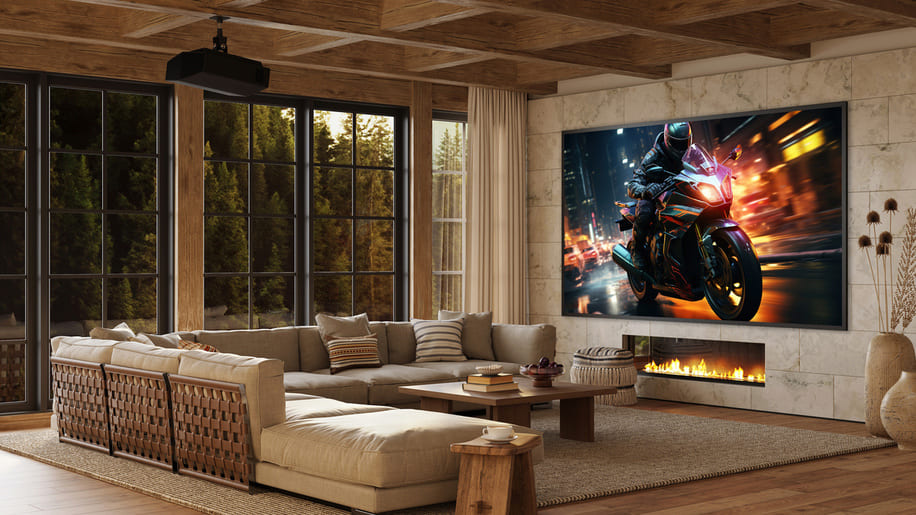
The definition of a ‘home cinema’ has broadened in recent years. While fully dedicated, purpose-built theatres still exist at the high end, many clients now favour more versatile media rooms that can transition between different uses. Open-plan living has influenced this shift, with entertainment spaces increasingly integrated into family rooms, basements or multifunctional areas rather than isolated spaces. The modern home cinema is less about replicating a commercial theatre and more about delivering a premium, personalised viewing experience within the context of everyday living.
What are today’s clients prioritising – performance, aesthetics, flexibility, lifestyle integration?
As a result, client priorities have shifted, and while performance remains critical, it is no longer the sole driver. All of the above are now equally important, and clients want spaces that look as good as they sound, with discreet technology, clean lines and materials that complement interior design schemes. There is also a growing demand for simplicity and ease of use—systems must be intuitive and seamlessly integrated into the wider smart home ecosystem. Increasingly, clients are asking not just “how does it perform?” but “how does it fit into how we live?”
How are immersive audio, video processing, room design and acoustic treatment advancing the category?
Technological advancements continue to push the category forward. Immersive audio formats such as object-based surround systems have redefined expectations, creating a three-dimensional soundstage that envelops the listener. At the same time, improvements in video processing, HDR performance and display technologies—whether projection or large-format LED—are delivering unprecedented image quality in a wider range of environments. These innovations allow integrators to achieve reference-level performance even in rooms that are not traditionally ideal for cinema.
Is there a shift towards multi-functional entertainment spaces over single-purpose rooms?
There is a clear shift towards multi-functional entertainment spaces over single-purpose rooms. Clients increasingly want one room that can serve multiple roles: a cinema for movie nights, a gaming hub, a sports-viewing space or even a social area for entertaining. This demand is driving the need for flexible system design—motorised screens, hidden speakers, adaptable seating and configurable lighting all contribute to spaces that can transform at the touch of a button.
Home cinemas are evolving, but in what direction?
What opportunities exist for integrators to elevate the experience and justify premium investment?
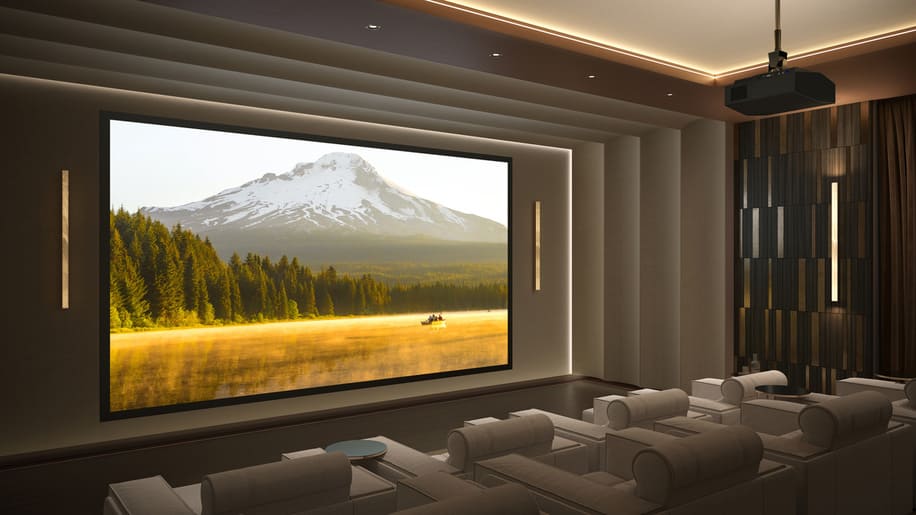
For integrators, this evolution presents significant opportunities. The complexity of delivering high performance within aesthetically driven, multi-use environments reinforces the value of professional design, engineering and calibration. It is no longer enough to specify high-end equipment; success lies in how well that technology is integrated into the space and tailored to the client’s needs. Expertise in acoustics, video optimisation and control systems becomes a key differentiator.
Moreover, there is an opportunity to educate clients on the tangible benefits of professional involvement. Demonstrating the impact of proper acoustic treatment, precise speaker placement and calibrated video can help justify premium investment. Clients may not initially understand the difference, but they will experience it, and it is important that this is conveyed properly when investing in high-end equipment.
Ultimately, the modern home cinema is defined by balance—between performance and design, technology and usability, immersion and everyday living. Integrators who can navigate these competing demands and deliver cohesive, thoughtfully engineered solutions are best positioned to elevate the experience and define the next generation of home entertainment spaces.