

 Staff
StaffPhil Clark, Retail Business Development Manager at LG, examines the shifting sands in the world of super-sized displays and screens.
The rise of super-sized screens has created a noticeable shift in how modern spaces are designed and used. Whether you walk into a workplace, a university, a hotel lobby or a flagship retail store, the trend is unmistakable: displays are getting bigger. Screens of 100in and above, once seen as specialist hardware, are becoming mainstream.
The drivers behind this are numerous – the need for greater communication and content capability and the demand for visual impact and improved clarity – all of which large-format displays deliver. As technology has advanced, audiences have grown accustomed to seeing huge panels in everyday settings. Improved resolution and more flexible viewing distances now give customers the confidence to choose screen sizes that once felt excessive. Meanwhile, LED has shifted from a bespoke, modular solution to a far more accessible option, with all-in-one designs simplifying installation.
This means large screens are no longer seen as a ‘nice to have’ or an ‘add-on’ by designers, architects and AV consultants, who are increasingly planning and designing spaces with large-format displays in mind. This has been helped by far less complex installation compared with traditional LED solutions. Integrated frames, power and control systems mean installers can approach LED in much the same way they would a large LCD panel.
Facing the future
Historically, installing super-sized screens has come with challenges, with ambient light one of the biggest issues, as these huge displays are often placed in bright, open spaces. As the industry adapts, there is a growing understanding that displays have the potential to shape the atmosphere and identity of a space and should feel like a natural, considered part of the environment.
This potentially huge market has pushed manufacturers to innovate, improving brightness and contrast performance, which now holds up particularly well in naturally lit environments. Customers also need displays that can operate for long hours, often 24/7, especially in retail or transport locations. Commercial-grade LCD panels and stable, inorganic LED materials help brightness and colour remain consistent over time, as does front-access LED servicing.
From an operational perspective, and to get the most value from large-format displays, a clean installation path, reliable data connectivity and simple device management are essential. WebOS platforms can remove the need for external media players, while tools such as ConnectedCare enable remote monitoring, diagnostics and proactive servicing. Products also need to be compatible with a wide range of CMS platforms, ensuring even the largest displays fit into existing ecosystems without disrupting workflows.
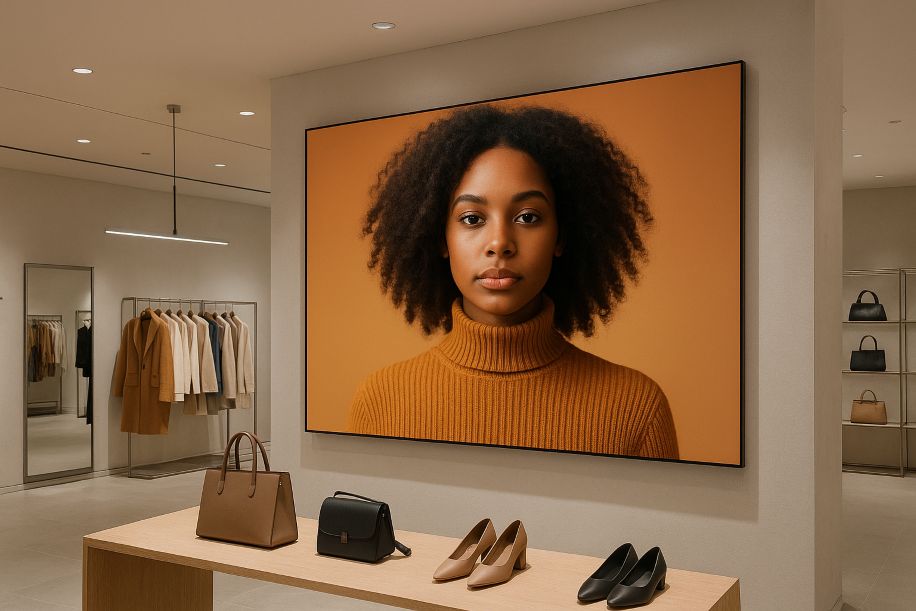
Demand for super-sized displays is growing across multiple sectors, including education, where circa 100in-plus LCD displays provide improved visibility in flexible teaching environments. In retail, large-format screens are increasingly becoming centrepiece elements within experiential store design. Content creators are also shifting towards motion-led, high-resolution storytelling designed specifically for larger screens.