

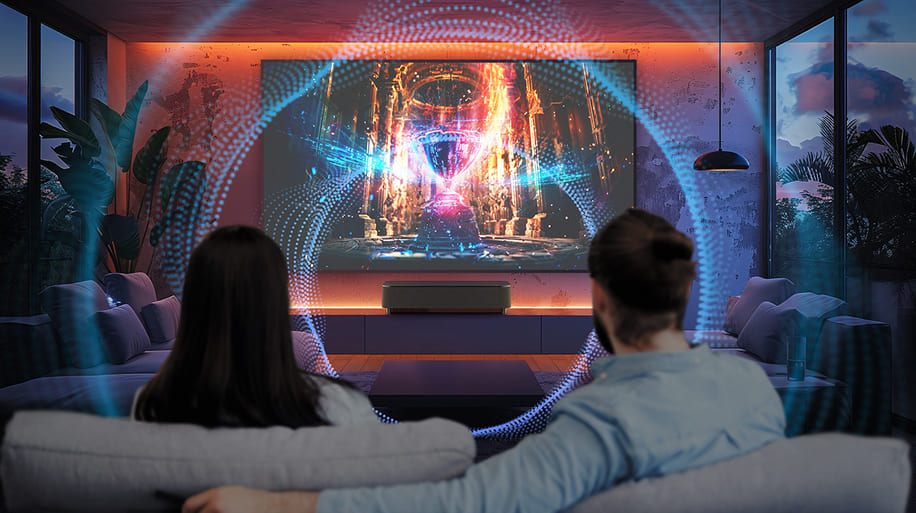
Ben White, Product Manager, Epson Europe, contemplates the future of home cinema design.

For many years, the home cinema room represented the ultimate AV ambition: a darkened, acoustically treated environment carefully designed to deliver the best possible picture and sound. While that vision still has its appeal, it reflects a specific type of homeowner with the space, budget and desire for a single-purpose room. Today, however, a growing number of homeowners are taking a different approach—one that prioritises flexibility and integration over separation.
Advances in projection technology—particularly ultra-short-throw solutions—are enabling cinematic, large-screen experiences to be integrated seamlessly into everyday living spaces. What was once the pinnacle of home entertainment, these purpose-built, single-use spaces are no longer the default.
From single-use rooms to multi-functional spaces
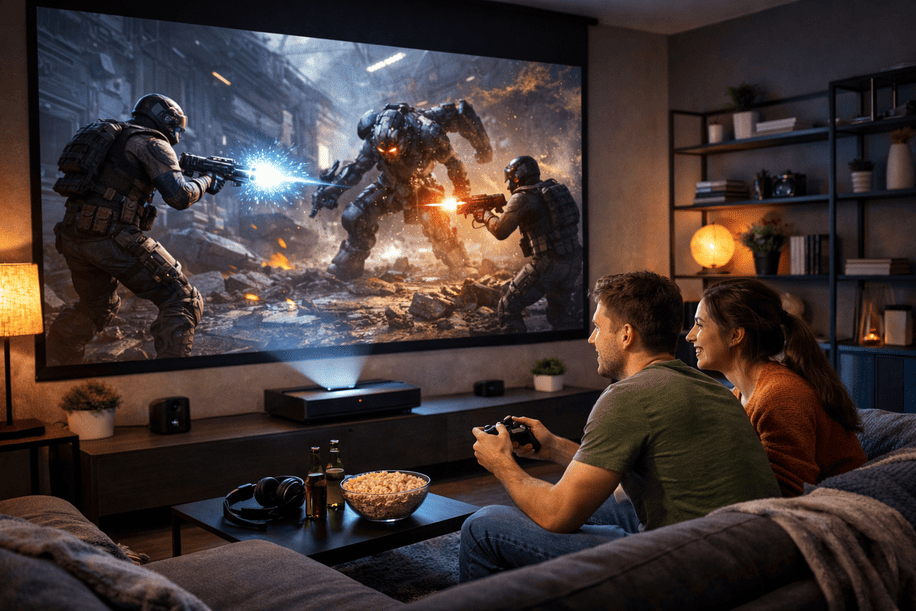
Flexibility has become a defining priority. Rather than dedicating an entire room to one activity, homeowners are looking for spaces that can evolve throughout the day. A living room might host family time, work or socialising during daylight hours before transforming into a cinema space in the evening.
This shift is not purely driven by space constraints (although that remains a factor) but by broader lifestyle changes. Open-plan living, multifunctional design and a preference for less formal environments are all influencing how entertainment spaces are conceived.
Technology has played a key role in enabling this transition. Ultra-short-throw projection, in particular, has removed many of the traditional barriers associated with large-screen viewing. By positioning the projector close to the wall or screen, it is possible to achieve a genuinely cinematic image without the need for complex installation or intrusive hardware.
Combine ultra-short-throw technology with ambient light-rejecting screens and brighter projection systems, and these solutions can perform effectively in spaces that are not fully light-controlled, making them far more practical for use in existing spaces such as a living room or bedroom.
Balancing performance with design and practicality
Despite this shift, expectations around performance have not diminished. AV enthusiasts still want large screen sizes, high resolution and high-lumen brightness. What has changed, however, is the context in which those expectations sit.
It is important for performance to coexist with aesthetics and usability. Nowadays, technology is expected to integrate into the home rather than dominate it. Clean lines, minimal cabling and discreet installation are more important than ever.
At the same time, systems must be intuitive, allowing users to switch effortlessly between everyday viewing and a more immersive cinematic experience.
This shift has led to the emergence of a new kind of home cinema, defined more by the experience it delivers than by being a dedicated room. In many cases, the living room is effectively becoming the home cinema, supported by technology that adapts to the environment rather than dictating it.
The end or evolution of the cinema room?
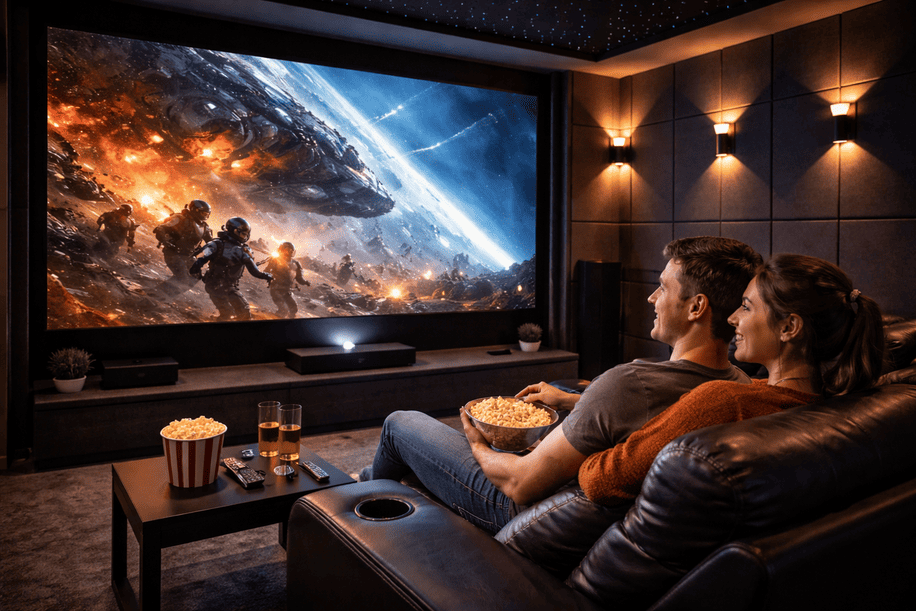
Of course, it would be wrong to suggest that the dedicated cinema room is disappearing altogether. For some homeowners, particularly those with the available space and a passion for AV, a dedicated home cinema room remains the ultimate way to enjoy their favourite films and television in an immersive way.
A fully controlled environment still offers advantages in terms of acoustics, lighting and image consistency that are difficult to replicate in a shared space—especially as manufacturers continue to push innovation at the high end, with ever more powerful, high-lumen projection solutions designed for large-scale viewing.
What is changing is that the home cinema experience is no longer only for those who have the space and budget for dedicated rooms. Rather than being the default aspiration, home cinema rooms are now one option within a broader spectrum of home entertainment design.
In that sense, the dedicated home cinema room is not dead—but it is no longer the only vision of what home cinema can be.