

 Staff
StaffA Practical Guide for Smart Home Integrators provided by Paul White of Raex UK, experts in automated blinds and curtains.
For smart home integrators, automated curtains are no longer simply an aesthetic feature within an interior scheme. They form part of the wider automation ecosystem, often interacting with lighting scenes, HVAC strategies, security routines and voice control platforms.
When everything is specified correctly, electric curtain systems integrate seamlessly into the automation architecture of the home. Curtains can open gradually in the morning, close automatically at sunset or respond to lighting scenes within a room.
However, in practice many projects encounter avoidable problems because key details were overlooked during the specification stage.
Integrators are often called in to resolve issues such as unreliable control, motors struggling with curtain loads or systems that cannot communicate with the wider automation platform.
The good news is that the majority of these problems can be avoided with careful planning at the start of the project.
Below we explore the most common mistakes encountered when specifying motorised curtain tracks within smart home systems and how integrators can ensure reliable, long-term performance.
1. Underestimating Curtain Weight and Fabric Behaviour
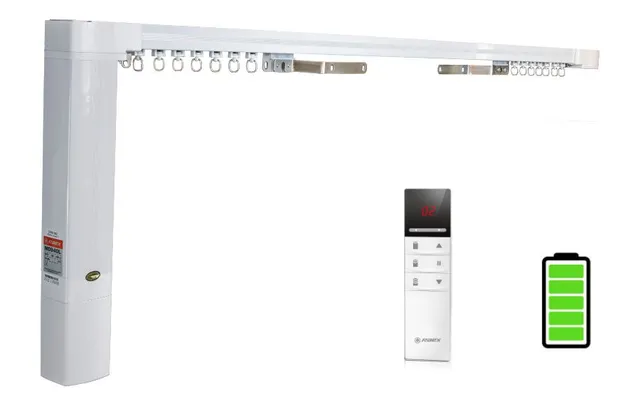
One of the most frequent causes of motorised curtain issues is an incorrect assumption about curtain weight.
At first glance, curtains may appear lightweight. However, once fabrics are interlined, pleated and manufactured into full-height curtains, the total load can increase significantly.
Several factors influence the final curtain weight:
- Fabric density
- Curtain fullness
- Blackout or thermal linings
- Curtain height and width
- Pleat style and heading structure
For integrators, this matters because the motor capacity must be matched precisely to the mechanical load being moved.
A motorised track designed for lightweight sheers may struggle significantly when installed with heavy velvet or blackout curtains. In these situations the motor may still function, but it will operate under continuous strain.
Typical symptoms include:
- Slower curtain movement
- Increased motor noise
- Reduced system lifespan
- Intermittent operation within automation routines
Interestingly, specifying a more powerful motor is not always the ideal solution. Oversized motors can create unnecessarily aggressive movement and introduce additional noise.
The key is selecting a motor and track system designed specifically for the curtain weight and track length involved.
For integrators, this is one of the areas where collaboration with a curtain motor specialist can prevent problems later in the project. By reviewing curtain sizes, track lengths and fabric types early in the process, the correct motor specification can be confirmed before installation begins.
2. Leaving Power Planning Too Late
Power planning is another area that frequently causes challenges for automation installers.
Motorised curtain systems generally fall into two broad categories.
Hardwired curtain systems
Hardwired systems connect directly into the BMS or electrical infrastructure of the property. These are often preferred in new builds and high-end developments where power can be installed discreetly during the early stages of the construction phase.
From an integrator’s perspective, hardwired motors often provide the most reliable long-term solution, particularly when integrating with building management systems.
Battery powered curtain systems
Battery curtain tracks provide exceptional flexibility for retrofit installations or projects where running electrical cabling would be difficult.
However, battery systems require careful planning around motor placement and charging access, although batteries can be removed from the motor and taken to a convenient charging point.
Modern battery curtain systems have become extremely capable, but they should still be chosen with care when curtain weights are substantial.
Early collaboration between the integrator, designer and curtain motor supplier ensures the most appropriate power solution is selected.
3. Overlooking Automation Compatibility
Perhaps the most critical issue for smart home integrators is ensuring the curtain motor can communicate effectively with the automation system.
Clients increasingly expect curtain systems to integrate with platforms such as:
- Lutron
- Control4
- KNX Association
- Rako Controls
- Loxone
In addition, many systems now incorporate voice control via:
- Amazon Amazon Alexa
- Google Google Assistant
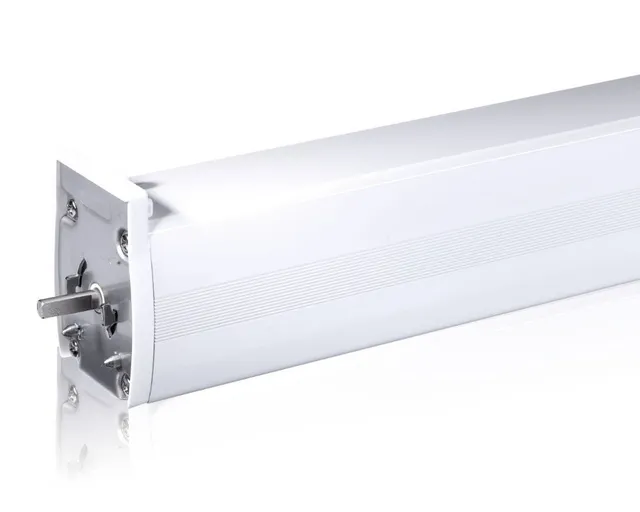
Curtain motors typically offer several control interfaces, including:
- Dry contact control
- RF remote control
- Wi-Fi / Tuya and Shelly control
- KNX communication
- SMI motor protocols
When the wrong interface is selected, integrators may find themselves forced to add additional modules, gateways or workarounds to achieve the desired control functionality.
This not only increases installation complexity but can also introduce potential points of failure within the automation system.
Integrators often favour wired control methods such as dry contact, KNX or SMI, as these provide predictable and reliable communication within the wider control architecture.
RF or Wi-Fi control may still be useful in certain applications, but these approaches should be selected deliberately rather than by default.
Confirming the required control method before specifying the motor is one of the most important steps in ensuring smooth integration.
4. Incorrect Measurements and Track Layout
Even the most advanced automation system cannot compensate for incorrect track design.
Motorised curtain tracks rely on smooth mechanical movement and small installation errors can quickly affect performance.
Common issues include:
- Incorrect track lengths
- Inaccurate recess measurements
- Insufficient allowance for curtain stack-back
- Overlooking ceiling obstructions or coving
- Not accounting for bay or curved windows
For integrators, these problems often appear during commissioning when curtains fail to open fully or operate unevenly.
Curved windows and bays require specialised track systems designed to maintain smooth motorised movement around the curve. Attempting to force a standard straight track into these spaces can lead to excessive friction and poor performance.
Careful planning during the design phase ensures the system performs reliably once automation routines are programmed.
5. Choosing the Wrong Motor Configuration
Another issue frequently encountered on site is incorrect motor positioning.
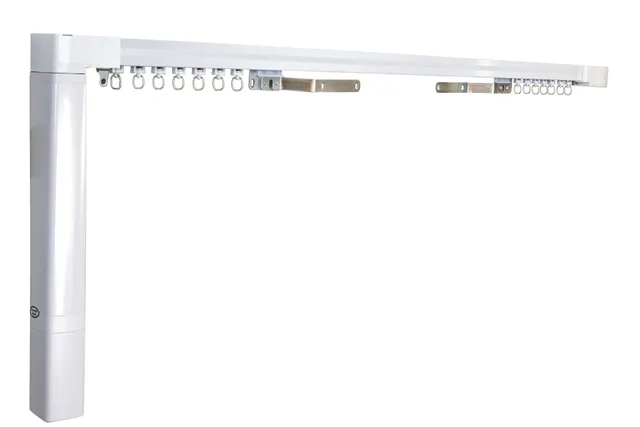
Curtain motors are typically mounted on either the left or right side of the track. While this may seem like a minor detail, it can significantly affect installation when considering:
- Power cable routing
- Socket location
- Access for maintenance
- Integration with automation equipment
If the motor position is not aligned with the available power source, installers may need to reroute cables or reposition the entire track.
Battery systems introduce additional considerations, as the motor or battery must remain accessible for periodic charging.
Thinking about these factors early in the design stage prevents unnecessary complications during installation.
The Benefits of Well-Integrated Electric Curtains
When specified correctly, motorised curtains become a powerful component of the smart home ecosystem.
Improved Lighting Control
Curtains can respond automatically to lighting scenes, helping create comfortable environments throughout the day.
Enhanced Energy Efficiency
Automated curtain routines can reduce heat loss during winter evenings and minimise solar gain during warmer months.
Improved Acoustic Comfort
Curtain fabrics can help soften acoustics in large or reflective spaces, particularly in open-plan environments.
Seamless Automation
Integrated systems can form part of larger automation routines alongside lighting, security and climate control.
Everyday Luxury
For homeowners, the ability to control curtains via voice command, wall switch or automated scenes adds a subtle but meaningful layer of convenience and luxury.
Why Early Consultation Matters
For integrators, reliability is everything.
Automation systems are judged by how consistently they perform. When motorised curtains are specified correctly from the start, they become a seamless extension of the automation system.
However, when key details are overlooked, integrators may find themselves troubleshooting mechanical issues that fall outside the traditional scope of automation.
Working with a specialist partner during the specification stage can eliminate these risks.
At Raex Motors, the team regularly works alongside integrators, designers and installers to help ensure motorised curtain systems are specified correctly from the outset.
By reviewing curtain sizes, fabric weights, track layouts and control requirements, potential issues can be identified before installation begins.
Integrators are always welcome to share drawings, window schedules or project plans for review, allowing the most appropriate motorised curtain track solution to be recommended for the project.
This collaborative approach helps reduce call-backs, simplify commissioning and ensure the automation system performs exactly as intended.
A Final Thought
Motorised curtains are one of the most effective ways to enhance both comfort and automation within a smart home.
When the mechanical and control elements are specified correctly, they integrate seamlessly into the wider system, delivering reliable performance and an effortless user experience.
By avoiding the common pitfalls outlined above, smart home integrators can ensure their curtain systems operate smoothly, quietly and reliably for many years.
If you are currently planning a project that includes electric curtain tracks or battery powered curtain systems, the team at Raex Motors would be happy to assist with specification advice.
A brief review of drawings or project details can often identify key considerations early, helping ensure the finished installation reflects the same level of technical precision as the rest of the automation system.